- BGG rating
- 7.8
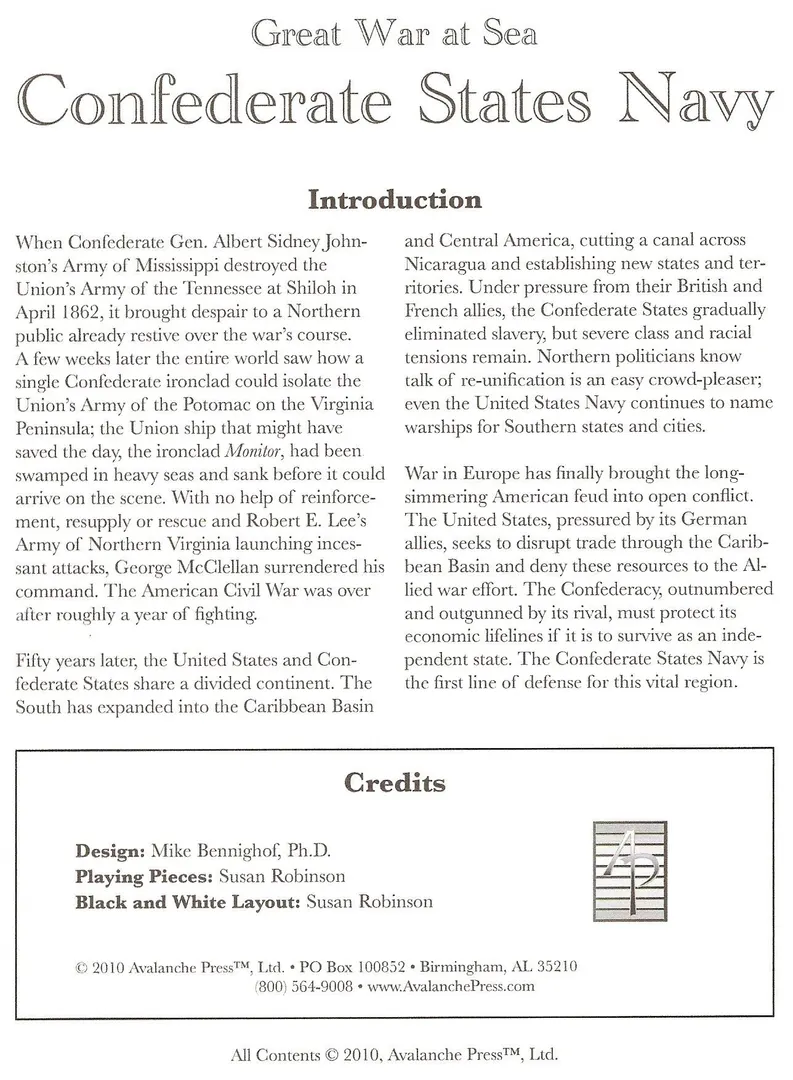
Great War at Sea: Confederate States Navy
- 1–2 players
- 30 min
- 2010
2006
Rules assistance for Great War at Sea: U.S. Navy Plan Gold
Plain-language explanations of turns, card effects and disputed situations, with official source references and saved question history.
For 1 player
What would you like to know?
Answers come from the official rulebook, with the page to check.
Great War at Sea: U.S. Navy Plan Gold is a board game released in 2006 for 1–2 players, 30 minutes per game, and ages 12 and up. It was designed by Michael Bennighof and Doug McNair and its main mechanics are Secret Unit Deployment, Hexagon Grid, and Simulation.


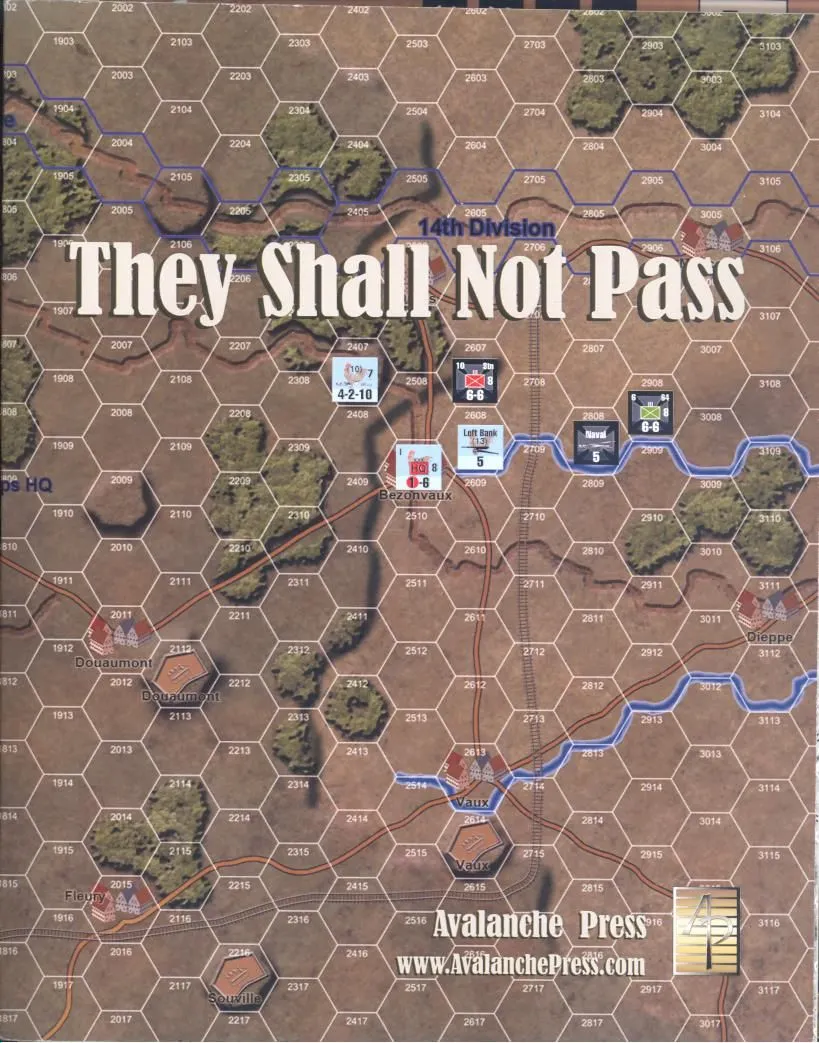

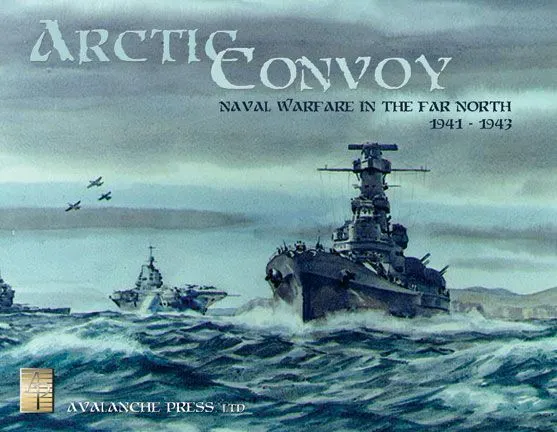
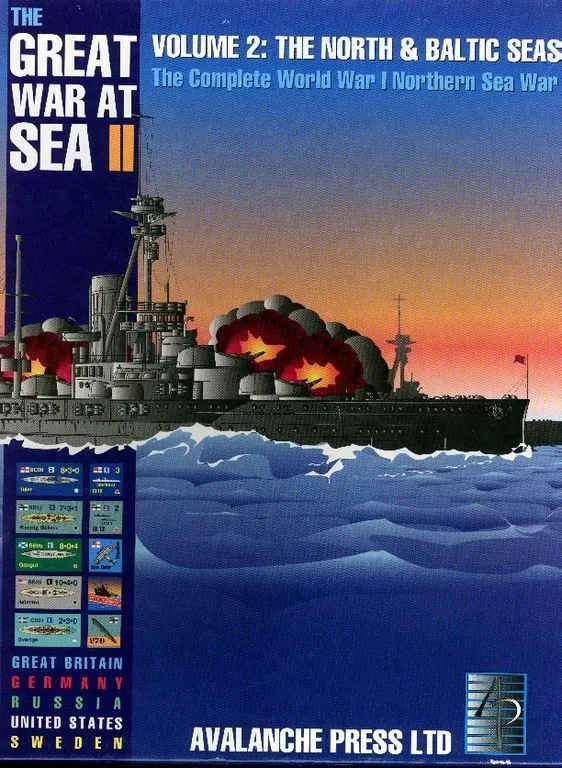



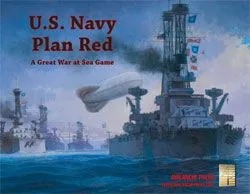
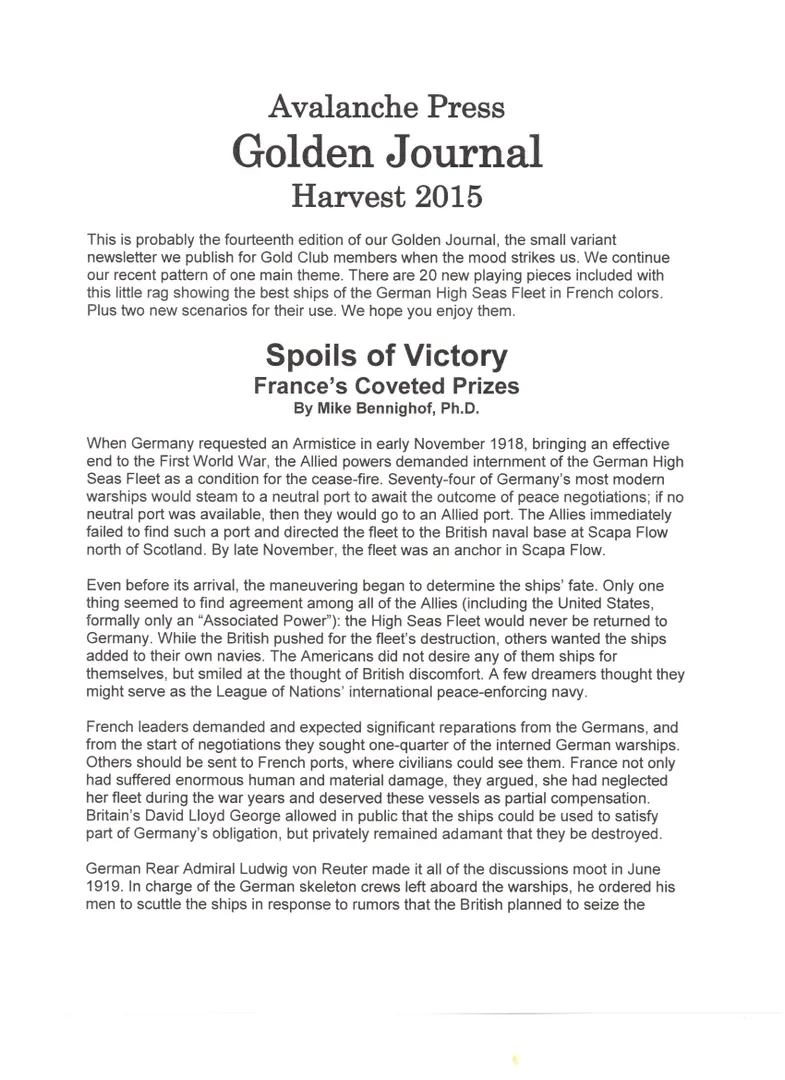
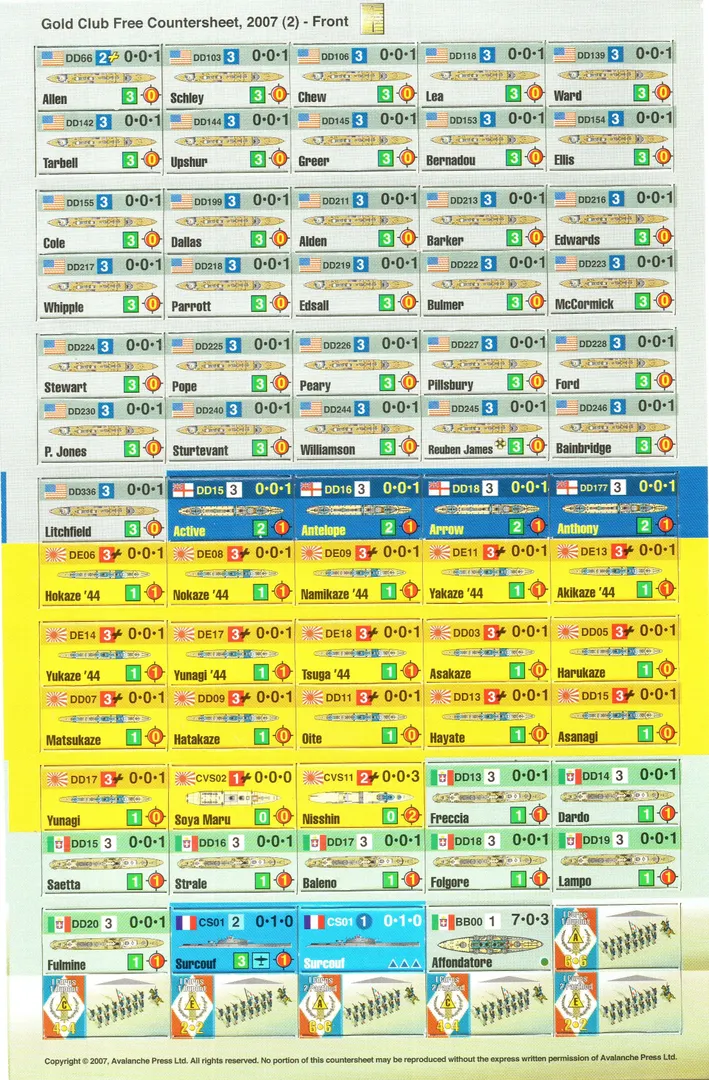
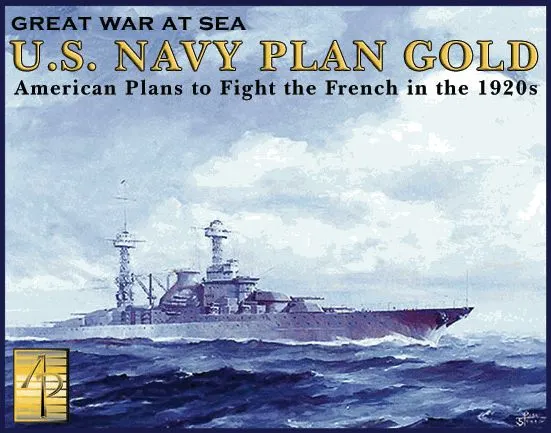
Great War at Sea series. From "Avalanche Press" Website: During the early decades of the Twentieth Century, the United States Navy made plans to fight a host of potential enemies. Some of these future wars seemed inevitable, particularly that with Japan. Others depended on changes in current politics, but Navy planners wanted to be prepared just in case. One of these plans, labeled “Gold,” studied a potential naval war with France. The United States had stood alongside its “oldest ally” during the First World War, but in the years immediately afterwards the Navy looked at the potential for radical politicians to change France from friend to foe. Also, the peace negotiations which followed the war revealed deep underlying tensions between the Americans and their European allies; some of the more paranoid came to believe the next war would be between Europe and America. U.S. Navy Plan Gold is based on these plans. American officers believed the seat of conflict would be the same as that of the undeclared naval war against France in the 1790s: the Caribbean Basin. U.S. Navy Plan Gold includes the ships projected by the Armee Navale but never built due to the Washington Naval Treaty: the large Gilles and Durand-Viel battle cruisers, Normandie and Lyon class battleships, and the very odd “croiseur de combat” battleship/carrier design. And of course the Americans receive a number of new ships, such as the “alternate Omaha” large scout cruiser design.
Great War at Sea: U.S. Navy Plan Gold supports 1–2 players according to the catalogue. This range comes from the publisher’s listed player count, so the game can be set up for any group size within it. Some setups, rules and scoring details may still vary by player count, so check your edition’s rulebook for the exact configuration.
The listed playing time for Great War at Sea: U.S. Navy Plan Gold is 30 minutes. This is the publisher’s estimate for a full game. The actual duration depends on the group, the player count and familiarity with the rules: first sessions usually run longer, while experienced groups often finish faster. Setup and teaching time are not included in this estimate.
The catalogue lists Great War at Sea: U.S. Navy Plan Gold for ages 12 and up. This is the publisher’s recommendation and reflects reading demands, rule complexity and small components rather than theme alone. Younger players can often join with help from an adult, so check the age guidance on your edition and consider your group’s experience with board games.
Great War at Sea: U.S. Navy Plan Gold has a complexity rating of 2.8 out of 5 from BoardGameGeek players, which makes it a medium-light game. The rating reflects how much rules knowledge, planning and decision-making a typical game demands. Expect a longer first teach for heavier games, and use a preparation guide before game night.
Great War at Sea: U.S. Navy Plan Gold belongs to these categories: Fighting, Wargame, and Nautical. Its main mechanics are Secret Unit Deployment, Hexagon Grid, and Simulation. Categories describe the theme and setting of a game, while mechanics describe what players actually do on their turns. Each mechanic links to a catalogue hub with similar games, which helps when you want something comparable.
The credited designers of Great War at Sea: U.S. Navy Plan Gold are: Michael Bennighof and Doug McNair. These credits come from the published game data and name the people responsible for the game’s design, not its illustrators or publishers. Designer pages on MeepleRules collect other titles by the same designers, which helps when you enjoy a game and want to find similar ones.
The catalogue lists Great War at Sea: U.S. Navy Plan Gold as a base game. It can be played on its own with the components in the box and does not require any other title. Expansions, if any exist, add new content or rules on top of it and are listed separately in the catalogue with a link back to this base game.