
- BGG rank
- BGG #24,139
- BGG rating
- 6.1
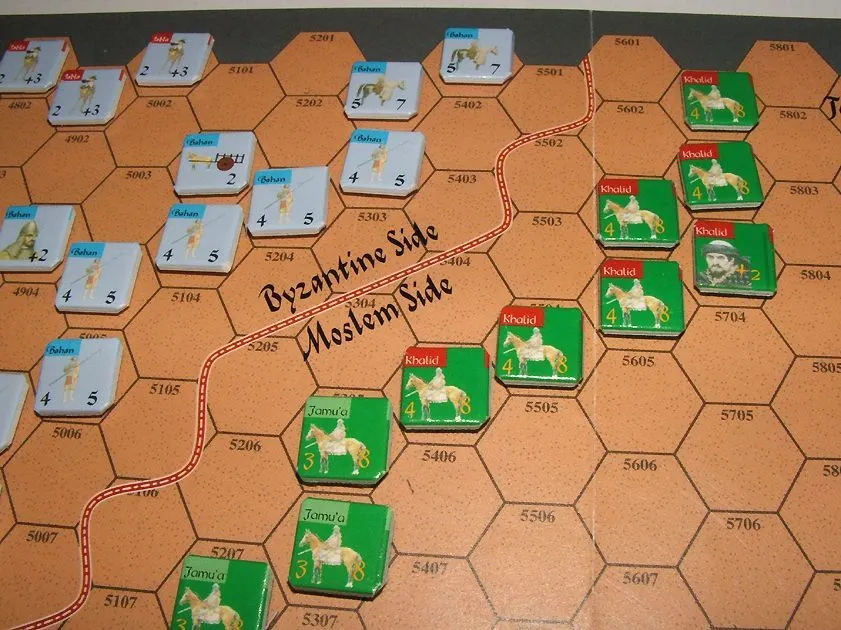
Yarmuk
- 2 players
- Complexity 2.6/5
- 1997
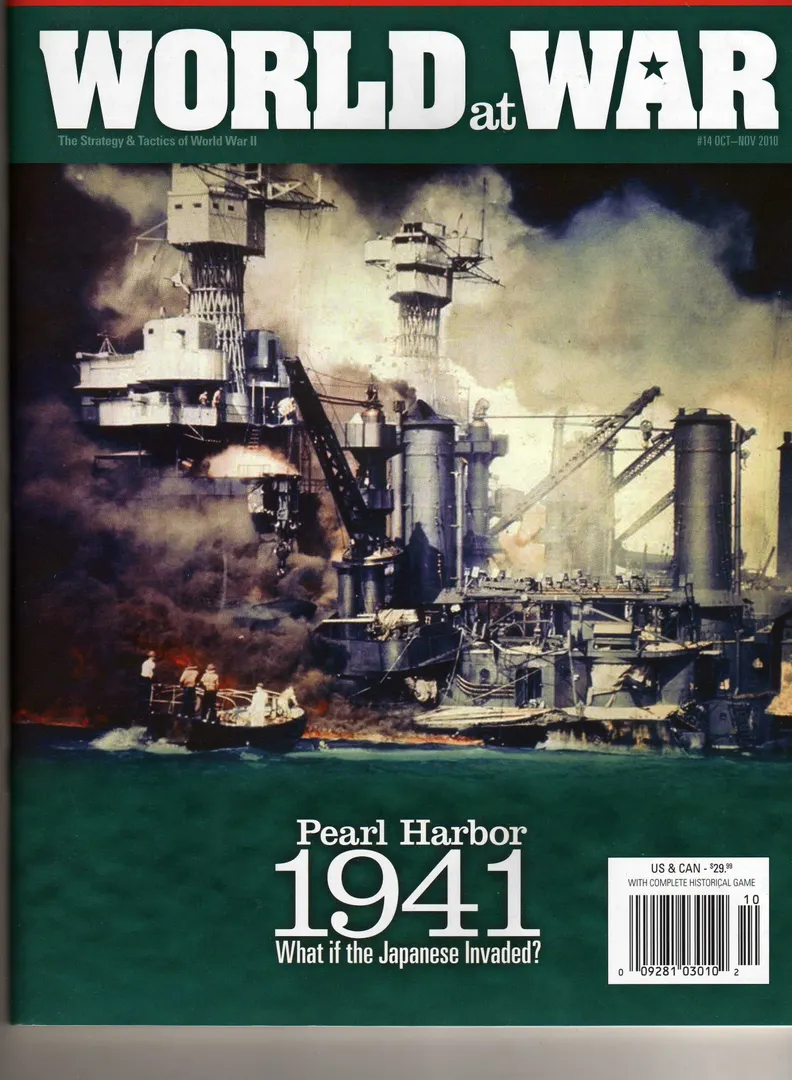
2010
Rules assistance for Invasion Pearl Harbor
Plain-language explanations of turns, card effects and disputed situations, with official source references and saved question history.
For 1 player
What would you like to know?
Answers come from the official rulebook, with the page to check.
Invasion Pearl Harbor is a board game released in 2010 for 1–2 players, 120 minutes per game, and ages 12 and up. It was designed by Adrian McGrath and Chris Smith and its main mechanics are Dice Rolling, Hexagon Grid, and Simulation.
What If the Japanese Invaded? (IPH). It’s a low-to-intermediate complexity, strategic/operational-level, alternative history wargame of the campaign that could've resulted had the Japanese decided to launch an amphibious invasion of Oahu at the same time as their historic air raid. The game is intended for two players, one commanding the Japanese and the other commanding the US forces. The game system is focused so as to present the ground-commanders’ views of the campaign. Aero-naval operations – though certainly important in play – are presented more abstractly than would be the case in a design centered on those aspects of the campaign. Each hex on the 34x22 large-hex map equals one mile (1.62 km) from side to opposite side. Each game turn represents about four hours of daylight or an entire night. Playing pieces (176 iconic counters) represent ground units of approximately company size, or individual aircraft carriers or battleships, or enough aircraft sorties (about two to three dozen) needed to affect battlefield events at this scale. The rules contain a little less than 11,000 words. Two experienced players can finish a match in less than four hours. The single counterfactual assumption underlying the game is Adm. Yamamoto decided to back the plan he scrapped historically in September 1941. That plan had called for an amphibious invasion, conducted by about two regiments, to land on Oahu at the same time as the air attacks were begun. The further supposition then is, the Japanese, once ashore, would’ve had no more than about three days in which to achieve their now more ambitious goal: either secure the whole island or at least fight their way across enough of it – while thoroughly wrecking facilities as they came to them – to ensure the American recovery would be delayed as long as possible. The three-day limit is due to the fact that, by the end of that period, the Japanese carrier strike group would had to have withdrawn and the ground force’s initial load of combat supply would be used up. Rules cover such things as: variable landing sites, rough surf, carrier interventions, combat ground support, interdiction, a Nisei uprising, Ford Island and Battleship Row, night combat, banzai attacks and much more. The turn sequence is as follows. I. Carrier Warfare Phase (only Game Turns 5 & 9) A. Ship Disposition Segment B. Carrier Combat Segment II. US Submarine Attack Phase (only Game Turns 5 through 11) III. Japanese Landing Phase IV. US Sub-Command Chit-Pull Phase* V. US Sub-Command Chit-Pull Phase* VI. US Sub-Command Chit-Pull Phase* VII. US Sub-Command Chit-Pull Phase* May be preceded or followed by the Japanese Movement or Combat Phase, to the limit of one of such Japanese phase being executed per game turn upon that player’s declarations of them. Magazine: World at War #14
Invasion Pearl Harbor supports 1–2 players according to the catalogue. This range comes from the publisher’s listed player count, so the game can be set up for any group size within it. Some setups, rules and scoring details may still vary by player count, so check your edition’s rulebook for the exact configuration.
The listed playing time for Invasion Pearl Harbor is 120 minutes. This is the publisher’s estimate for a full game. The actual duration depends on the group, the player count and familiarity with the rules: first sessions usually run longer, while experienced groups often finish faster. Setup and teaching time are not included in this estimate.
The catalogue lists Invasion Pearl Harbor for ages 12 and up. This is the publisher’s recommendation and reflects reading demands, rule complexity and small components rather than theme alone. Younger players can often join with help from an adult, so check the age guidance on your edition and consider your group’s experience with board games.
Invasion Pearl Harbor has a complexity rating of 2.3 out of 5 from BoardGameGeek players, which makes it a medium-light game. The rating reflects how much rules knowledge, planning and decision-making a typical game demands. Expect a longer first teach for heavier games, and use a preparation guide before game night.
Invasion Pearl Harbor belongs to these categories: Wargame and World War II. Its main mechanics are Dice Rolling, Hexagon Grid, and Simulation. Categories describe the theme and setting of a game, while mechanics describe what players actually do on their turns. Each mechanic links to a catalogue hub with similar games, which helps when you want something comparable.
The credited designers of Invasion Pearl Harbor are: Adrian McGrath and Chris Smith. These credits come from the published game data and name the people responsible for the game’s design, not its illustrators or publishers. Designer pages on MeepleRules collect other titles by the same designers, which helps when you enjoy a game and want to find similar ones.
The catalogue lists Invasion Pearl Harbor as a base game. It can be played on its own with the components in the box and does not require any other title. Expansions, if any exist, add new content or rules on top of it and are listed separately in the catalogue with a link back to this base game.