

- BGG rank
- BGG #3,630
- BGG rating
- 7.6
Tiny Epic Game of Thrones
- 1–4 players
- 45–60 min
- Complexity 3.4/5
- 2025
1998
Rules assistance for Joan of Arc
Plain-language explanations of turns, card effects and disputed situations, with official source references and saved question history.
For 3 players
What would you like to know?
Answers come from the official rulebook, with the page to check.
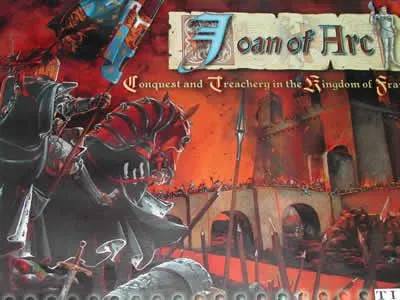
Joan of Arc is a board game released in 1998 for 3–6 players, 150 minutes per game, and ages 10 and up. It was designed by Pascal Bernard and its main mechanics are Hand Management, Take That, and Area Movement.
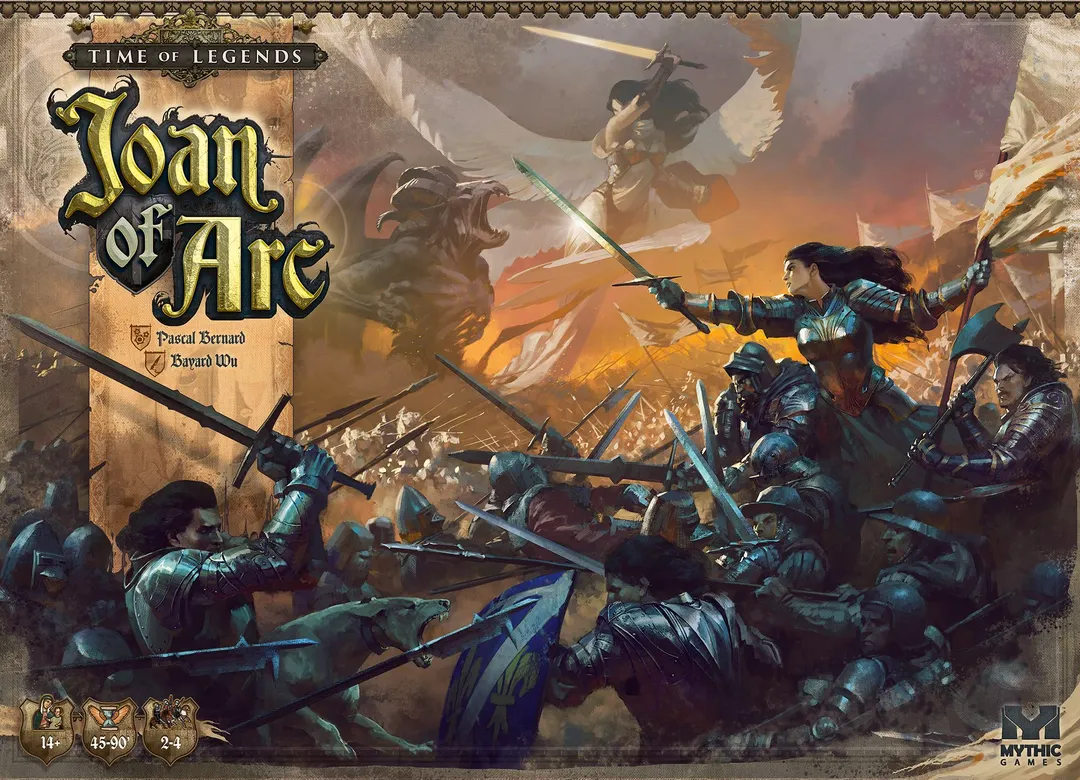


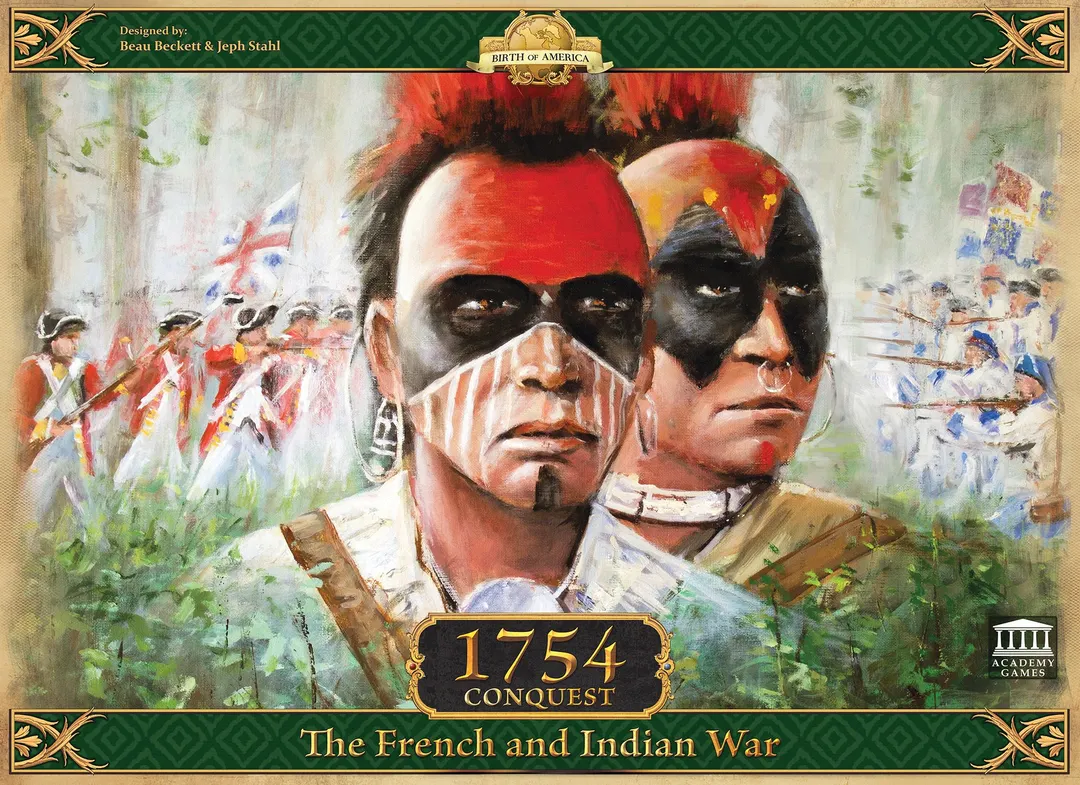
Joan of Arc, a game of "Conquest and Perfidy in the Kingdom of France", deals with the conflicts in France during the Hundred Years' War. It's a multiplayer wargame with a card-driven combat system and a political layer that players must contend with. For just over one hundred years England and France battled over who would sit on the French throne. Even within France itself factions developed, putting forth their own candidates challenging the rights of the Dauphin. From this struggle heroes emerged, notably the Black Prince and Jeanne d'Arc, The Maid of Orleans. Tremendous battles were fought at Crecy, Poitiers and Agincourt, yet their impact on the war was ephemeral. Long sieges followed short campaigns, bands of the notorious Free Companies, temporarily unemployed, marauded across the countryside in search of rapine and plunder. Complicating matters, both famine and plague poisoned the seasons. All in all, 'twas a grand time! The game randomly lasts from 8 to 10 turns. The winner is the player with the most Pretender Points. Points are gained at the end of each turn for each Province a player controls. Controlled cities gain revenue. Those can be spent on Battle Cards and fortification. Battles are resolved by playing Battle Cards (yellow(numerical) or red(special cards), combined with Influence, fortifications, and die roll. TURN SEQUENCE Income phase: based on controlled cities Political phase: vote for War or Peace Battle Cards collection Purchase fortifications and/or cards. Player Order phase Event(s) phase Foreign Intervention phase Player Turns: In player order, each player resolves: 1-Expansion moves 2-Combat only if 2+ Yellow cards; Resolve battle, then repeat combat if needed. Pretender Points: Players gain points (depending on regions they control), then Influence points (up to 6), then discard all cards. GAME END: check on turn 8 and 9, automatic on 10 Components: 1 mounted game board 80 cards (a la Tarot) 20 resin cast castles and 10 resin cast strongholds die-cut coin markers and garrisons representing the factions of France, England, Navarre, Brittany, Flanders and Burgandy. Sequel Renaissance
Joan of Arc supports 3–6 players according to the catalogue. This range comes from the publisher’s listed player count, so the game can be set up for any group size within it. Some setups, rules and scoring details may still vary by player count, so check your edition’s rulebook for the exact configuration.
The listed playing time for Joan of Arc is 150 minutes. This is the publisher’s estimate for a full game. The actual duration depends on the group, the player count and familiarity with the rules: first sessions usually run longer, while experienced groups often finish faster. Setup and teaching time are not included in this estimate.
The catalogue lists Joan of Arc for ages 10 and up. This is the publisher’s recommendation and reflects reading demands, rule complexity and small components rather than theme alone. Younger players can often join with help from an adult, so check the age guidance on your edition and consider your group’s experience with board games.
Joan of Arc has a complexity rating of 2.5 out of 5 from BoardGameGeek players, which makes it a medium-light game. The rating reflects how much rules knowledge, planning and decision-making a typical game demands. Expect a longer first teach for heavier games, and use a preparation guide before game night.
Joan of Arc belongs to these categories: Card Game, Wargame, and Medieval. Its main mechanics are Hand Management, Take That, and Area Movement. Categories describe the theme and setting of a game, while mechanics describe what players actually do on their turns. Each mechanic links to a catalogue hub with similar games, which helps when you want something comparable.
The credited designers of Joan of Arc are: Pascal Bernard. These credits come from the published game data and name the people responsible for the game’s design, not its illustrators or publishers. Designer pages on MeepleRules collect other titles by the same designers, which helps when you enjoy a game and want to find similar ones.
The catalogue lists Joan of Arc as a base game. It can be played on its own with the components in the box and does not require any other title. Expansions, if any exist, add new content or rules on top of it and are listed separately in the catalogue with a link back to this base game.