
- BGG rank
- BGG #7,861
- BGG rating
- 7.8
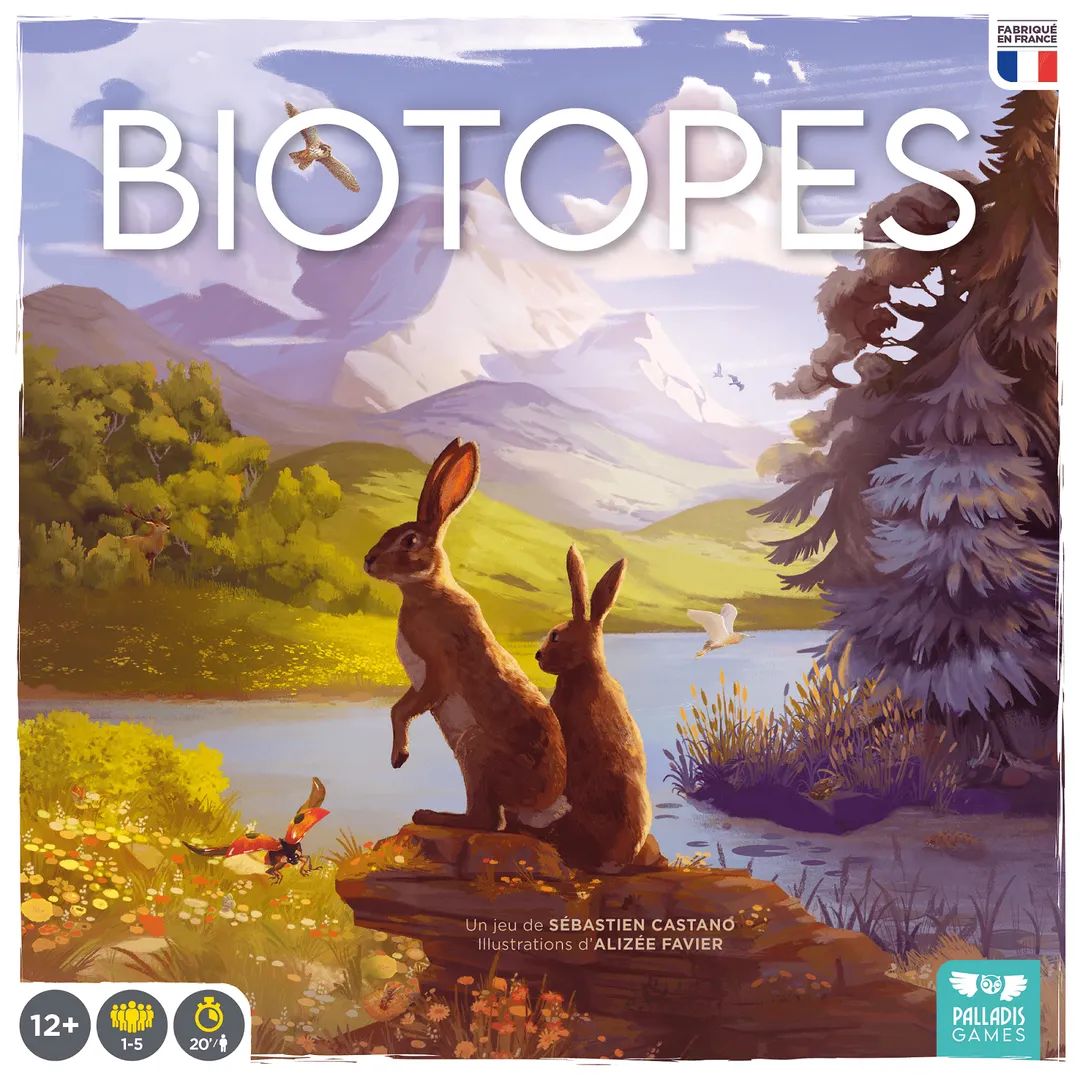
Biotopes
- 1–5 players
- 45–90 min
- Complexity 3.1/5
- 2023
2027
Rules assistance for Microlonies
Plain-language explanations of turns, card effects and disputed situations, with official source references and saved question history.
For 1 player
What would you like to know?
Answers come from the official rulebook, with the page to check.
Microlonies is a board game released in 2027 for 1–4 players, 45–120 minutes per game, and ages 14 and up. It was designed by Franz Couderc and Sébastien Castano and its main mechanics are End Game Bonuses, Solo / Solitaire Game, and Zone of Control.

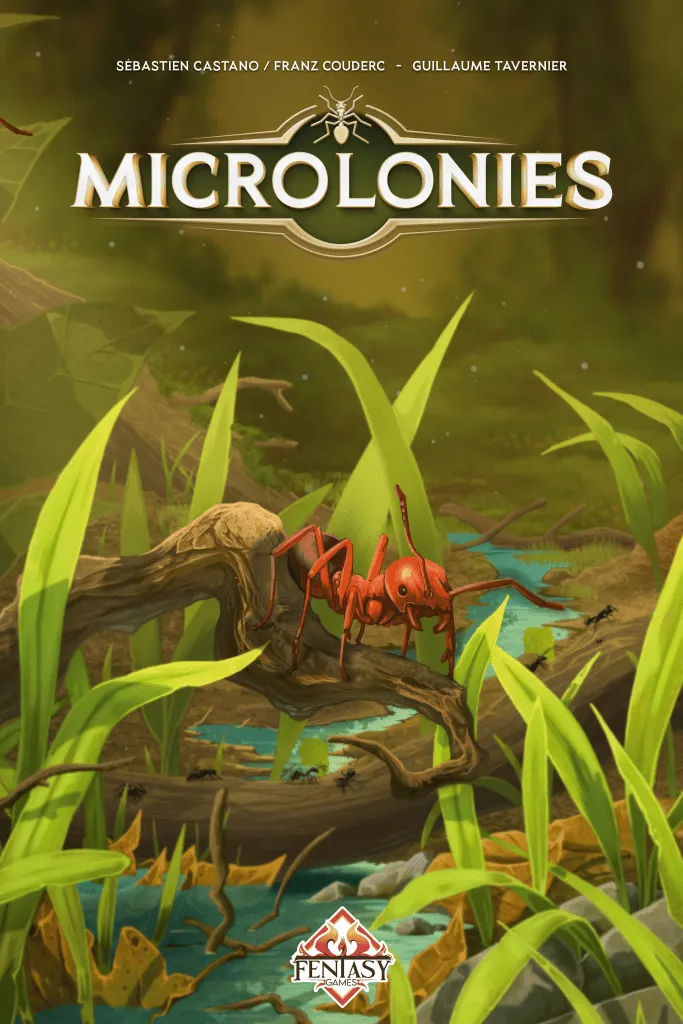
Microlonies is an asymmetric strategy game in which each player controls a unique ant species, striving to ensure the survival and dominance of its colony. The game is played on a modular map representing the insect micro-world: hunting grounds, strategic areas, environmental bonuses, and a highly contested central termite mound. Each player begins with their own anthill, the core from which their colony expands. The game features 16 ant species, all fully asymmetric, each with its own rules, strengths, limitations, and playstyle. Mastering your species while understanding the behavior and threats of others is key to success. Throughout the game, players will: Deploy ants to claim hunting zones Take advantage of environmental bonuses Complete species-specific objectives Adapt to the presence and pressure of rival colonies The central termite mound can become a powerful strategic asset, granting significant advantages, but it comes with a critical responsibility: feeding your population. Overexpansion or poor planning may lead to starvation and collapse. In Microlonies, every choice matters. Growth, area control, direct interaction, and resource management are tightly interwoven in a demanding game where only the most adaptive colony will prevail. —description from the publisher Microlonies est un jeu de stratégie asymétrique dans lequel chaque joueur incarne une espèce de fourmis cherchant à assurer la survie et la domination de sa colonie. Le plateau est constitué d’une carte modulaire représentant le micro-monde des insectes : zones de chasse, emplacements stratégiques, bonus environnementaux et une termitière centrale convoitée. Chaque joueur commence avec sa propre fourmilière, point d’origine de son expansion. Le jeu propose 16 espèces de fourmis, toutes entièrement asymétriques, chacune disposant de règles spécifiques, de forces uniques et de contraintes propres. Maîtriser son espèce tout en comprenant celles des autres est essentiel pour survivre dans cet écosystème hostile. Au fil de la partie, les joueurs doivent : Déployer leurs fourmis sur la carte pour prendre position dans les zones de chasse Exploiter les bonus offerts par l’environnement Accomplir des objectifs propres à leur espèce Observer et anticiper les actions des colonies adverses La termitière centrale peut devenir un levier stratégique majeur, offrant des avantages puissants, mais elle impose une contrainte constante : nourrir sa population. Une expansion trop rapide ou mal maîtrisée peut conduire à l’effondrement de la colonie. Dans Microlonies, chaque décision compte. Croissance, contrôle territorial, interaction directe et gestion des ressources s’entremêlent dans un jeu exigeant où seule la colonie la plus adaptée survivra. —description from the publisher (French)
Microlonies supports 1–4 players according to the catalogue. This range comes from the publisher’s listed player count, so the game can be set up for any group size within it. Some setups, rules and scoring details may still vary by player count, so check your edition’s rulebook for the exact configuration.
The listed playing time for Microlonies is 45–120 minutes. This is the publisher’s estimate for a full game. The actual duration depends on the group, the player count and familiarity with the rules: first sessions usually run longer, while experienced groups often finish faster. Setup and teaching time are not included in this estimate.
The catalogue lists Microlonies for ages 14 and up. This is the publisher’s recommendation and reflects reading demands, rule complexity and small components rather than theme alone. Younger players can often join with help from an adult, so check the age guidance on your edition and consider your group’s experience with board games.
Microlonies has a complexity rating of 3.0 out of 5 from BoardGameGeek players, which makes it a medium-weight game. The rating reflects how much rules knowledge, planning and decision-making a typical game demands. Expect a longer first teach for heavier games, and use a preparation guide before game night.
Microlonies belongs to these categories: Animals and Environmental. Its main mechanics are End Game Bonuses, Solo / Solitaire Game, and Zone of Control. Categories describe the theme and setting of a game, while mechanics describe what players actually do on their turns. Each mechanic links to a catalogue hub with similar games, which helps when you want something comparable.
The credited designers of Microlonies are: Franz Couderc and Sébastien Castano. These credits come from the published game data and name the people responsible for the game’s design, not its illustrators or publishers. Designer pages on MeepleRules collect other titles by the same designers, which helps when you enjoy a game and want to find similar ones.
The catalogue lists Microlonies as a base game. It can be played on its own with the components in the box and does not require any other title. Expansions, if any exist, add new content or rules on top of it and are listed separately in the catalogue with a link back to this base game.