
- BGG rank
- BGG #6,661
- BGG rating
- 6.7
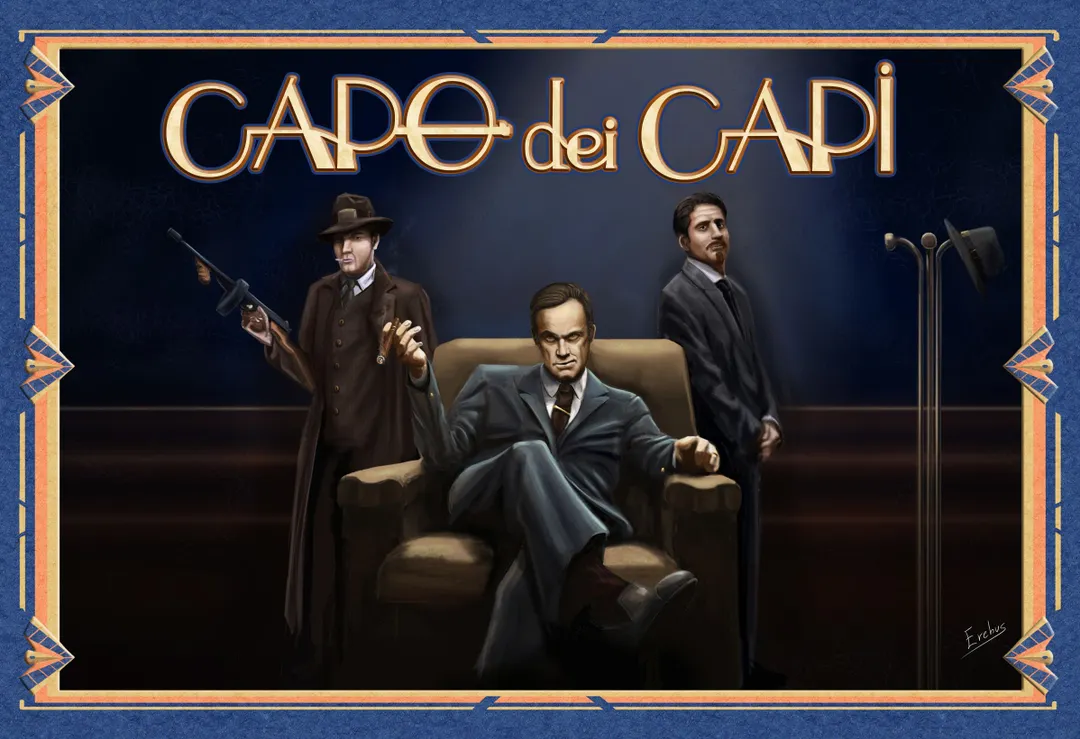
Capo dei Capi
- 2 players
- 20 min
- Complexity 1.6/5
- 2013
2022
Rules assistance for MOB: Big Apple
Plain-language explanations of turns, card effects and disputed situations, with official source references and saved question history.
For 2 players
What would you like to know?
Answers come from the official rulebook, with the page to check.
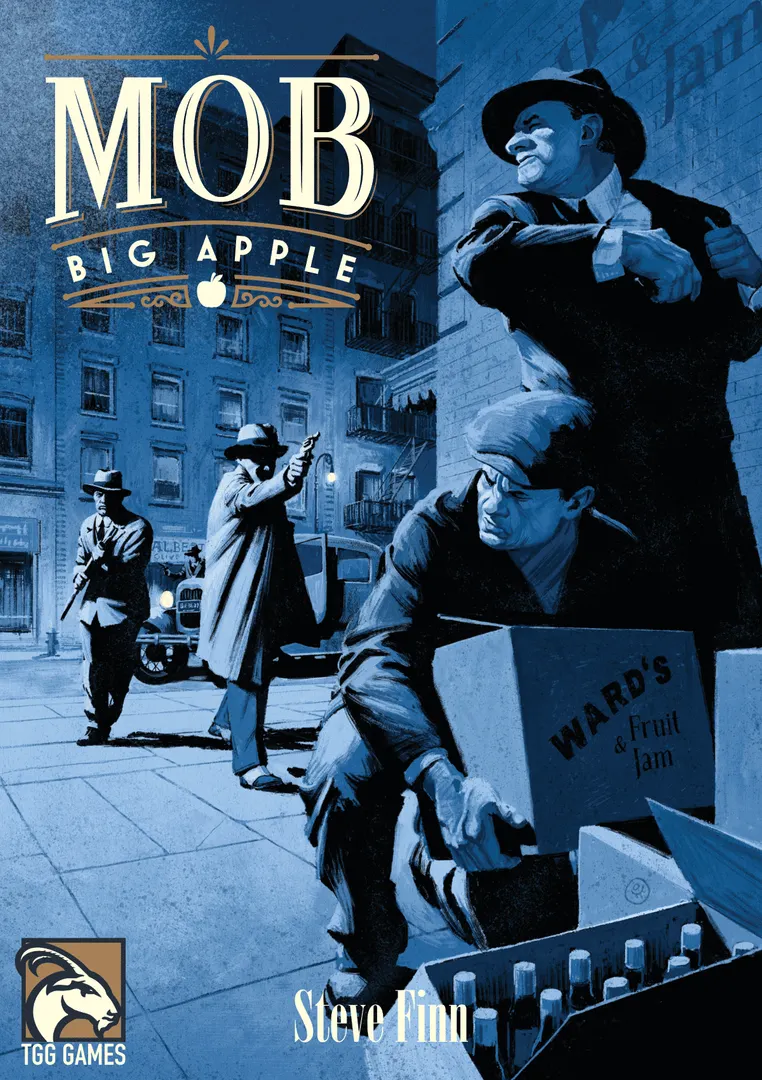
MOB: Big Apple is a board game released in 2022 for 2 players, 30–45 minutes per game, and ages 14 and up. It was designed by Steve Finn and its main mechanics are Area Majority / Influence, Worker Placement, and Different Dice Movement.





New York City, 1926: Two crime families battle for territory to extort local businesses and control backdoor distribution of spirits during Prohibition. Each family fights dirty, doing all they can to seize ownership of alcohol crates, even if that means sending rivals to sleep with the fishes. You are the "Capodecina" for one of these families. Command your henchmen to gain the upper hand in New York City by collecting crates, eliminating rivals, exposing moles, and tipping off the DA on your opponent. Do you have what it takes for your family to become Capo dei Capi? Each round in MOB: Big Apple, players take turns rolling two dice, then decide how to execute the results. Each roll allows players to allocate henchmen to the two game boards and perform various dastardly tasks, such as loading cars with henchmen to drive to locations, loading crates of contraband, revealing their rival's moles, and eluding the District Attorney. In more detail, six key locations of New York City are contested each round, with half being represented by a black die and half by a white die. You roll one of each die on a turn, and the die values denote which locations may be interacted with, and how many henchmen may travel to that specific location, with the white die serving as the location and the black die the number of henchmen or vice versa. During every turn, a player must send at least one henchmen to perform a specific task on the action board, which can help command cars, expose moles, move crates, and influence the District Attorney to move in on their rival’s family. Once both players have allocated all of their henchmen, the round ends, then a battle takes place at each location, with the survivors remaining to guard the contraband. After the third and final round, whichever Capodecina owns the most crates of contraband gains control of the Big Apple!
MOB: Big Apple supports 2 players according to the catalogue. This is the publisher’s listed player count, so the game is designed for exactly that number of participants. Variants for other group sizes, if any, are described in the rulebook of your edition, so check it before setting up a different configuration.
The listed playing time for MOB: Big Apple is 30–45 minutes. This is the publisher’s estimate for a full game. The actual duration depends on the group, the player count and familiarity with the rules: first sessions usually run longer, while experienced groups often finish faster. Setup and teaching time are not included in this estimate.
The catalogue lists MOB: Big Apple for ages 14 and up. This is the publisher’s recommendation and reflects reading demands, rule complexity and small components rather than theme alone. Younger players can often join with help from an adult, so check the age guidance on your edition and consider your group’s experience with board games.
MOB: Big Apple has a complexity rating of 2.1 out of 5 from BoardGameGeek players, which makes it a medium-light game. The rating reflects how much rules knowledge, planning and decision-making a typical game demands. Expect a longer first teach for heavier games, and use a preparation guide before game night.
MOB: Big Apple belongs to these categories: Mafia. Its main mechanics are Area Majority / Influence, Worker Placement, and Different Dice Movement. Categories describe the theme and setting of a game, while mechanics describe what players actually do on their turns. Each mechanic links to a catalogue hub with similar games, which helps when you want something comparable.
The credited designers of MOB: Big Apple are: Steve Finn. These credits come from the published game data and name the people responsible for the game’s design, not its illustrators or publishers. Designer pages on MeepleRules collect other titles by the same designers, which helps when you enjoy a game and want to find similar ones.
The catalogue lists MOB: Big Apple as a base game. It can be played on its own with the components in the box and does not require any other title. Expansions, if any exist, add new content or rules on top of it and are listed separately in the catalogue with a link back to this base game.