
- BGG rank
- BGG #1,934
- BGG rating
- 7.3
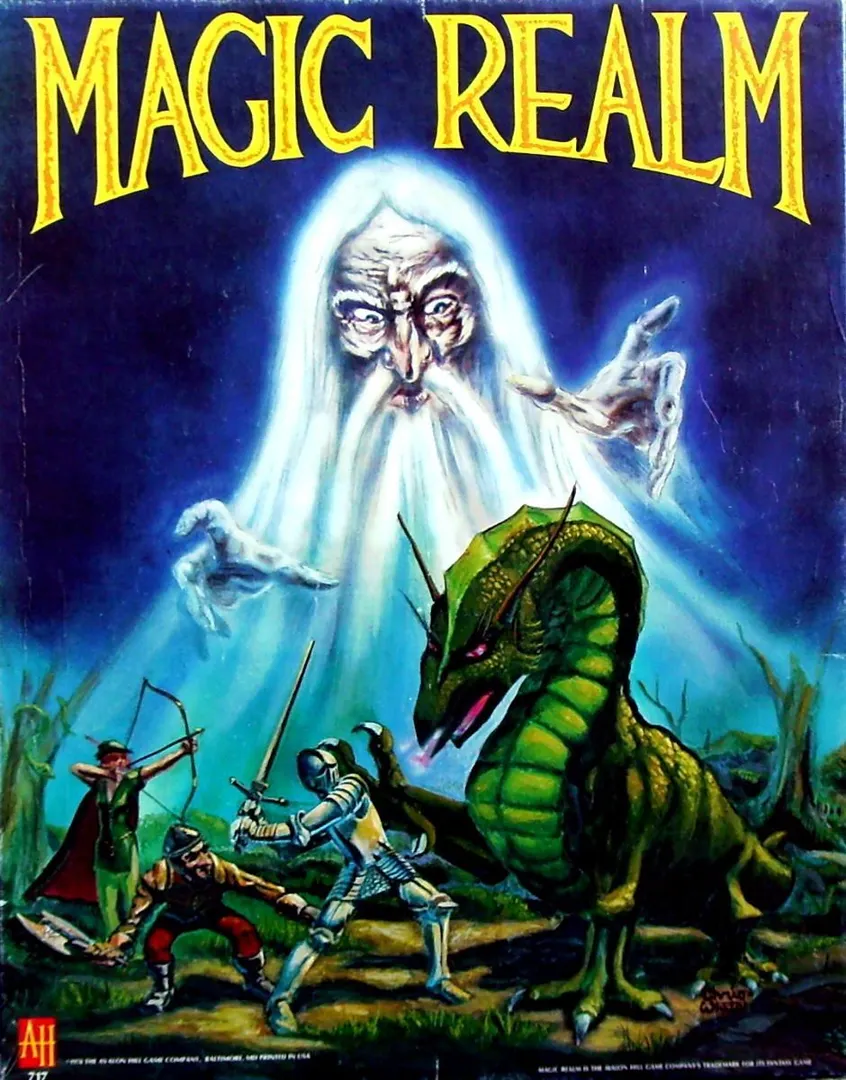
Magic Realm
- 1–16 players
- 60–240 min
- Complexity 4.6/5
- 1979
2019
Rules assistance for Mountaineers
Plain-language explanations of turns, card effects and disputed situations, with official source references and saved question history.
What would you like to know?
Answers come from the official rulebook, with the page to check.
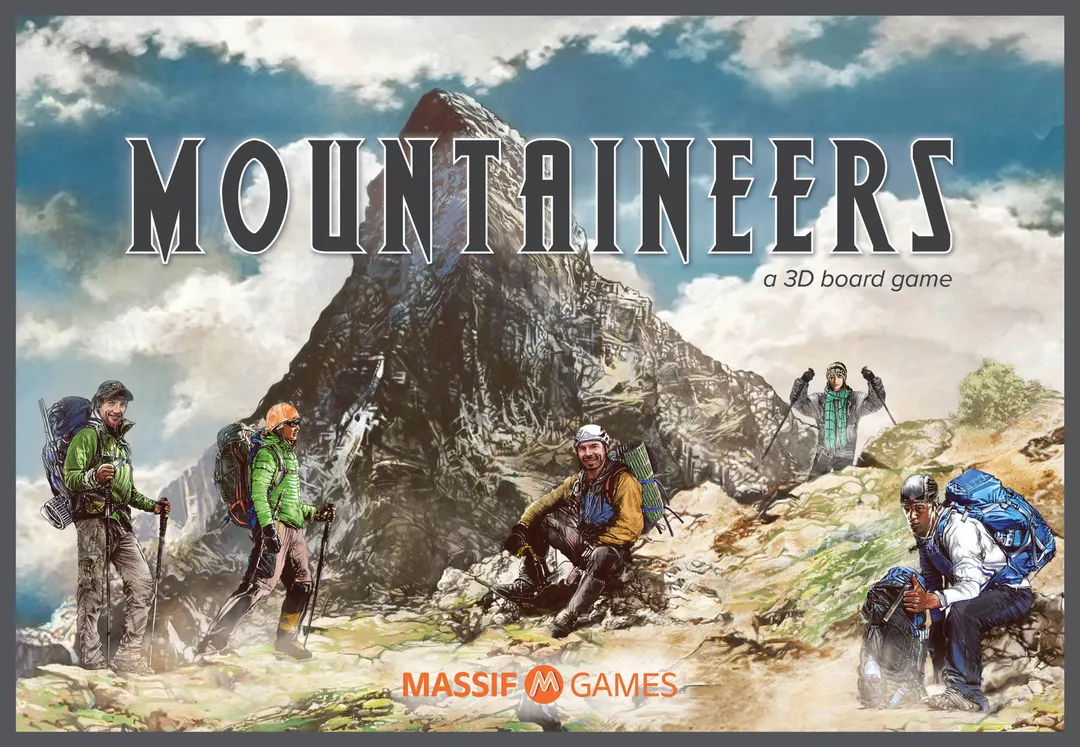
Mountaineers is a board game released in 2019 for 1–4 players, 30–120 minutes per game, and ages 14 and up. It was designed by Corey Wright and its main mechanics are Variable Player Powers, Point to Point Movement, and Area Majority / Influence.

Mountaineers is a strategic board game in which 1-4 players (up to 6 with the Deluxe or Collector's edition) compete against each other and AI climbers to earn climbing points (victory points) as they maneuver around a 18 in./45 cm tall rotating 3D modular game board. The theme of Mountaineers is lighthearted and fun, primarily focused on competitive route finding, resource management, character building and upgrades, while challenging players to react to various exciting (and sometimes comical) events that occur on the mountain. Strategy during both set-up and game play is important. At the beginning of a game, players need to choose four climbing routes, one character, and a starting position that work well together, in order to earn the maximum amount of points possible. However, as the game progresses, the mountain terrains fill up, making it more difficult to complete certain climbing routes. Additionally, various mountain conditions change (once per player), and event cards (drawn on each turn) require players to adapt their strategy, change their climbing routes, and purchase various combinations of gear upgrades to continue climbing. Resource management is important as players start with a limited number of thirty route markers and will on average draw only sixty supply tokens during a game. Depending on the game and the various difficulty of event cards used, players have to balance how often they spend supplies and route markers in order to climb efficiently and complete routes. Climbing strategy is also important. Players must be careful in what order they complete routes, how they maneuver on the mountain, and whether or not they pay extra to "lock in" certain route markers to avoid sabotage by other players. A typical turn involves drawing an event card, resolving the conditions of the event card (which may apply to other players), saving the event card for later use with your character, performing 0 to 2 regular actions, 0 to 1 special actions (if available), and special character actions (as allowed). Games with 1 to 4 players last ten rounds, each player drawing a total of ten event cards, and 5 to 6 player games last for eight rounds (with eight event cards/player). For 1 to 2 player games (and more challenging 3 to 5 player games), an "AI" mechanism can cause "automated climbers" to move around the mountain, placing route markers and blocking/sabotaging players. Players can also substitute more difficult event cards into the game, creating more flavor and challenge. The goal of a 2-6 player game is to have the most victory points at game end, and the goal of a one-player game is to have 55 victory points and four climbing routes complete at game's end. ••• While Mountaineers has a similar 3D appearance to its predecessor The Mountaineer, it is a vastly different game. For example, The Mountaineer was a roll-and-move game that required resource trading between players and had a large luck element. On the other hand, Mountaineers offers freedom and interesting choices to players every turn as players can choose when and how much to climb, and are not restricted by a luck element. Additionally, Mountaineers allows players to "lock" their routes, and provides mechanisms for advanced climbing techniques.
Mountaineers supports 1–4 players according to the catalogue. This range comes from the publisher’s listed player count, so the game can be set up for any group size within it. Some setups, rules and scoring details may still vary by player count, so check your edition’s rulebook for the exact configuration.
The listed playing time for Mountaineers is 30–120 minutes. This is the publisher’s estimate for a full game. The actual duration depends on the group, the player count and familiarity with the rules: first sessions usually run longer, while experienced groups often finish faster. Setup and teaching time are not included in this estimate.
The catalogue lists Mountaineers for ages 14 and up. This is the publisher’s recommendation and reflects reading demands, rule complexity and small components rather than theme alone. Younger players can often join with help from an adult, so check the age guidance on your edition and consider your group’s experience with board games.
Mountaineers has a complexity rating of 2.3 out of 5 from BoardGameGeek players, which makes it a medium-light game. The rating reflects how much rules knowledge, planning and decision-making a typical game demands. Expect a longer first teach for heavier games, and use a preparation guide before game night.
Mountaineers belongs to these categories: Exploration and Adventure. Its main mechanics are Variable Player Powers, Point to Point Movement, and Area Majority / Influence. Categories describe the theme and setting of a game, while mechanics describe what players actually do on their turns. Each mechanic links to a catalogue hub with similar games, which helps when you want something comparable.
The credited designers of Mountaineers are: Corey Wright. These credits come from the published game data and name the people responsible for the game’s design, not its illustrators or publishers. Designer pages on MeepleRules collect other titles by the same designers, which helps when you enjoy a game and want to find similar ones.
The catalogue lists Mountaineers as a base game. It can be played on its own with the components in the box and does not require any other title. Expansions, if any exist, add new content or rules on top of it and are listed separately in the catalogue with a link back to this base game.