
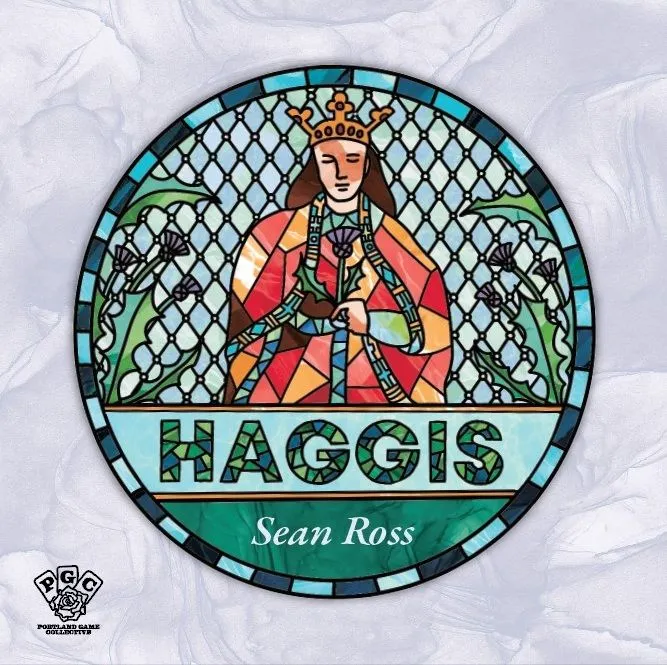
- BGG rank
- BGG #1,253
- BGG rating
- 7.0
Haggis
- 2–4 players
- 45 min
- Complexity 2.1/5
- 2010
1745
Rules assistance for Mus
Plain-language explanations of turns, card effects and disputed situations, with official source references and saved question history.
For 4 players
What would you like to know?
Answers come from the official rulebook, with the page to check.
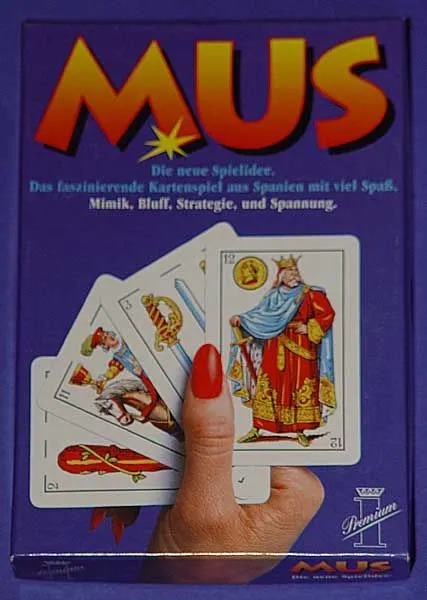
Mus is a board game released in 1745 for 4 players, 10 minutes per game, and ages 7 and up. Its main mechanics are Team-Based Game and Betting and Bluffing.
This is a Spanish card game born in Basque Country. The first reference about this game goes back to 1745, when Don Manuel de Larramendi, philologist and Jesuit basque, quoted it in the trilingual dictionary (Basque-Spanish-Latin). It is played by two opposing pairs of players with the Spanish deck, which is a deck of 40 cards without eights or nines and no jokers. Usually all 4 "3" cards count as kings and all four "2" cards count as aces. It has a variety of different rules in the different regions of Spain. In every round of the game Mus (discard) is either agreed or stopped. Then, four bets are made on the same hand of cards: * Grande (Biggest): playing for the highest combination of cards; handiak (big ones) in Basque. * Pequeña or Chica (Smallest): playing for the lowest combination of cards. * Pares (Pairs): playing for the best matching card combination; pareak in Basque. * Juego (Game): playing for cards total values of 31 or more. Sometimes replaced by a Punto (Point) special round; jokua in Basque. At last, accepted bets and passes are counted until one of the pairs of players reaches the previously agreed amount (different standards in different regions of Spain, but most commonly 30). The pair of players winning most out of three games wins a vaca (which means cow in spanish), and the pair winning most out of three vacas win the match. One other special feature of Mus is that it is a mostly verbal game, with little card-involving action, limited to deal and discard (if any). After cards are dealt and Mus (discard) is stopped, all rounds are played verbally, bets are called, passed, accepted or rejected but cards are not shown, dealt or touched in any further way, and the player only is obliged to show them in the end of the round if needed in order to resolve any accepted bet. This makes it a poor card game to watch other people play, and learning to play it through only watching is rather difficult in comparison with other card games.
Mus supports 4 players according to the catalogue. This is the publisher’s listed player count, so the game is designed for exactly that number of participants. Variants for other group sizes, if any, are described in the rulebook of your edition, so check it before setting up a different configuration.
The listed playing time for Mus is 10 minutes. This is the publisher’s estimate for a full game. The actual duration depends on the group, the player count and familiarity with the rules: first sessions usually run longer, while experienced groups often finish faster. Setup and teaching time are not included in this estimate.
The catalogue lists Mus for ages 7 and up. This is the publisher’s recommendation and reflects reading demands, rule complexity and small components rather than theme alone. Younger players can often join with help from an adult, so check the age guidance on your edition and consider your group’s experience with board games.
Mus has a complexity rating of 2.3 out of 5 from BoardGameGeek players, which makes it a medium-light game. The rating reflects how much rules knowledge, planning and decision-making a typical game demands. Expect a longer first teach for heavier games, and use a preparation guide before game night.
Mus belongs to these categories: Card Game. Its main mechanics are Team-Based Game and Betting and Bluffing. Categories describe the theme and setting of a game, while mechanics describe what players actually do on their turns. Each mechanic links to a catalogue hub with similar games, which helps when you want something comparable.
The catalogue lists Mus as a base game. It can be played on its own with the components in the box and does not require any other title. Expansions, if any exist, add new content or rules on top of it and are listed separately in the catalogue with a link back to this base game.