
- BGG rank
- BGG #7,568
- BGG rating
- 7.7
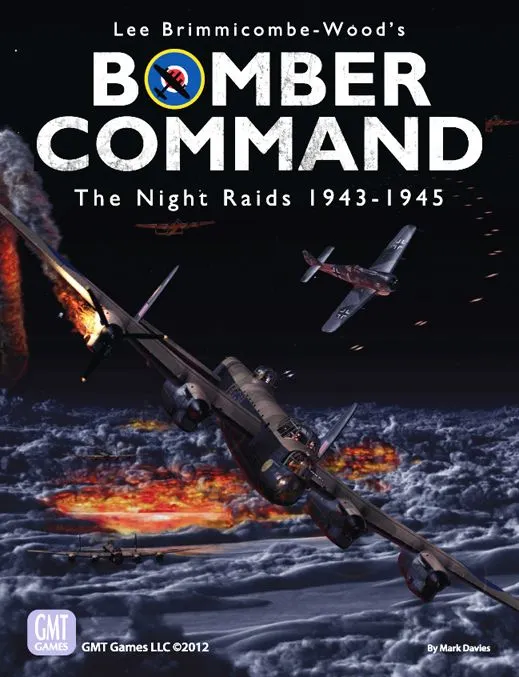
Bomber Command: The Night Raids
- 2 players
- 120 min
- Complexity 3.0/5
- 2012
2011
Rules assistance for Nightfighter: Air Warfare in the Night Skies of World War Two
Plain-language explanations of turns, card effects and disputed situations, with official source references and saved question history.
For 1 player
What would you like to know?
Answers come from the official rulebook, with the page to check.
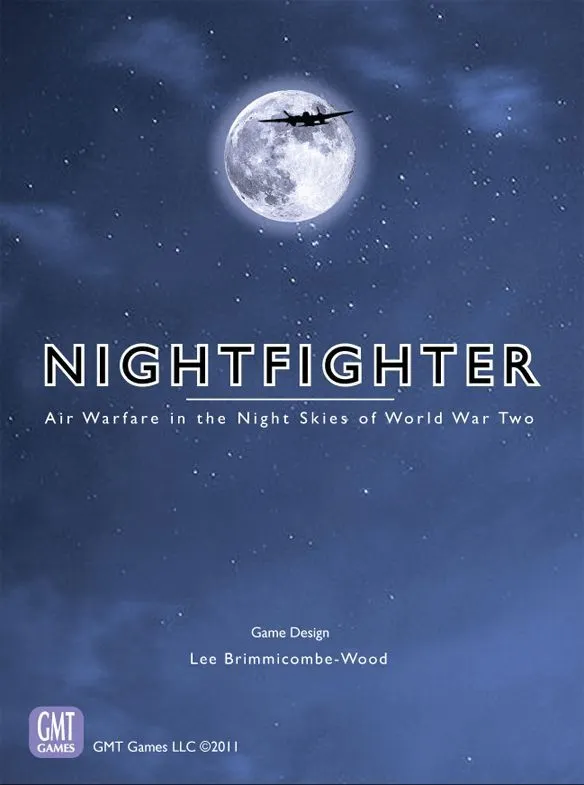
Nightfighter: Air Warfare in the Night Skies of World War Two is a board game released in 2011 for 1–2 players and 60 minutes per game. It was designed by Lee Brimmicombe-Wood and its main mechanics are Dice Rolling, Secret Unit Deployment, and Hexagon Grid.




from GMT website: Nightfighter is a board game of air warfare in the night skies of WWII. Using a blind play system, an umpire controls the attacking forces while the defending player must find, fix, and destroy the incoming bombers. Nightfighter recreates the tactics of night fighting, from the cat's eye intercepts of the London night blitz to the Mosquito intruder operations at the climax of the war. More than forty scenarios describe the development of nightfighting aircraft and technology. Rules cover radar-guided interception, searchlights, airborne radar and electronic countermeasures. Specials weapons such as Schr„ge Musik are featured. Tactics such as Wild Boar and Tame Boar (Wilde Sau and Zahme Sau) receive their own scenarios. Nightfighter features more than fifty fighter and bomber variants, from early Blenheim and Ju88 interceptors to advanced fighters such as the Mosquito and He219. Pacific operations see F4U-2s and P-61A Black Widow fighters engaging Japanese bomber threats. Rarities such as the Ta154, Me262B-1a and the Japanese J1N1 Gekko are included. Fast-playing, with scenarios that can be completed in 30-45 minutes, Nightfighter provides a new view of the night hunters of the sky. DESIGNER: Lee Brimmicombe-Wood MAP & COUNTER ART: Lee Brimmicombe-Wood AIRCRAFT ART: Ian Wedge
Nightfighter: Air Warfare in the Night Skies of World War Two supports 1–2 players according to the catalogue. This range comes from the publisher’s listed player count, so the game can be set up for any group size within it. Some setups, rules and scoring details may still vary by player count, so check your edition’s rulebook for the exact configuration.
The listed playing time for Nightfighter: Air Warfare in the Night Skies of World War Two is 60 minutes. This is the publisher’s estimate for a full game. The actual duration depends on the group, the player count and familiarity with the rules: first sessions usually run longer, while experienced groups often finish faster. Setup and teaching time are not included in this estimate.
Nightfighter: Air Warfare in the Night Skies of World War Two has a complexity rating of 2.6 out of 5 from BoardGameGeek players, which makes it a medium-light game. The rating reflects how much rules knowledge, planning and decision-making a typical game demands. Expect a longer first teach for heavier games, and use a preparation guide before game night.
Nightfighter: Air Warfare in the Night Skies of World War Two belongs to these categories: Wargame, World War II, and Aviation / Flight. Its main mechanics are Dice Rolling, Secret Unit Deployment, and Hexagon Grid. Categories describe the theme and setting of a game, while mechanics describe what players actually do on their turns. Each mechanic links to a catalogue hub with similar games, which helps when you want something comparable.
The credited designers of Nightfighter: Air Warfare in the Night Skies of World War Two are: Lee Brimmicombe-Wood. These credits come from the published game data and name the people responsible for the game’s design, not its illustrators or publishers. Designer pages on MeepleRules collect other titles by the same designers, which helps when you enjoy a game and want to find similar ones.
The catalogue lists Nightfighter: Air Warfare in the Night Skies of World War Two as a base game. It can be played on its own with the components in the box and does not require any other title. Expansions, if any exist, add new content or rules on top of it and are listed separately in the catalogue with a link back to this base game.