- BGG rank
- BGG #52
- BGG rating
- 8.0
Harmonies
1–4 players30–45 min2024
Complexity 2.0/5
- Ask about the rules

Rules assistance for Nim
Plain-language explanations of turns, card effects and disputed situations, with saved question history.
For 2 players
What would you like to know?
Answers come from the official rulebook, with the page to check.
Nim is a board game for 2 players.
1–4 players30–45 min2024
2–4 players30–45 min2017
2–4 players60–120 min1997
2 players15–30 min2014
2–4 players30 min2018
1–4 players45 min2017
2 players30–180 min-2200

2–4 players30–45 min2019

2 players30–60 min2003

1–4 players30–45 min2020
2–4 players30–60 min1998

2–4 players20 min2016
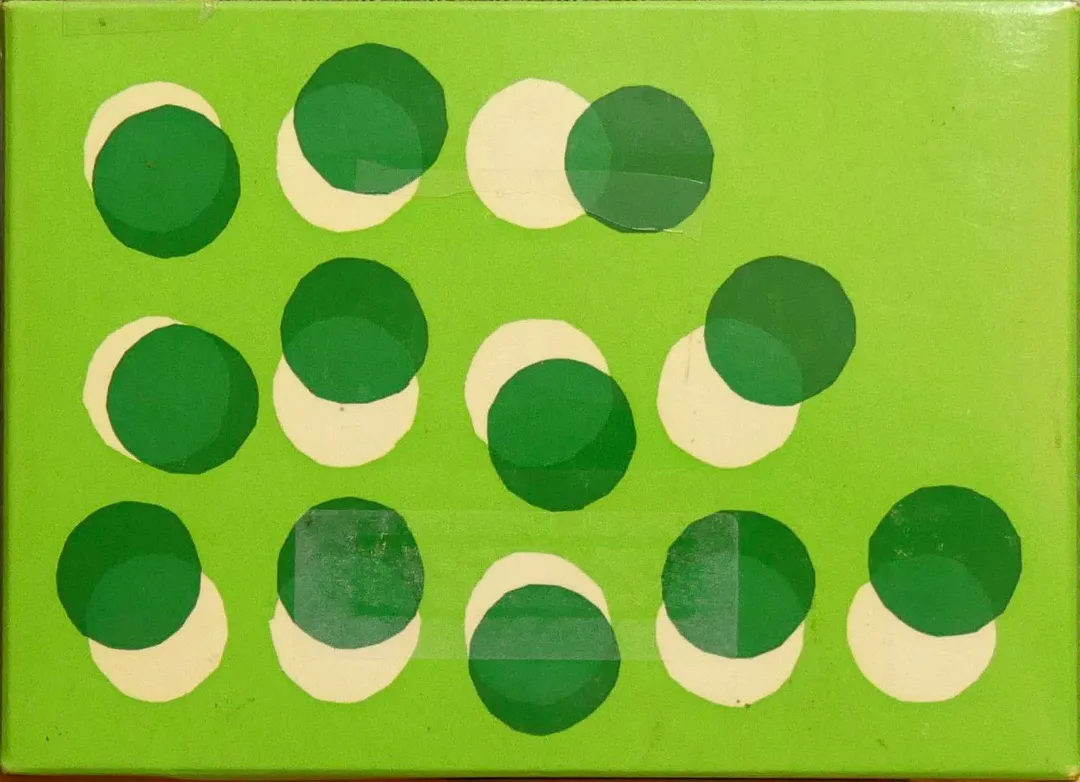
Generally, the game of Nim is a two-player game of perfect information in which there are some number of rows or "heaps" of objects, and a legal move consists of removing any number of objects from a single heap. (For a non-trivial game, we should start with at least three heaps.) In "standard play", the player who cannot make a move on his turn (because no objects remain) is the loser. A very general and far-reaching theory of such games is developed in Berlekamp, Conway, and Guy's Winning Ways for Your Mathematical Plays. In the commercial version pictured, the players take turns removing 1, 2, 3, or 4 pegs together in a row. It would appear from the picture that "rows" can run in any direction, which means that the "heaps" intersect. This is not what most people know as Nim. Also, according to the original description, in this version the loser is the player who has to remove the last peg. This is so-called "misere play", rather than the standard winning condition. Many combinatorial games allow misère play as a variation. Nim is solved, which means that from any initial configuration, one can readily determine whether the next player or the previous player has a winning strategy, and identify a good next move in the former case. For Nim, this can be determined surprisingly readily no matter the size of the heaps, but you're not going to get the secret from me. As most who would be interested in Nim know the solution, there isn't much of a game here. But Nim plays a central role in the theory of combinatorial games, as any two-player finite impartial game is in some sense Nim in disguise: any position in such a game corresponds to a unique Nim-heap, and one can play the disguised game perfectly by making the moves that correspond to winning moves in Nim. Sprouts is one example. This however does not mean that Sprouts itself is solved, as the "disguise" is only partially revealed.
Nim supports 2 players according to the catalogue. This is the publisher’s listed player count, so the game is designed for exactly that number of participants. Variants for other group sizes, if any, are described in the rulebook of your edition, so check it before setting up a different configuration.
Nim has a complexity rating of 1.5 out of 5 from BoardGameGeek players, which makes it a light game. The rating reflects how much rules knowledge, planning and decision-making a typical game demands. Expect a longer first teach for heavier games, and use a preparation guide before game night.
Nim belongs to these categories: Abstract Strategy. Categories describe the theme, setting and style of a game rather than its rules. Filter the catalogue by the same category to find similar games when you enjoyed Nim and want something comparable for your next game night.
The catalogue lists Nim as a base game. It can be played on its own with the components in the box and does not require any other title. Expansions, if any exist, add new content or rules on top of it and are listed separately in the catalogue with a link back to this base game.
