- BGG rating
- 9.0
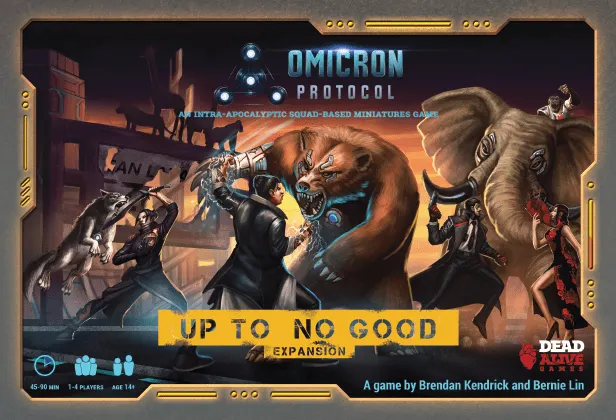
Omicron Protocol: Up to No Good
- 1–4 players
- 45–90 min
- 2022
2022
Rules assistance for Omicron Protocol
Plain-language explanations of turns, card effects and disputed situations, with official source references and saved question history.
For 1 player
What would you like to know?
Answers come from the official rulebook, with the page to check.
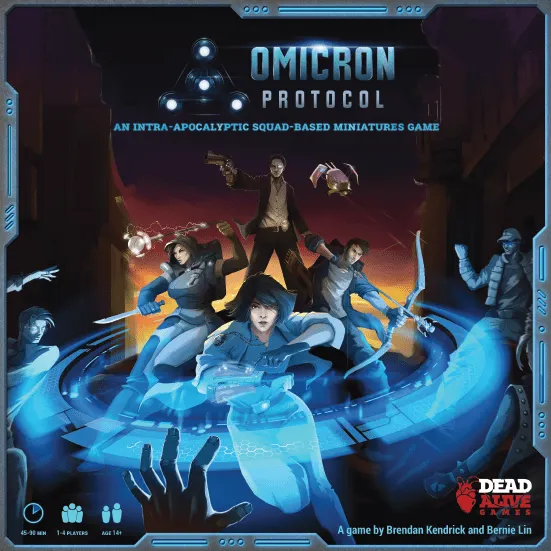
Omicron Protocol is a board game released in 2022 for 1–4 players, 45–90 minutes per game, and ages 10 and up. It was designed by Bernie Lin and Brendan Kendrick and its main mechanics are Area Movement, Dice Rolling, and Modular Board.




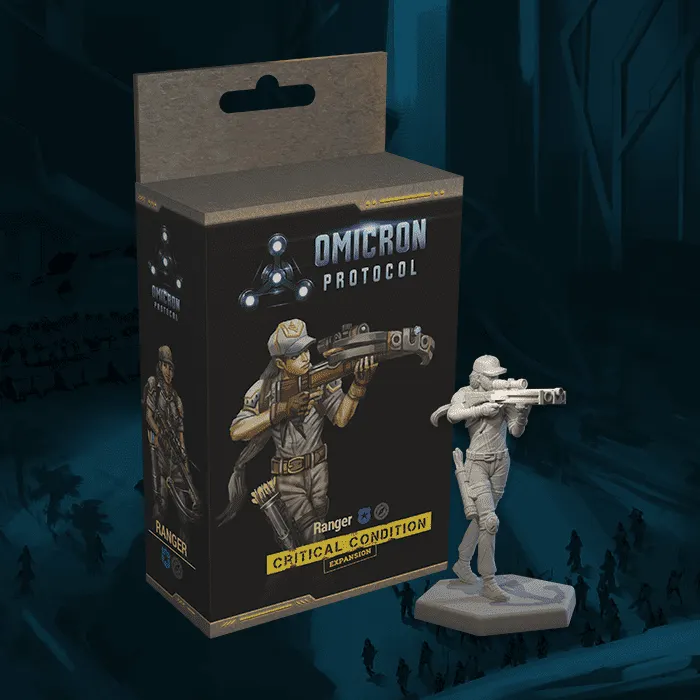
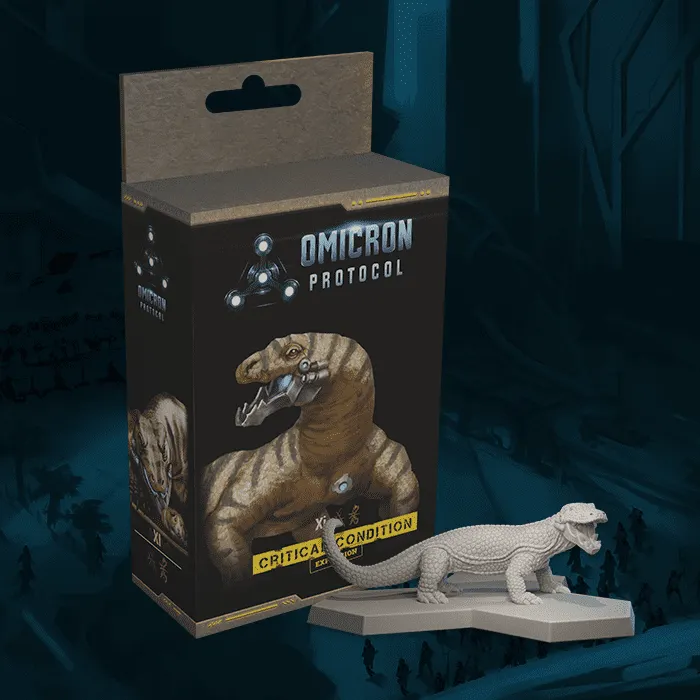
In the year 2050, the utopian city of San Lazaro is locked down and crippled by a mysterious computer virus, turning once-ordinary people into maddeningly violent and unpredictable “CyMS”, Cyber-Memetic Sociopaths. Omicron Protocol is an “intra-apocalyptic”, cyberpunk-themed miniatures skirmish board game for 1-4 players, where you control a squad of unique characters, and take turns controlling a 3rd party enemy to harass your opponent. Or play solo/cooperatively as a team to fight enemies, complete objectives, and survive! Every character is represented by a detailed 32mm-scale miniature, possessing their own rich history and personality, as well as powerful cybernetic abilities! Play the competitive or solo/cooperative modes through various narrative scenarios to survive the crisis! With innovative game mechanics like the Action Store and Luck Tokens, every game is thrilling and exciting. Enjoy a deeply tactical game in under an hour and introduce your gaming friends to skirmish games with Omicron Protocol! In the game, you play with a squad of 1-4 characters, either competitively against another player/team, solo, or cooperatively with friends. Each round consists of spending a shared pool of action points on your characters, activating them one-by-one, and using movement and tactics to survive the onslaught of the Cyber-Memetic Sociopaths (CyMS). All games are based on scenarios derived from the lore of the world (120K+ word collection of stories), and the game can be linked together into a light campaign in both competitive and cooperative modes. In competitive scenarios, the team that scores the most victory points wins. In solo/cooperative scenarios, the players win if they reach the VP goal within a specified number of rounds. Background: Everything can change in a month. The cutting edge West Coast city of San Lazaro had been the epicenter of a cybernetics tech revolution in 2044, ushering all of humanity into the future...but in the year 2050, a mysterious viral menace the likes of which the world had never seen toppled the utopian city in a sea of infection and death. The disease could not be stopped; it evolved to surpass any countermeasure, mutated to answer any cure. In mere days San Lazaro was overwhelmed by the infected. Martial law descended on the city immediately. Barricades and armed soldiers divided its streets into isolated sectors. Efforts to contain the outbreak were as useless as the attempts to control the surging numbers of mysteriously insane and violent residents, a second catastrophe on the heels of the first.. Dubbed ‘Cyber-Memetic Sociopaths’ by the media, with their actions being blamed on an over-immersion in virtual reality, these ‘CyMS’ were spreading across the city in a wave of mindless, indiscriminate violence. With the infection spreading and the murderous CyMS rampaging, the government abandoned San Lazaro and its people after a mere two weeks. All that remains of the city now is a twisted hellscape. The few survivors have banded together in hopes of escaping, while gangs once suppressed by the government have seized control. The CyMS have grown into a constant threat on the streets, sowing fear and terror in their path. In this waking nightmare, your only chance of salvation is to join a faction powerful enough to dominate the foes that stand in your way.
Omicron Protocol supports 1–4 players according to the catalogue. This range comes from the publisher’s listed player count, so the game can be set up for any group size within it. Some setups, rules and scoring details may still vary by player count, so check your edition’s rulebook for the exact configuration.
The listed playing time for Omicron Protocol is 45–90 minutes. This is the publisher’s estimate for a full game. The actual duration depends on the group, the player count and familiarity with the rules: first sessions usually run longer, while experienced groups often finish faster. Setup and teaching time are not included in this estimate.
The catalogue lists Omicron Protocol for ages 10 and up. This is the publisher’s recommendation and reflects reading demands, rule complexity and small components rather than theme alone. Younger players can often join with help from an adult, so check the age guidance on your edition and consider your group’s experience with board games.
Omicron Protocol has a complexity rating of 3.3 out of 5 from BoardGameGeek players, which makes it a medium-weight game. The rating reflects how much rules knowledge, planning and decision-making a typical game demands. Expect a longer first teach for heavier games, and use a preparation guide before game night.
Omicron Protocol belongs to these categories: Wargame, Dice, and Zombies. Its main mechanics are Area Movement, Dice Rolling, and Modular Board. Categories describe the theme and setting of a game, while mechanics describe what players actually do on their turns. Each mechanic links to a catalogue hub with similar games, which helps when you want something comparable.
The credited designers of Omicron Protocol are: Bernie Lin and Brendan Kendrick. These credits come from the published game data and name the people responsible for the game’s design, not its illustrators or publishers. Designer pages on MeepleRules collect other titles by the same designers, which helps when you enjoy a game and want to find similar ones.
The catalogue lists Omicron Protocol as a base game. It can be played on its own with the components in the box and does not require any other title. Expansions, if any exist, add new content or rules on top of it and are listed separately in the catalogue with a link back to this base game.