
- BGG rank
- BGG #2,281
- BGG rating
- 7.5
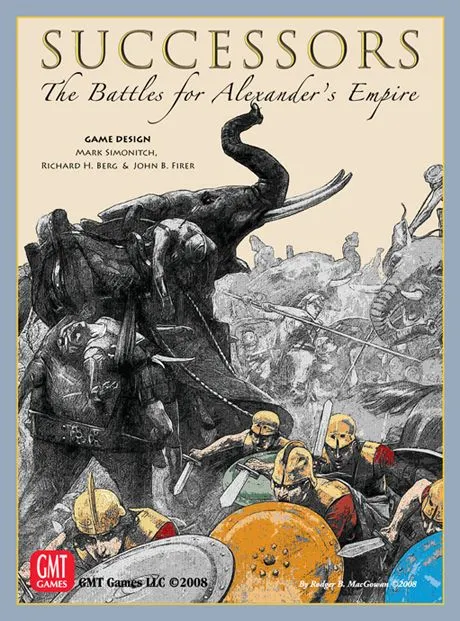
Successors: The Battles for Alexander's Empire
- 3–4 players
- 60–300 min
- Complexity 3.3/5
- 2008
2006
Rules assistance for Onward Christian Soldiers: The Crusades
Plain-language explanations of turns, card effects and disputed situations, with official source references and saved question history.
For 1 player
What would you like to know?
Answers come from the official rulebook, with the page to check.
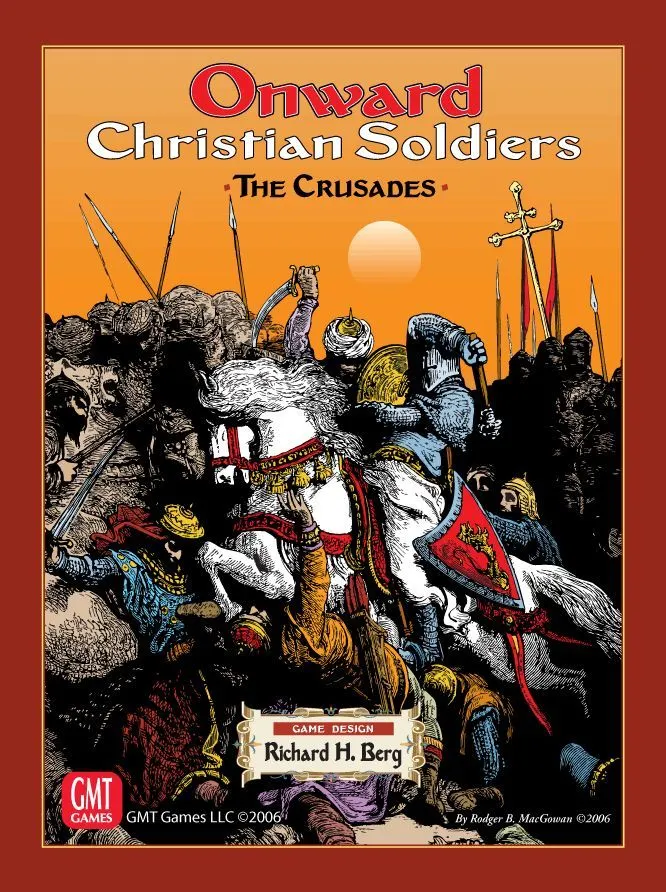
Onward Christian Soldiers: The Crusades is a board game released in 2006 for 1–7 players, 300 minutes per game, and ages 12 and up. It was designed by Richard H. Berg and its main mechanics are Dice Rolling and Point to Point Movement.
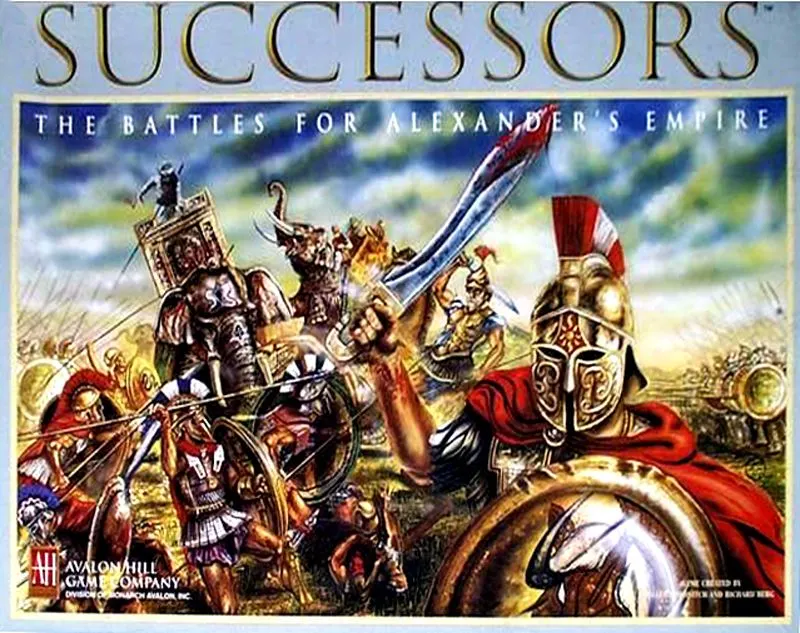
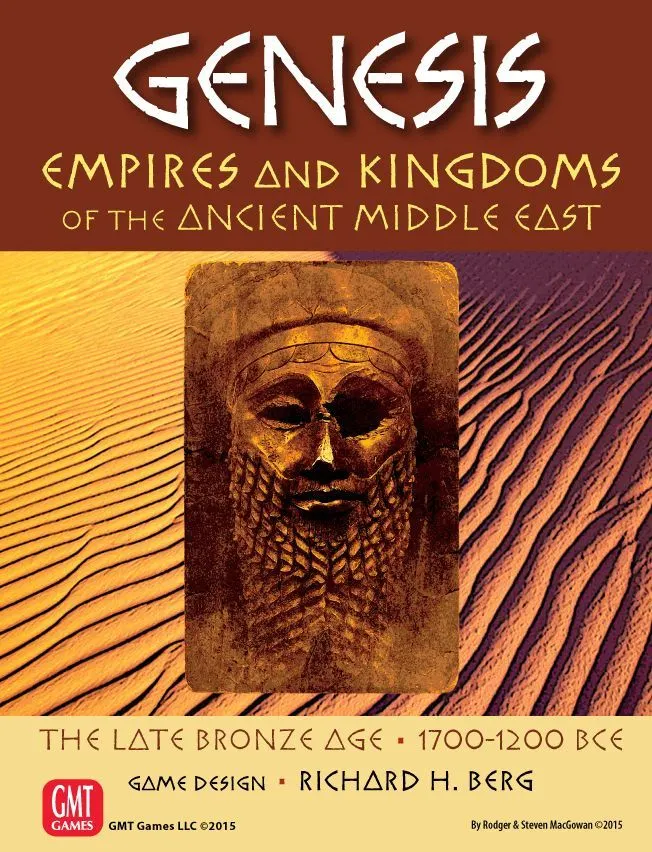
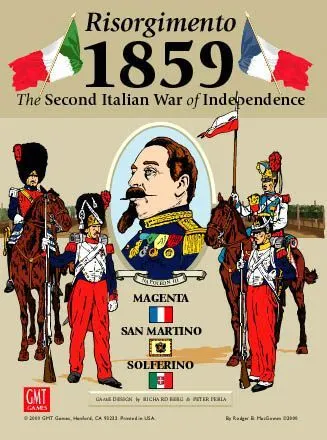

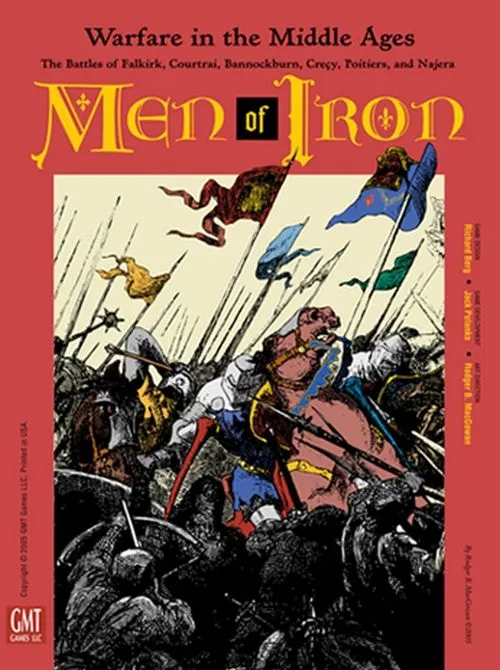

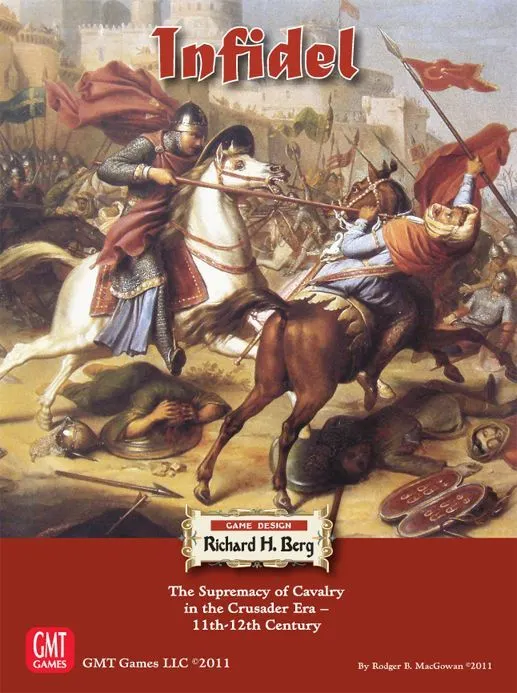

(from GMT website:) Onward Christian Soldiers is Richard Berg's newest strategic level game, this one focused on one of, if not THE, central events in the Middle Ages - The Crusades. It will allow gamers to replay not only the first three Crusades - the only 3 that focused on what we call The Middle East - but with scenarios that range from a 7-player version of the 1st Crusade to a 3rd Crusade scenario that supposes Frederick Barbarossa didn't drown in Turkey and his immense army reached the Kingdom of Jerusalem pretty much intact. Onward Christian Soldiers uses numerous innovative mechanics, including: an Activation system that allows players to choose which leaders/armies they want to use most in a given turn, but not know when they will be available for such use. a Movement system with no Movement Allowances or Costs, but a heavy emphasis on Attrition and the ability of commanders to "keep going". Shop 'til ya Drop . . . Combat mechanics that put a major, detailed emphasis on sieges and ravaging the surrounding areas, but still allow for the predilections of the various armies in field battles (such as the famous Frankish Heavy Cavalry Charge), as well as the abilities of their commanders . . . men like the great initial Crusaders, such as Raymond, Bohemond, Godfrey and Tancred, King Louis VII of France (and his troublesome wife, the famous Eleanor of Aquitaine), Frederick Barbarossa (if he stays away from the pool), the dangerous Nur ad-Din, the magnificent Saladin, and the one Christian the Muslims feared more than anyone, Richard Lionheart. Movement and attrition go hand in hand in this game. Leaders may move as far as they want The game uses three sets of cards (110 cards total). Each of the four Crusader factions -- Northern Franks, Southern Franks, Sicilian Normans, Germans -- and three Muslim factions -- Northern Syrians, Southern Syrians, Mosul Turks -- has three or four Leader cards, which the players secretly "purchase" at the beginning of the Game-Turn to create the Activation Deck that determines which leader goes next. In addition, there are two Event Decks - one for the Crusaders and one for the Muslims -- through which a variety of random events occur, ranging from taking cities via treachery to suffering added attrition through oppressive heat. Normally, each Leader controls armies only from its own faction. However, a simple set of multi-faction rules controls situations in which either side wishes to combine their armies into larger forces, mostly for the sake of sieges against major cities. The Siege of Antioch, which usually happens early in the game, often requires such an army. The multi-faction rules particularly come into their own during multi-player games; here you can expect to see players bickering over who controls the combined forces, an important point considering that whoever is in charge when the city falls gains control over the city. If attacked while combined, the players of a multi-faction force have 30 seconds to decide who's in charge: if they don't, they defend using a mediocre formation. COUNTERS: 876 full color counters MAP: One 22"x34" full-color map CARDS: 110 Cards OTHER: Two six-sided dice First Crusade Rule book Second and Third Crusade Rule book Playbook 4 Player Aid cards DESIGNER Richard Berg DEVELOPER Neil Randall ART DIRECTOR Rodger B. MacGowan CARD ART Mark Simonitch MAP ART Mark Simonitch & Wayne Highland COUNTERS Rodger B. MacGowan, Mark Simonitch, & Mike Lemick
Onward Christian Soldiers: The Crusades supports 1–7 players according to the catalogue. This range comes from the publisher’s listed player count, so the game can be set up for any group size within it. Some setups, rules and scoring details may still vary by player count, so check your edition’s rulebook for the exact configuration.
The listed playing time for Onward Christian Soldiers: The Crusades is 300 minutes. This is the publisher’s estimate for a full game. The actual duration depends on the group, the player count and familiarity with the rules: first sessions usually run longer, while experienced groups often finish faster. Setup and teaching time are not included in this estimate.
The catalogue lists Onward Christian Soldiers: The Crusades for ages 12 and up. This is the publisher’s recommendation and reflects reading demands, rule complexity and small components rather than theme alone. Younger players can often join with help from an adult, so check the age guidance on your edition and consider your group’s experience with board games.
Onward Christian Soldiers: The Crusades has a complexity rating of 3.6 out of 5 from BoardGameGeek players, which makes it a medium-weight game. The rating reflects how much rules knowledge, planning and decision-making a typical game demands. Expect a longer first teach for heavier games, and use a preparation guide before game night.
Onward Christian Soldiers: The Crusades belongs to these categories: Wargame and Medieval. Its main mechanics are Dice Rolling and Point to Point Movement. Categories describe the theme and setting of a game, while mechanics describe what players actually do on their turns. Each mechanic links to a catalogue hub with similar games, which helps when you want something comparable.
The credited designers of Onward Christian Soldiers: The Crusades are: Richard H. Berg. These credits come from the published game data and name the people responsible for the game’s design, not its illustrators or publishers. Designer pages on MeepleRules collect other titles by the same designers, which helps when you enjoy a game and want to find similar ones.
The catalogue lists Onward Christian Soldiers: The Crusades as a base game. It can be played on its own with the components in the box and does not require any other title. Expansions, if any exist, add new content or rules on top of it and are listed separately in the catalogue with a link back to this base game.