
- BGG rank
- BGG #1,814
- BGG rating
- 7.4
Heroes of Normandie
- 2 players
- 30–60 min
- Complexity 2.7/5
- 2014
2026
Rules assistance for Operation Overlord
Plain-language explanations of turns, card effects and disputed situations, with official source references and saved question history.
For 2 players
What would you like to know?
Answers come from the official rulebook, with the page to check.
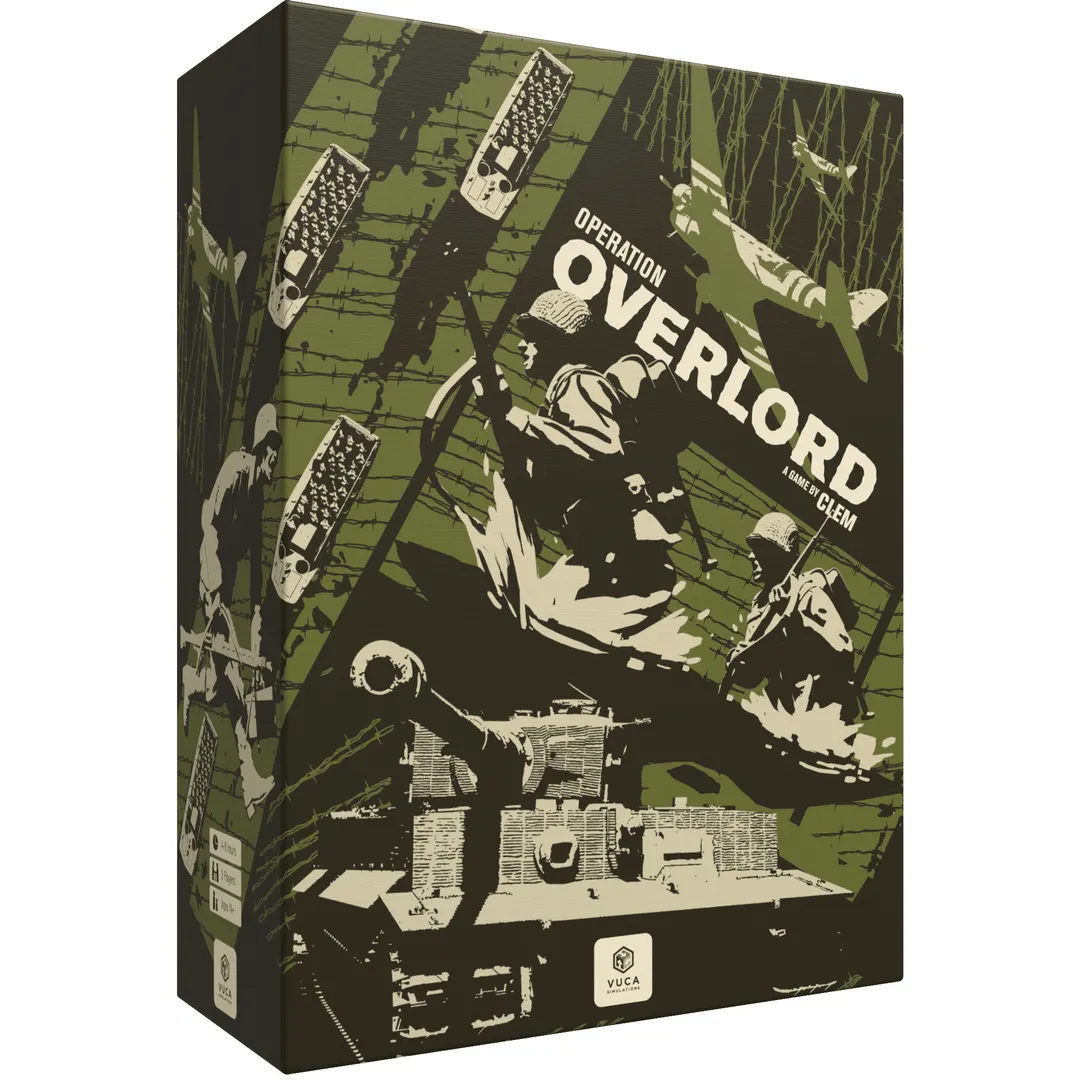
Operation Overlord is a board game released in 2026 for 2 players, 240–480 minutes per game, and ages 14 and up. It was designed by Clem Seurat and its main mechanics are Point to Point Movement, Events, and Bingo.
Operation Overlord is a deep, historically grounded strategic wargame that simulates the Normandy invasion and the critical battles that followed from June to August 1944. One player commands the Allied SHAEF forces, planning and executing the largest amphibious operation in history, while the opposing player takes the role of Oberbefehlshaber West, defending the Atlantic Wall and attempting to delay the Allied advance long enough to alter the course of the war. Rather than focusing on tactical skirmishes, Operation Overlord operates at the operational–strategic level, where timing, logistics, intelligence, and command structure are decisive. Players maneuver divisions and army corps across a detailed map of Normandy, manage supply networks and reinforcements, execute historical and fictional operations, and influence battles through doctrine, supports, and event cards. Each month begins with high-level planning: the Allied player secretly schedules strategic and special operations, while the German player designates key cities as Festungen, to be held at all costs. Weekly turns then unfold through intelligence gathering, supply allocation, reinforcement arrivals, and alternating unit activations that combine maneuver and combat into a tense, fluid system. Fog of war is maintained through hidden unit values and simultaneous combat card reveals, ensuring constant uncertainty and meaningful decision-making. Victory is not measured simply by territory, but by time and consequences. The German player is unlikely to drive the Allies back into the sea—but every week gained has far-reaching implications for morale, resources, and other fronts of the war. Likewise, an Allied breakthrough ahead of schedule can dramatically reshape history. Each scenario and campaign outcome includes historically reasoned consequences that frame the result within the broader context of World War II. With multiple scenarios (June, July, August, and a full campaign), robust asymmetry, and a strong emphasis on planning and operational art, Operation Overlord offers a demanding and rewarding experience for players seeking a serious, historically informed wargame. —description from the publisher
Operation Overlord supports 2 players according to the catalogue. This is the publisher’s listed player count, so the game is designed for exactly that number of participants. Variants for other group sizes, if any, are described in the rulebook of your edition, so check it before setting up a different configuration.
The listed playing time for Operation Overlord is 240–480 minutes. This is the publisher’s estimate for a full game. The actual duration depends on the group, the player count and familiarity with the rules: first sessions usually run longer, while experienced groups often finish faster. Setup and teaching time are not included in this estimate.
The catalogue lists Operation Overlord for ages 14 and up. This is the publisher’s recommendation and reflects reading demands, rule complexity and small components rather than theme alone. Younger players can often join with help from an adult, so check the age guidance on your edition and consider your group’s experience with board games.
Operation Overlord has a complexity rating of 3.5 out of 5 from BoardGameGeek players, which makes it a medium-weight game. The rating reflects how much rules knowledge, planning and decision-making a typical game demands. Expect a longer first teach for heavier games, and use a preparation guide before game night.
Operation Overlord belongs to these categories: Wargame and World War II. Its main mechanics are Point to Point Movement, Events, and Bingo. Categories describe the theme and setting of a game, while mechanics describe what players actually do on their turns. Each mechanic links to a catalogue hub with similar games, which helps when you want something comparable.
The credited designers of Operation Overlord are: Clem Seurat. These credits come from the published game data and name the people responsible for the game’s design, not its illustrators or publishers. Designer pages on MeepleRules collect other titles by the same designers, which helps when you enjoy a game and want to find similar ones.
The catalogue lists Operation Overlord as a base game. It can be played on its own with the components in the box and does not require any other title. Expansions, if any exist, add new content or rules on top of it and are listed separately in the catalogue with a link back to this base game.