
- BGG rating
- 6.5
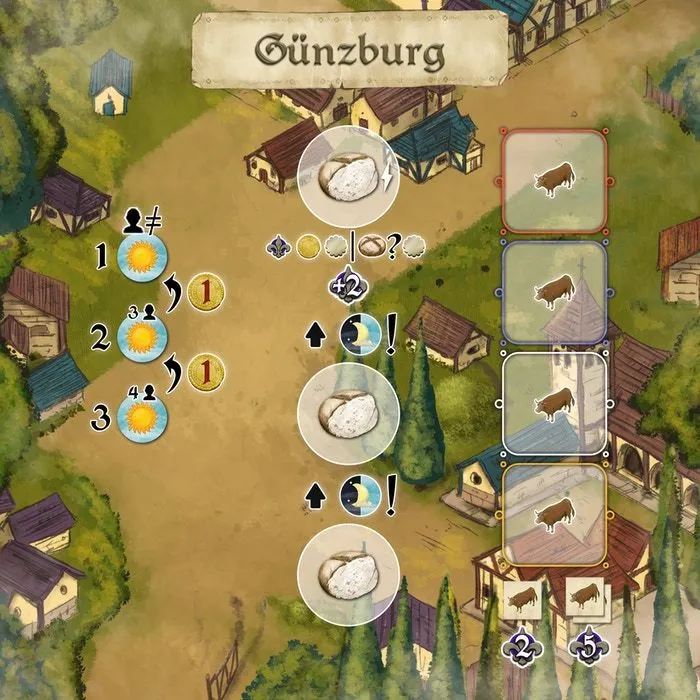
Pandemain: Traditional Farmers' Bread: Günzburg
- 1–4 players
- 60–120 min
- 2021
2021
Rules assistance for Pandemain: Traditional Farmers' Bread
Plain-language explanations of turns, card effects and disputed situations, with official source references and saved question history.
For 1 player
What would you like to know?
Answers come from the official rulebook, with the page to check.
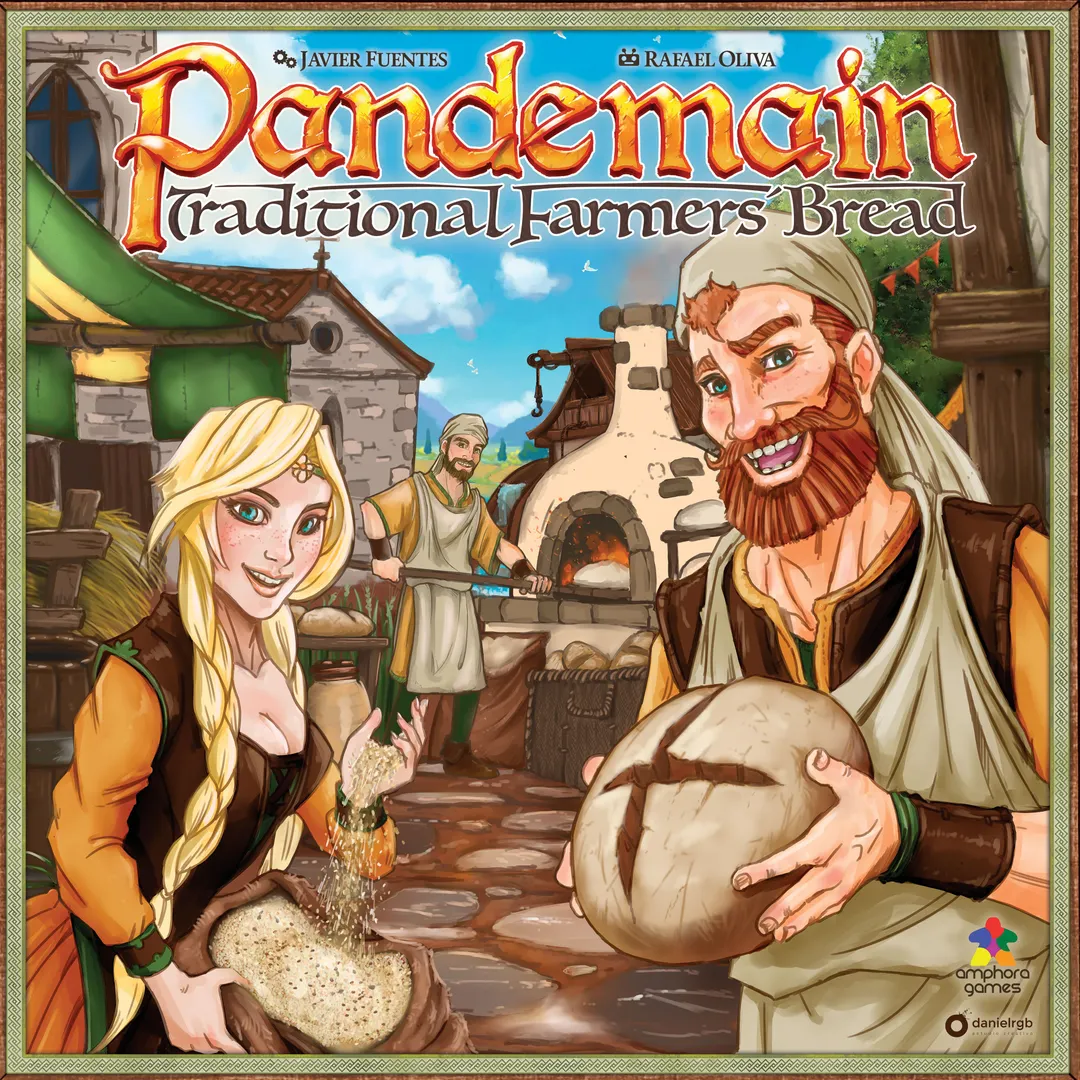
Pandemain: Traditional Farmers' Bread is a board game released in 2021 for 1–4 players, 60–120 minutes per game, and ages 12 and up. It was designed by Javier Fuentes and Rafael Oliva and its main mechanics are Set Collection, Simulation, and Worker Placement.



Pandemain: Traditional Farmers' Bread is a worker placement and bread making game for 1 to 4 players, where you must run a small bakery business located in the village of Nördlingen, during the fascinating period of the Middle Ages. Buy ingredients in the market, get flour by visiting the mill, bake your bread in the Feudal Lord’s oven and try to sell it in nearby villages. Satisfy the demand with high quality bread and improve your reputation to prosper and emerge victorious. Face the difficulties of the harsh medieval life, in which only a few peasants escaped the servile dependence of the Feudal Lord. The game takes place in the medieval region of the Duchy of Schwaben during the year 1276, in the domains of Emperor Rudolf I of Habsburg and under the watchful eye of the Inquisition. The historical base of the game has been verified in ancient documents and history books, and its mechanics are based on readings from original literature of that time. Explore this enigmatic period hidden under layers of mud and ash, and discover the real day to day of the period’s peasants. Pandemain: Traditional Farmers' Bread is played in turns. Each player starts with four workers and they can get another one if certain conditions are met. There are 5 game rounds divided in 4 phases each, with a variable element at the end of the game. In the game, some actions that are chosen by the players (worker placement), and all actions will lead to the selling of the bread they bake in the nearest villages or to the Feudal Lord, which additionally gives you favors (set collection). Each type of bread is sold at a different price and have different point values. The players must collect the correct ingredients for each recipe, bake high quality or low quality bread and sell it, for which they will receive the gratitude from the villages (set collection), allowing them to make extra actions and receive extra points. The players can hire and improve their master bakers (set collection), which allows them to bake the highest quality bread, provide benefits, and increase their reputation. Cows, oxen and wagons add some variability when the players go to acquire the ingredients. The Inquisition is also relevant: the players will make donations to the church, which gives them influence to avoid losing points each round and, in return they will give some benefits and points. And not only that, the church also controls the turn order. What changes every round? - Bread demand in each village - Flour available in the market - Feudal Lord's servant position - Inquisition advance What changes every game? - Available master bakers - Villagers in the villages - Feudal Lord's favors - Benefits when donating to the church -description from designer
Pandemain: Traditional Farmers' Bread supports 1–4 players according to the catalogue. This range comes from the publisher’s listed player count, so the game can be set up for any group size within it. Some setups, rules and scoring details may still vary by player count, so check your edition’s rulebook for the exact configuration.
The listed playing time for Pandemain: Traditional Farmers' Bread is 60–120 minutes. This is the publisher’s estimate for a full game. The actual duration depends on the group, the player count and familiarity with the rules: first sessions usually run longer, while experienced groups often finish faster. Setup and teaching time are not included in this estimate.
The catalogue lists Pandemain: Traditional Farmers' Bread for ages 12 and up. This is the publisher’s recommendation and reflects reading demands, rule complexity and small components rather than theme alone. Younger players can often join with help from an adult, so check the age guidance on your edition and consider your group’s experience with board games.
Pandemain: Traditional Farmers' Bread has a complexity rating of 3.6 out of 5 from BoardGameGeek players, which makes it a medium-weight game. The rating reflects how much rules knowledge, planning and decision-making a typical game demands. Expect a longer first teach for heavier games, and use a preparation guide before game night.
Pandemain: Traditional Farmers' Bread belongs to these categories: Medieval, Farming, and Industry / Manufacturing. Its main mechanics are Set Collection, Simulation, and Worker Placement. Categories describe the theme and setting of a game, while mechanics describe what players actually do on their turns. Each mechanic links to a catalogue hub with similar games, which helps when you want something comparable.
The credited designers of Pandemain: Traditional Farmers' Bread are: Javier Fuentes and Rafael Oliva. These credits come from the published game data and name the people responsible for the game’s design, not its illustrators or publishers. Designer pages on MeepleRules collect other titles by the same designers, which helps when you enjoy a game and want to find similar ones.
The catalogue lists Pandemain: Traditional Farmers' Bread as a base game. It can be played on its own with the components in the box and does not require any other title. Expansions, if any exist, add new content or rules on top of it and are listed separately in the catalogue with a link back to this base game.