
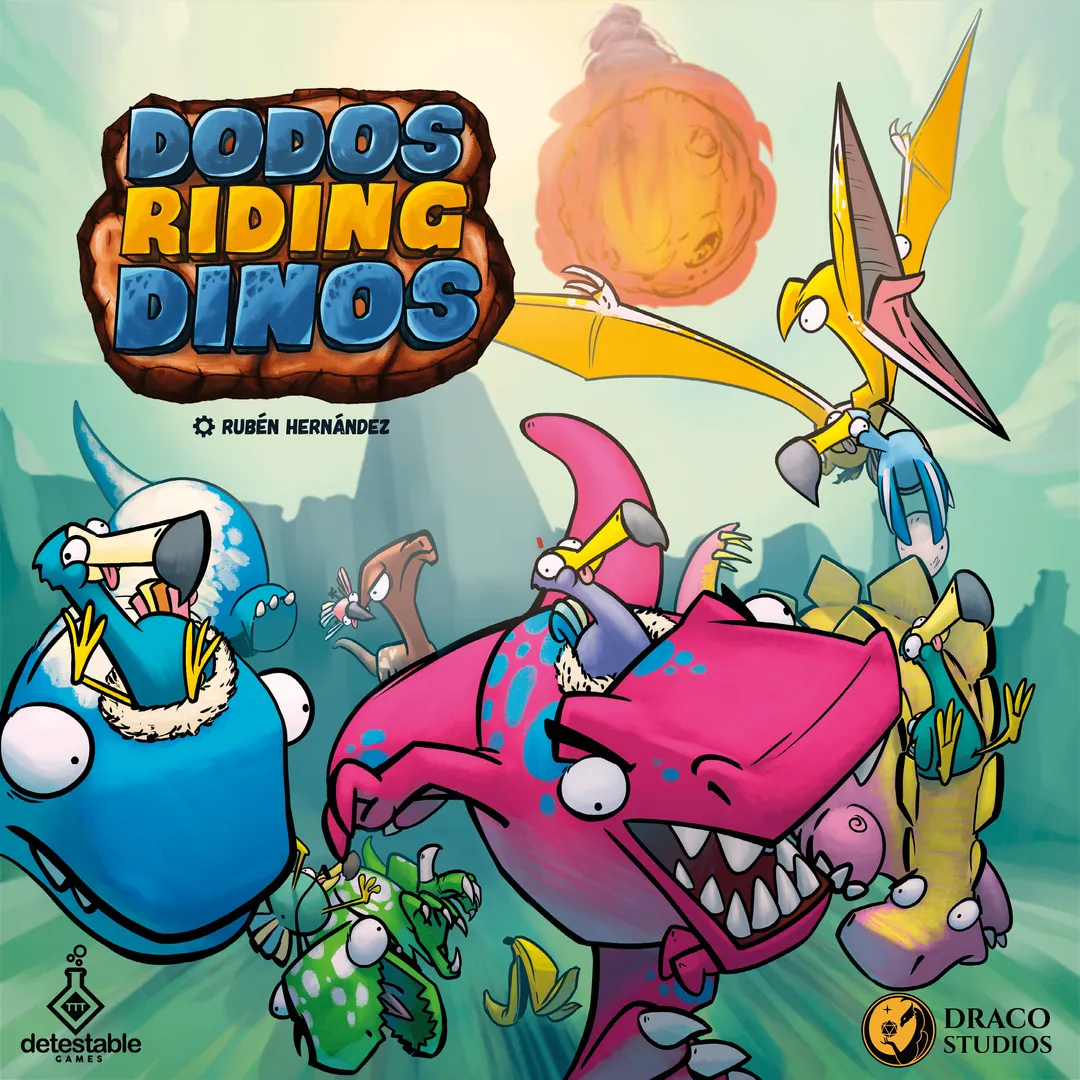
- BGG rank
- BGG #2,390
- BGG rating
- 7.5
Dodos Riding Dinos
- 1–8 players
- 20 min
- Complexity 1.6/5
- 2021
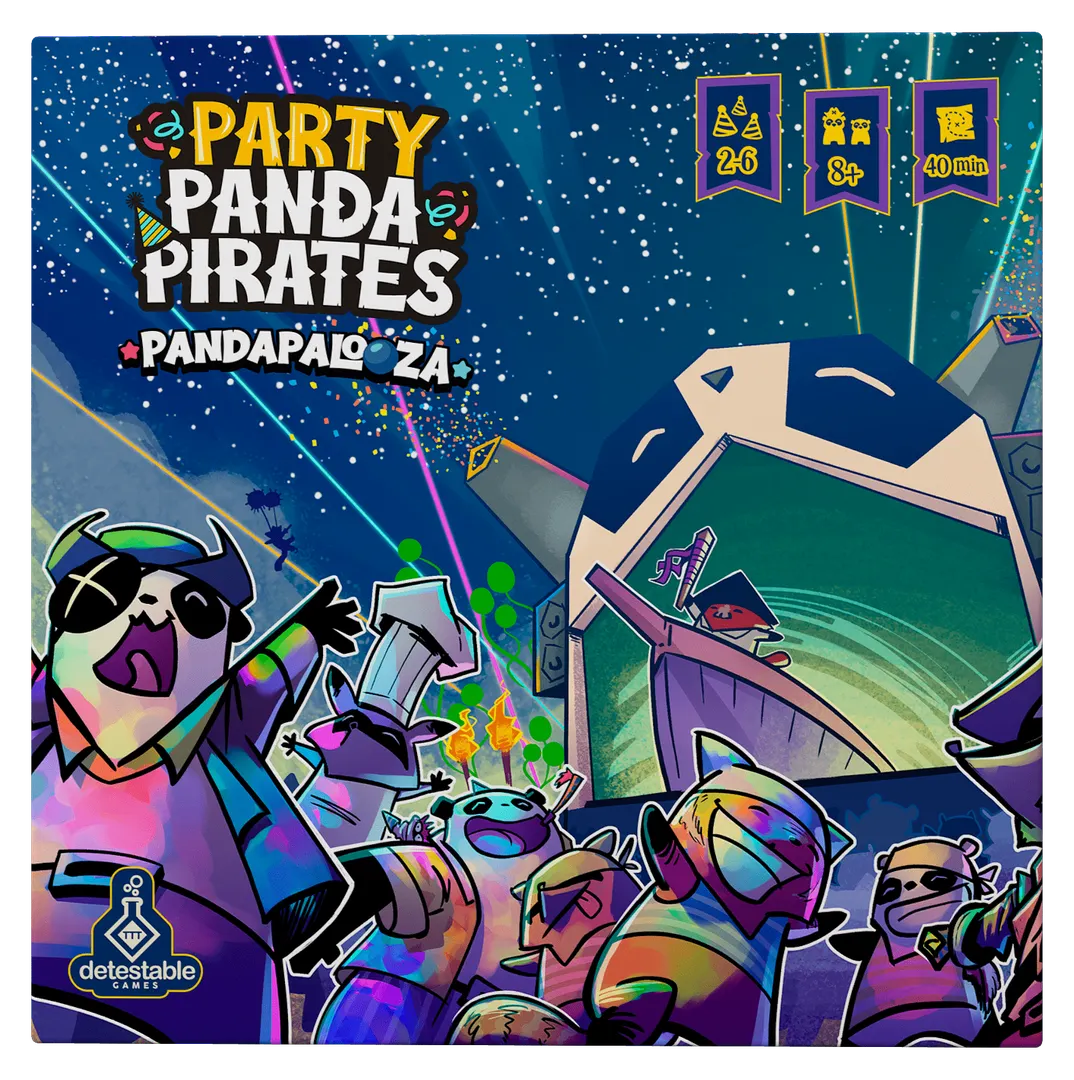
Rules assistance for Party Panda Pirates: Pandapalooza
Plain-language explanations of turns, card effects and disputed situations, with official source references and saved question history.
What would you like to know?
Answers come from the official rulebook, with the page to check.
Party Panda Pirates: Pandapalooza is an expansion for Party Panda Pirates released in 2026 for 2–6 players, 30–45 minutes per game, and ages 8 and up. It was designed by Juan Pablo Villaseñor "Oso" and its main mechanics are Take That, Race, and Push Your Luck.



After exploring the Avian Archipelago, our festive crew of panda pirates sail back to celebrate pandapalooza with other aspiring panda initiates who practice their party and pirate skills to join the legendary crew. In this expansion, you can find more minigames and a new Treasure Map board that's not only a different shape, but also offers a different feel than the board in the base game, increasing player interaction and decision-making while reducing the luck factor in the fourth phase (Treasure hunt). Some key differences: You must spend coins to buy Chest tokens in numbered spaces. Benefits in the position track offer a player choice: Gain many coins (even buying a Chest in 1st place) OR claim fewer coins plus a token that allows you to roll an additional die on future movements to advance more. The routes are longer, there’s more variety of effects in the spaces, and the sorting of numbered spaces is different from the base game board. Longer routes reward you with Item cards that you can use in this phase to interact with other players… now you can force another player to reroll or steal coins from their supply. —description from the publisher
Party Panda Pirates: Pandapalooza supports 2–6 players according to the catalogue. This range comes from the publisher’s listed player count, so the game can be set up for any group size within it. Some setups, rules and scoring details may still vary by player count, so check your edition’s rulebook for the exact configuration.
The listed playing time for Party Panda Pirates: Pandapalooza is 30–45 minutes. This is the publisher’s estimate for a full game. The actual duration depends on the group, the player count and familiarity with the rules: first sessions usually run longer, while experienced groups often finish faster. Setup and teaching time are not included in this estimate.
The catalogue lists Party Panda Pirates: Pandapalooza for ages 8 and up. This is the publisher’s recommendation and reflects reading demands, rule complexity and small components rather than theme alone. Younger players can often join with help from an adult, so check the age guidance on your edition and consider your group’s experience with board games.
Party Panda Pirates: Pandapalooza belongs to these categories: Animals, Party Game, and Action / Dexterity. Its main mechanics are Take That, Race, and Push Your Luck. Categories describe the theme and setting of a game, while mechanics describe what players actually do on their turns. Each mechanic links to a catalogue hub with similar games, which helps when you want something comparable.
The credited designers of Party Panda Pirates: Pandapalooza are: Juan Pablo Villaseñor "Oso". These credits come from the published game data and name the people responsible for the game’s design, not its illustrators or publishers. Designer pages on MeepleRules collect other titles by the same designers, which helps when you enjoy a game and want to find similar ones.
The catalogue lists Party Panda Pirates: Pandapalooza as an expansion for Party Panda Pirates. Expansions add new content, rules or scenarios to the base game and usually cannot be played on their own, so you need Party Panda Pirates to use it. Check that your edition of Party Panda Pirates is compatible, as some expansions were revised between editions.