
- BGG rating
- 8.1
Pax Pamir: Khyber Knives
- 1–5 players
- 60–180 min
- Complexity 4.2/5
- 2016
2015
Rules assistance for Pax Pamir
Plain-language explanations of turns, card effects and disputed situations, with official source references and saved question history.
For 2 players
What would you like to know?
Answers come from the official rulebook, with the page to check.
Pax Pamir is a board game released in 2015 for 2–5 players, 60–120 minutes per game, and ages 12 and up. It was designed by Phil Eklund and Cole Wehrle and its main mechanics are Hand Management, Area Movement, and Area Majority / Influence.



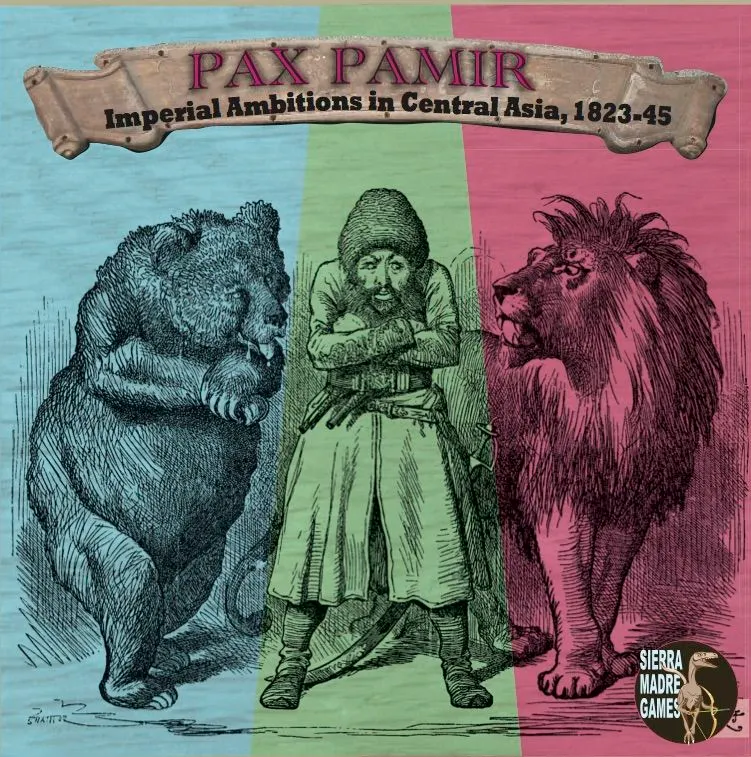
With the fall of Napoleon, the British East India Company plied its trade unchecked from the Cape of Good Hope to the markets of Hong Kong. India stood at the center of this sprawling imperial network, and the currents of empire ran through its ports, tying the Far East with European markets and awarding the British virtual control of the vast wealth of the subcontinent. However, the "crown jewel" of the empire was far from secure. Across the forests of Siberia and the steppes of Asia, the Russian Empire advanced at a rate exceeding even the pace of America's western pioneers. This expansionism by the world’s largest nation loomed over British holdings in India, casting a longer shadow each year. In the buffer region of central Asia, surveyors, adventurers, industrialists and government agents crossed paths, all seeking to manipulate the byzantine local politics. There, in the shadow of the Pamir Mountains, the stage was set for a game that would define the limits of global power in the 19th century and the present day. In Pax Pamir, two to five players assume the role of Afghan tribal leaders navigating the winds of colonial power in "The Great Game". If either the Russian, British Empire, or Afghan is able to achieve supremacy, the player with the most influence in that empire wins.
Pax Pamir supports 2–5 players according to the catalogue. This range comes from the publisher’s listed player count, so the game can be set up for any group size within it. Some setups, rules and scoring details may still vary by player count, so check your edition’s rulebook for the exact configuration.
The listed playing time for Pax Pamir is 60–120 minutes. This is the publisher’s estimate for a full game. The actual duration depends on the group, the player count and familiarity with the rules: first sessions usually run longer, while experienced groups often finish faster. Setup and teaching time are not included in this estimate.
The catalogue lists Pax Pamir for ages 12 and up. This is the publisher’s recommendation and reflects reading demands, rule complexity and small components rather than theme alone. Younger players can often join with help from an adult, so check the age guidance on your edition and consider your group’s experience with board games.
Pax Pamir has a complexity rating of 3.7 out of 5 from BoardGameGeek players, which makes it a medium-weight game. The rating reflects how much rules knowledge, planning and decision-making a typical game demands. Expect a longer first teach for heavier games, and use a preparation guide before game night.
Pax Pamir belongs to these categories: Card Game, Economic, and Political. Its main mechanics are Hand Management, Area Movement, and Area Majority / Influence. Categories describe the theme and setting of a game, while mechanics describe what players actually do on their turns. Each mechanic links to a catalogue hub with similar games, which helps when you want something comparable.
The credited designers of Pax Pamir are: Phil Eklund and Cole Wehrle. These credits come from the published game data and name the people responsible for the game’s design, not its illustrators or publishers. Designer pages on MeepleRules collect other titles by the same designers, which helps when you enjoy a game and want to find similar ones.
The catalogue lists Pax Pamir as a base game. It can be played on its own with the components in the box and does not require any other title. Expansions, if any exist, add new content or rules on top of it and are listed separately in the catalogue with a link back to this base game.