- BGG rank
- BGG #24,461
- BGG rating
- 6.6
Irány a Kincses Sziget!
2–4 players60–75 min2016
Complexity 2.0/5
1920
Rules assistance for Pogs
Plain-language explanations of turns, card effects and disputed situations, with saved question history.
What would you like to know?
Answers come from the official rulebook, with the page to check.
Pogs is a board game released in 1920 1–5 minutes per game. Its main mechanics are Set Collection.
2–4 players60–75 min2016

3–5 players30 min2005
2–8 players45 min1995
1–10 players45 min1996
2 players20 min1999

2 players45 min1994
2–4 players25 min2023
2–4 players20 min2019

2 players45 min2002
2–4 players20 min2003
2–4 players20–40 min2023

2–6 players40–60 min2023
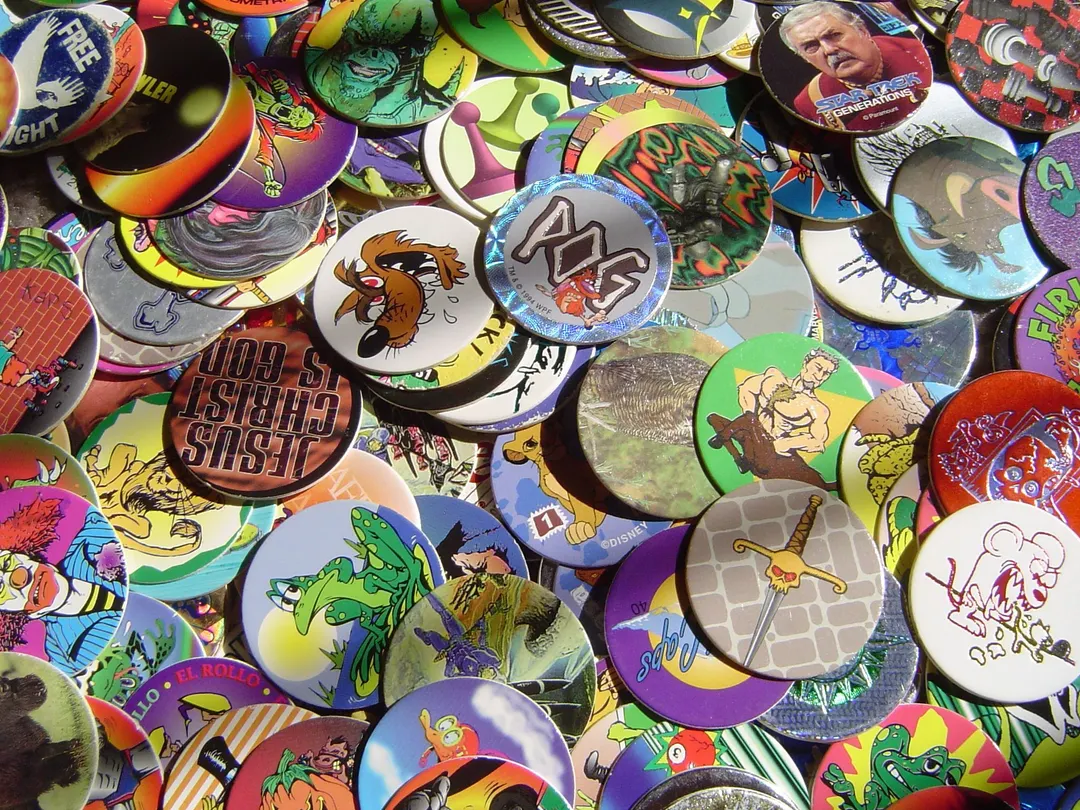
Pogs were originally a game played with milk caps which originated in Hawaii. The term Pog comes from POG brand juice. Each player begins with their collection of Pogs (milk caps) and at least one slammer (a heavier playing piece). Players add an equal number (often just one) of Pogs to a face down stack and take turns attempted to overturn the Pogs by throwing their slammer at it. Pogs which are turned face up are collected by the thrower. The game continues in this manner until players run out of Pogs to add to the stack or until they voluntarily quit.
The listed playing time for Pogs is 1–5 minutes. This is the publisher’s estimate for a full game. The actual duration depends on the group, the player count and familiarity with the rules: first sessions usually run longer, while experienced groups often finish faster. Setup and teaching time are not included in this estimate.
Pogs has a complexity rating of 1.3 out of 5 from BoardGameGeek players, which makes it a light game. The rating reflects how much rules knowledge, planning and decision-making a typical game demands. Expect a longer first teach for heavier games, and use a preparation guide before game night.
Pogs belongs to these categories: Action / Dexterity and Collectible Components. Its main mechanics are Set Collection. Categories describe the theme and setting of a game, while mechanics describe what players actually do on their turns. Each mechanic links to a catalogue hub with similar games, which helps when you want something comparable.
The catalogue lists Pogs as a base game. It can be played on its own with the components in the box and does not require any other title. Expansions, if any exist, add new content or rules on top of it and are listed separately in the catalogue with a link back to this base game.
