
- BGG rank
- BGG #11,849
- BGG rating
- 5.8
Senet
- 2 players
- 30 min
- Complexity 1.4/5
1915
Rules assistance for Pollyanna
Plain-language explanations of turns, card effects and disputed situations, with official source references and saved question history.
For 2 players
What would you like to know?
Answers come from the official rulebook, with the page to check.
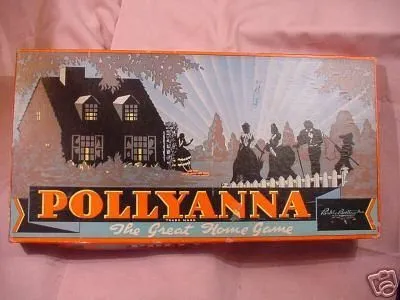
Pollyanna is a board game released in 1915 for 2–4 players and 30 minutes per game. Its main mechanics are Race, Roll / Spin and Move, and Dice Rolling.
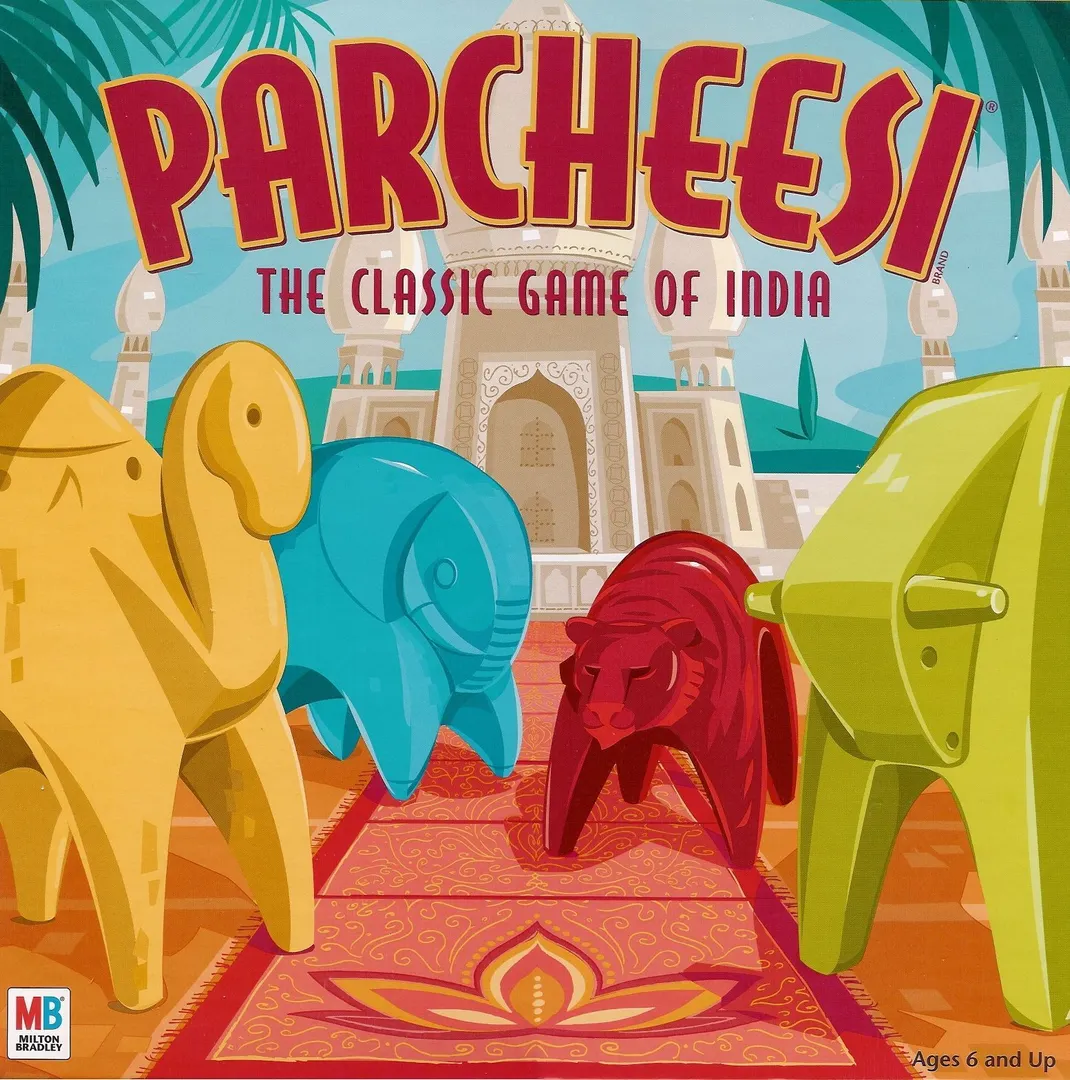



Pollyanna is a race/pursuit game published by Parker Brothers between 1915 and 1967. During those years, several editions appeared with differing artwork and game pieces. Some of these editions are entitled Dixie or Dixie-Pollyanna and some are subtitled "The Great Home Game," "The Glad Game," or "Parker Brothers Track Pursuit Game." In 1917 it was completely rethemed as The Popular Game of Broadway, with artwork of New York scenes featuring famous buildings of the time. Pollyanna itself gets its name from the title of the 1913 children's novel by Eleanor H. Porter. Each piece color in the game is associated with one of the characters in the novel. In the original 1915 edition blue was Aunt Polly; green was Nancy; red was Jimmy; and yellow was John Pendleton. These color associations changed in future editions. The game is widely recognized as a variant of Parcheesi, which is itself derived from Pachisi, a classic game of India. The object of Pollyanna, as in all games of the Pachisi family, is to be the first player to move his or her four men from the start space around the board to the home space. During the course of the game, players may also land on single opposing pieces and send them back to start. Two or three opposing pieces on the same space can neither be captured nor passed. Pollyanna differs from Parcheesi in several important ways. The track is laid out as a square and is 62 spaces long between start and home (in Parcheesi it is laid out as a cross and is 72 spaces long); furthermore Pollyanna employs four turnouts—short semi-circular paths off the main path (known as the broadway). Only single pieces may occupy a turnout space, but pieces there may not be passed and are invulnerable to capture. Turnouts are the most important difference between Pollyanna and Parcheesi. They make the two games play quite differently. The bonus move for capturing an opponent's piece is only 10 spaces, and there is no bonus for a piece reaching home (in Parcheesi these pay a 20-space and 10-space bonus respectively). Doubles are handled differently. In Pollyanna each double earns the right to another roll, provided that the player was able to use both dice. (In Parcheesi, on the third consecutive roll of doubles a player loses his/her turn and must return one of his pieces to start.) In addition, only the obverse faces of dice are counted in doubles. (In Parcheesi, both the obverse faces and reverse faces of the dice are counted.) Up to three pieces of the same color may occupy a space on the broadway. This effectively means that a player can pass his or her own blockade, by first landing exactly on the blockade and joining it, and then moving on. This is not possible in Parcheesi. Pieces are started on a roll of six (on either of the two dice or as the sum of the two dice). In Parcheesi, the roll required is a five. This means that starting a piece in Pollyanna is somewhat easier than in Parcheesi. There are safe spaces for each color; there are no general safe spaces. If a pawn is on a safe space of its own color no other player's pawn may land there, but it may pass through.
Pollyanna supports 2–4 players according to the catalogue. This range comes from the publisher’s listed player count, so the game can be set up for any group size within it. Some setups, rules and scoring details may still vary by player count, so check your edition’s rulebook for the exact configuration.
The listed playing time for Pollyanna is 30 minutes. This is the publisher’s estimate for a full game. The actual duration depends on the group, the player count and familiarity with the rules: first sessions usually run longer, while experienced groups often finish faster. Setup and teaching time are not included in this estimate.
Pollyanna has a complexity rating of 1.0 out of 5 from BoardGameGeek players, which makes it a light game. The rating reflects how much rules knowledge, planning and decision-making a typical game demands. Expect a longer first teach for heavier games, and use a preparation guide before game night.
Pollyanna belongs to these categories: Abstract Strategy, Racing, and Novel-based. Its main mechanics are Race, Roll / Spin and Move, and Dice Rolling. Categories describe the theme and setting of a game, while mechanics describe what players actually do on their turns. Each mechanic links to a catalogue hub with similar games, which helps when you want something comparable.
The catalogue lists Pollyanna as a base game. It can be played on its own with the components in the box and does not require any other title. Expansions, if any exist, add new content or rules on top of it and are listed separately in the catalogue with a link back to this base game.