
- BGG rank
- BGG #882
- BGG rating
- 7.8
Arkwright
- 1–4 players
- 120–240 min
- Complexity 4.6/5
- 2014
2026
Rules assistance for Ports of Call: The Board Game
Plain-language explanations of turns, card effects and disputed situations, with official source references and saved question history.
For 2 players
What would you like to know?
Answers come from the official rulebook, with the page to check.
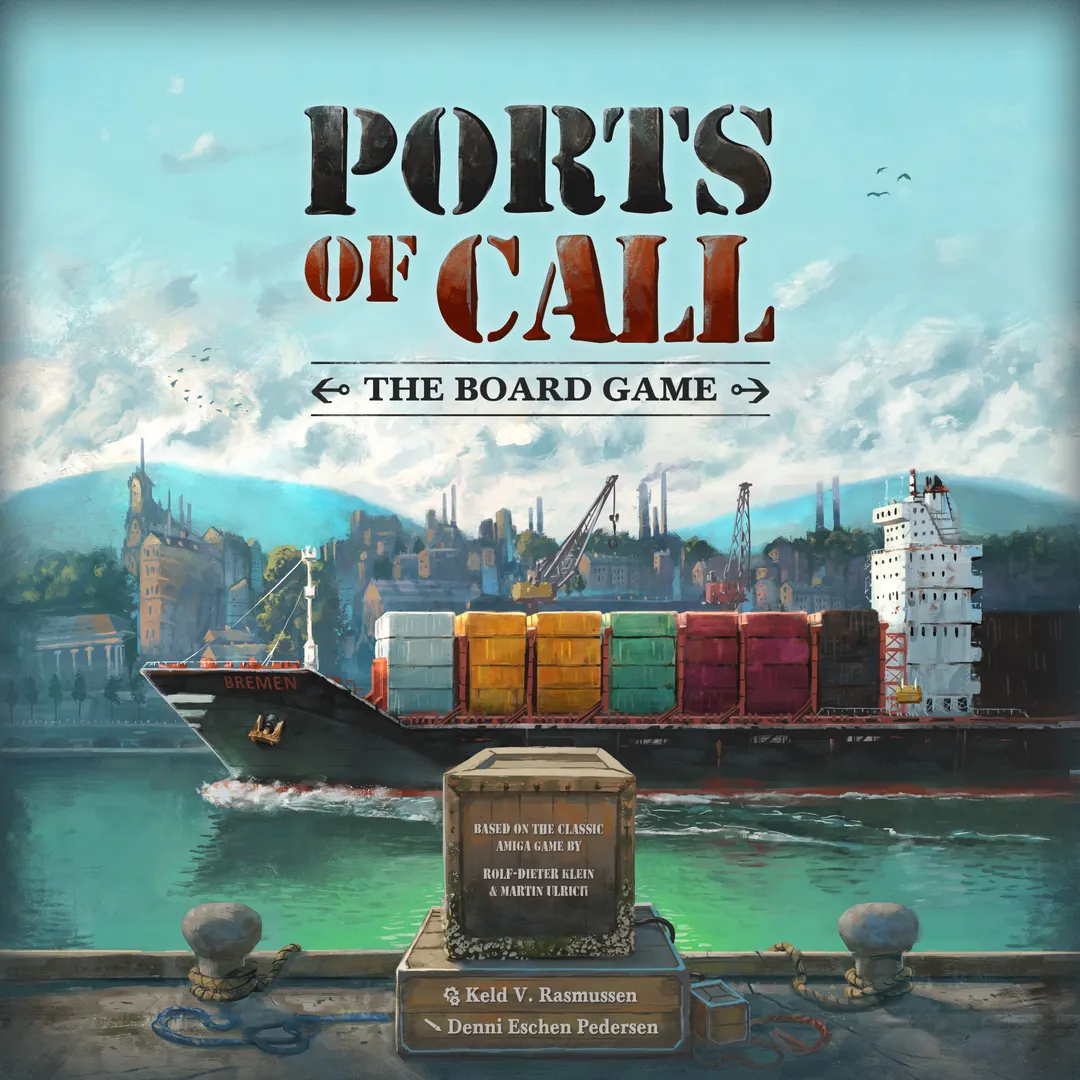
Ports of Call: The Board Game is a board game released in 2026 for 2–4 players, 90–240 minutes per game, and ages 15 and up. It was designed by Keld V. Rasmussen and its main mechanics are Point to Point Movement, End Game Bonuses, and Events.









Ports of Call: The Board Game brings the classic 1987 computer game, created by Rolf-Dieter Klein and Martin Ulrich, to the tabletop. Players compete to build the world's most valuable shipping company by transporting goods across the oceans, fulfilling commercial orders, establishing factories, and expanding their maritime empires. Starting with two ships, a home port, and limited financial resources, players must navigate international trade routes, manage their fleets, and make strategic investments, while dealing with pirates, rats, unpredictable weather, closed ports, and smuggling. The winner is the player who, by the end of the game, has built the most valuable shipping company. A World of Trade and Opportunity The game features 15 port cities connected by shipping routes across the globe. Five commodities – wind turbines, steel, electronics, wine, and oil – form the foundation of international trade. Each port specialises in producing one commodity, creating a worldwide network of trading opportunities. Players purchase containers, transport them between cities, and sell their cargo for profit. One of the main objectives is to fulfil commercial orders. Each Order Card requires two specific commodities to be delivered to a designated port. Players must plan efficient routes, acquire the necessary goods, and coordinate their ships to complete these contracts and increase their company's value. Build Your Fleet and Industrial Network As their businesses grow, players can invest in additional ships and establish factories in port cities around the world. Small ships are inexpensive and efficient, while large ships offer greater cargo capacity at higher purchase and maintenance costs. Expanding your fleet increases your transportation capabilities but also creates additional financial obligations. Factories allow players to produce their own containers and supply goods to the global Container Terminal, a shared marketplace where commodity prices fluctuate as containers are added and purchased. When another player purchases a container you have produced, you receive the payment. Producing goods also advances your position on the Production Track, unlocking valuable bonuses. Players must decide whether to focus on shipping contracts, industrial production, commodity trading, or a combination of these strategies. Strategic Decisions and Economic Challenges Each player manages their company through an individual Office Board and a limited number of Action Points. The number of Action Points depends on the size of the player's fleet, rewarding expansion with greater flexibility. Actions include purchasing ships, constructing factories, acquiring orders, buying containers, and producing goods. Ship movement and selling cargo do not require Action Points. Players must carefully balance investments, transportation efficiency, and available cash. Meanwhile, News Cards introduce unexpected events at the end of each quarter. Pirates, unpredictable weather, closed ports, smuggling, and changing market conditions can disrupt shipping operations and create new challenges or opportunities. Financial management is equally important. At the end of each fiscal year, companies receive income based on their Stock Exchange value but must pay maintenance costs for their ships. Poor financial planning can force players to sell shares or even face bankruptcy. Become the World's Leading Shipping Company The game takes place over four fiscal years, each consisting of four quarters, giving every player 16 turns to develop their business. Throughout the game, players increase their company's value by completing orders, earning Achievement Cards, and making strategic investments. The Stock Exchange tracks each company's value and ultimately determines the winner. At the end of the final year, unfinished orders result in penalties, while achievements provide additional rewards. The player with the highest company value wins! Ports of Call: The Board Game combines maritime logistics, economic strategy, market competition, and business development into a challenging trading experience where every decision matters. Welcome aboard! —description from the publisher
Ports of Call: The Board Game supports 2–4 players according to the catalogue. This range comes from the publisher’s listed player count, so the game can be set up for any group size within it. Some setups, rules and scoring details may still vary by player count, so check your edition’s rulebook for the exact configuration.
The listed playing time for Ports of Call: The Board Game is 90–240 minutes. This is the publisher’s estimate for a full game. The actual duration depends on the group, the player count and familiarity with the rules: first sessions usually run longer, while experienced groups often finish faster. Setup and teaching time are not included in this estimate.
The catalogue lists Ports of Call: The Board Game for ages 15 and up. This is the publisher’s recommendation and reflects reading demands, rule complexity and small components rather than theme alone. Younger players can often join with help from an adult, so check the age guidance on your edition and consider your group’s experience with board games.
Ports of Call: The Board Game has a complexity rating of 3.0 out of 5 from BoardGameGeek players, which makes it a medium-weight game. The rating reflects how much rules knowledge, planning and decision-making a typical game demands. Expect a longer first teach for heavier games, and use a preparation guide before game night.
Ports of Call: The Board Game belongs to these categories: Economic, Video Game Theme, and Industry / Manufacturing. Its main mechanics are Point to Point Movement, End Game Bonuses, and Events. Categories describe the theme and setting of a game, while mechanics describe what players actually do on their turns. Each mechanic links to a catalogue hub with similar games, which helps when you want something comparable.
The credited designers of Ports of Call: The Board Game are: Keld V. Rasmussen. These credits come from the published game data and name the people responsible for the game’s design, not its illustrators or publishers. Designer pages on MeepleRules collect other titles by the same designers, which helps when you enjoy a game and want to find similar ones.
The catalogue lists Ports of Call: The Board Game as a base game. It can be played on its own with the components in the box and does not require any other title. Expansions, if any exist, add new content or rules on top of it and are listed separately in the catalogue with a link back to this base game.