

- BGG rank
- BGG #558
- BGG rating
- 7.4
Evolution: Climate
2–6 players60 min2016
Complexity 2.7/5
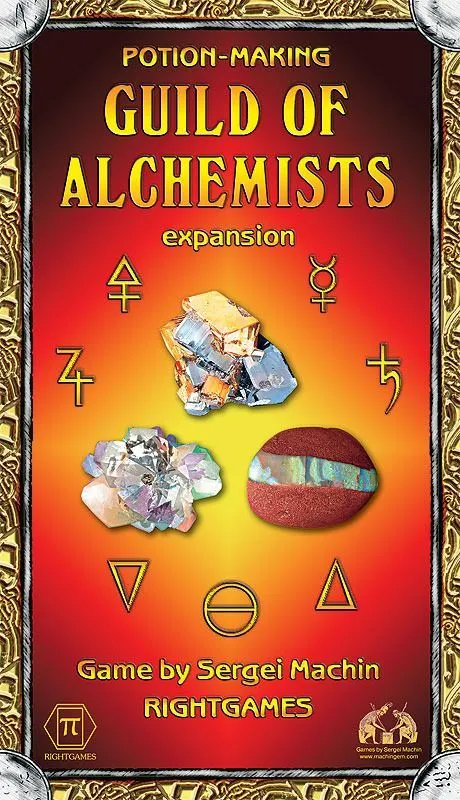
Rules assistance for Potion-Making: Guild Of Alchemists
Plain-language explanations of turns, card effects and disputed situations, with saved question history.
What would you like to know?
Answers come from the official rulebook, with the page to check.
Potion-Making: Guild Of Alchemists is an expansion for Potion-Making: Practice released in 2006 for 2–8 players and 60 minutes per game. It was designed by Sergey Machin and its main mechanics are Hand Management and Set Collection.
2–6 players60 min2016

2–6 players60 min2014

2–4 players30–60 min2010

2–4 players30–60 min2023

2 players30 min2007
2–4 players55 min2013
2–4 players40 min2011
2–4 players40 min2007
2 players30 min2024
1–4 players40–80 min2018
2–6 players25 min2023

2–6 players20 min2017
Potion-Making: Guild Of Alchemists, the second expansion for Potion-Making: Practice, adds another deck of cards to the game. With this expansion, the players can now attempt to create the Philosopher's Stone. How? At the start of the game, each player receives a Magnum Opus card that shows a succession of formulas. If you manage to fulfill the list you've been given, you create a Philosopher's Stone, the game ends, and you earn additional points. Potion-Making: Guild Of Alchemists also includes new formulas, spells and rules, and while you need the base game in order to play, the Practice and Guild Of Alchemists remain separate. Each turn now consists of three phases in which you can draw cards from either deck and play them as elements or formulas, therefore giving you new opportunities to carry out your strategy and invent ingenious combinations. "Elementary granum", a new element in the expansion, can be used as any element when creating a formula, then can replace any other element. The expansion also includes "Elixir of Omnitude", which can replace any simple (two-component) elixir – but if someone takes your completed formula made with this Elixir or with Elementary granum, you won't score half the points in compensation. Yes, there are benefits for paying for everything. The expansion Potion-Making: University Course can also be "combined" with Guild Of Alchemists, which means three separate decks would be in play.
Potion-Making: Guild Of Alchemists supports 2–8 players according to the catalogue. This range comes from the publisher’s listed player count, so the game can be set up for any group size within it. Some setups, rules and scoring details may still vary by player count, so check your edition’s rulebook for the exact configuration.
The listed playing time for Potion-Making: Guild Of Alchemists is 60 minutes. This is the publisher’s estimate for a full game. The actual duration depends on the group, the player count and familiarity with the rules: first sessions usually run longer, while experienced groups often finish faster. Setup and teaching time are not included in this estimate.
Potion-Making: Guild Of Alchemists has a complexity rating of 2.4 out of 5 from BoardGameGeek players, which makes it a medium-light game. The rating reflects how much rules knowledge, planning and decision-making a typical game demands. Expect a longer first teach for heavier games, and use a preparation guide before game night.
Potion-Making: Guild Of Alchemists belongs to these categories: Card Game, Fantasy, and Expansion for Base-game. Its main mechanics are Hand Management and Set Collection. Categories describe the theme and setting of a game, while mechanics describe what players actually do on their turns. Each mechanic links to a catalogue hub with similar games, which helps when you want something comparable.
The credited designers of Potion-Making: Guild Of Alchemists are: Sergey Machin. These credits come from the published game data and name the people responsible for the game’s design, not its illustrators or publishers. Designer pages on MeepleRules collect other titles by the same designers, which helps when you enjoy a game and want to find similar ones.
The catalogue lists Potion-Making: Guild Of Alchemists as an expansion for Potion-Making: Practice. Expansions add new content, rules or scenarios to the base game and usually cannot be played on their own, so you need Potion-Making: Practice to use it. Check that your edition of Potion-Making: Practice is compatible, as some expansions were revised between editions.


