
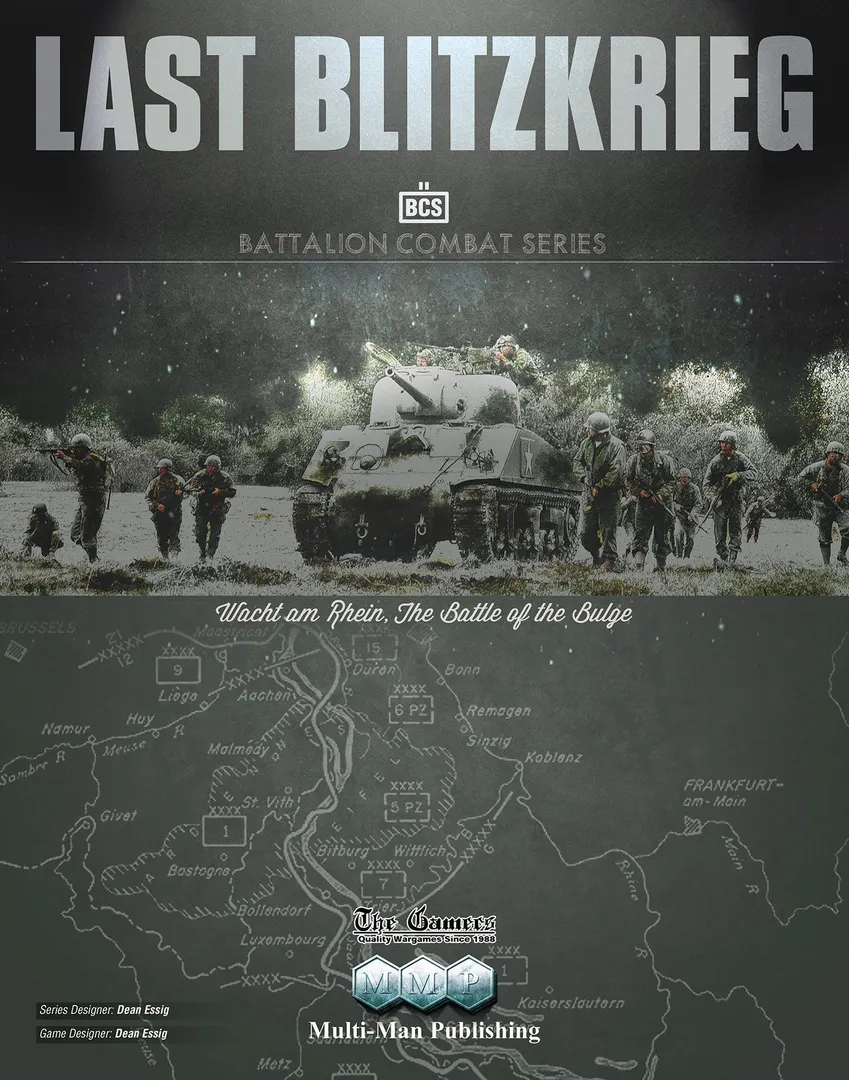
- BGG rank
- BGG #4,455
- BGG rating
- 8.7
Last Blitzkrieg: Wacht am Rhein, The Battle of the Bulge
- 2–4 players
- 180–960 min
- Complexity 3.8/5
- 2016
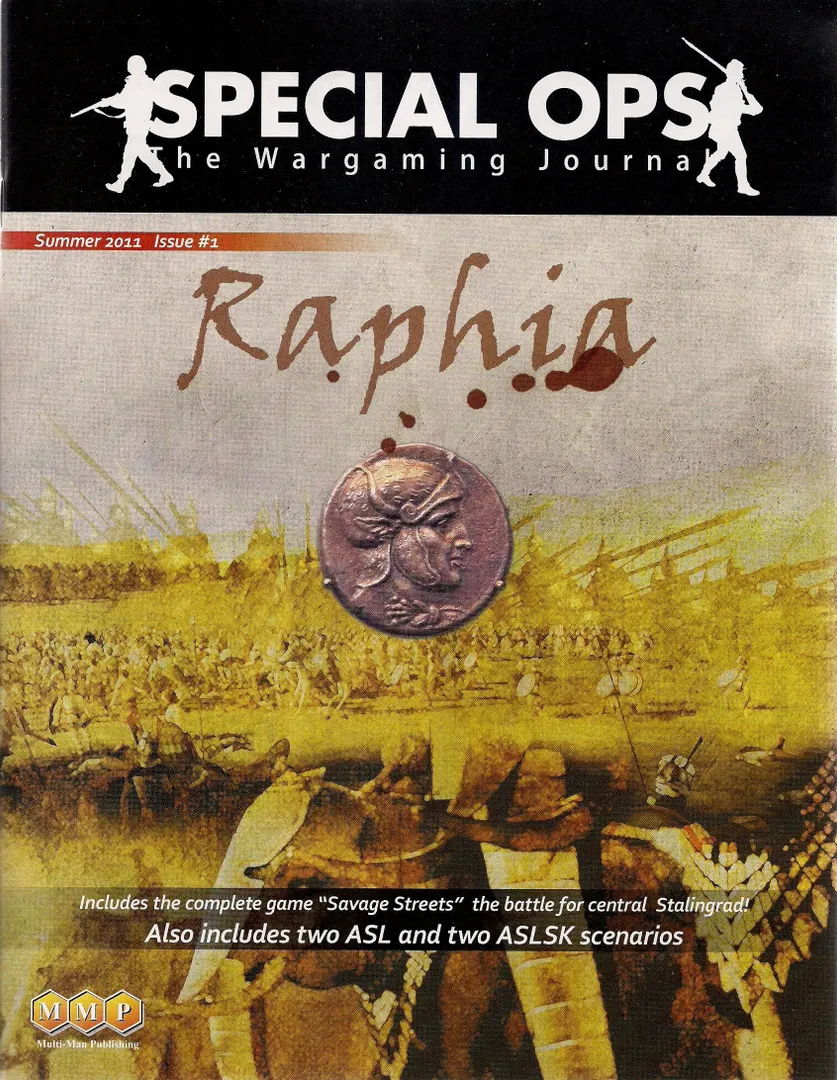
2011
Rules assistance for Raphia
Plain-language explanations of turns, card effects and disputed situations, with official source references and saved question history.
For 2 players
What would you like to know?
Answers come from the official rulebook, with the page to check.
Raphia is a board game released in 2011 for 2 players, 120 minutes per game, and ages 12 and up. It was designed by Dean Essig and its main mechanics are Hexagon Grid.
Raphia The Battle of Raphia, also known as the Battle of Gaza, was a battle fought on 22 June 217 BC near modern Rafah between the forces of Ptolemy IV Philopator, king of Egypt and Antiochus III the Great of the Seleucid kingdom during the Syrian Wars. It was one of the largest battles of the Hellenistic kingdoms of the Diadochi and was waged to determine the sovereignty of Coele Syria. Raphia was technically designed as a Standard Combat Series (SCS) game. However, only a small subset of the SCS rules are needed for play. If you are familiar with usual wargame movement (what an MP is, how units count movement, etc), stacking, step loss, and retreat conventions, there is no need to review the SCS rulebook itself (not included, but will be referenced in the links section). Players take turns moving their units and conducting ranged combat and melee until the victory conditions are reached. A player wins Raphia by being the first to move one of their Phalanx units into the enemy home tent. If all Phalanxes are destroyed before either player wins, the result is a draw. Raphia is one of the games included in Multi-Man Publishing's (MMP) Special Ops magazine Issue #1 (Summer 2011). Game Inventory: One 11 x 17" full-color mapsheet One dual-side printed countersheets (140 1/2" counters though only 130 are used for the game) One 4-page rule booklet
Raphia supports 2 players according to the catalogue. This is the publisher’s listed player count, so the game is designed for exactly that number of participants. Variants for other group sizes, if any, are described in the rulebook of your edition, so check it before setting up a different configuration.
The listed playing time for Raphia is 120 minutes. This is the publisher’s estimate for a full game. The actual duration depends on the group, the player count and familiarity with the rules: first sessions usually run longer, while experienced groups often finish faster. Setup and teaching time are not included in this estimate.
The catalogue lists Raphia for ages 12 and up. This is the publisher’s recommendation and reflects reading demands, rule complexity and small components rather than theme alone. Younger players can often join with help from an adult, so check the age guidance on your edition and consider your group’s experience with board games.
Raphia has a complexity rating of 1.3 out of 5 from BoardGameGeek players, which makes it a light game. The rating reflects how much rules knowledge, planning and decision-making a typical game demands. Expect a longer first teach for heavier games, and use a preparation guide before game night.
Raphia belongs to these categories: Wargame and Ancient. Its main mechanics are Hexagon Grid. Categories describe the theme and setting of a game, while mechanics describe what players actually do on their turns. Each mechanic links to a catalogue hub with similar games, which helps when you want something comparable.
The credited designers of Raphia are: Dean Essig. These credits come from the published game data and name the people responsible for the game’s design, not its illustrators or publishers. Designer pages on MeepleRules collect other titles by the same designers, which helps when you enjoy a game and want to find similar ones.
The catalogue lists Raphia as a base game. It can be played on its own with the components in the box and does not require any other title. Expansions, if any exist, add new content or rules on top of it and are listed separately in the catalogue with a link back to this base game.