
- BGG rank
- BGG #26,217
- BGG rating
- 5.4
Tanbo
- 2–4 players
- 30–90 min
- Complexity 2.8/5
- 1993

2012
Rules assistance for Redstone
Plain-language explanations of turns, card effects and disputed situations, with official source references and saved question history.
For 2 players
What would you like to know?
Answers come from the official rulebook, with the page to check.
Redstone is a board game released in 2012 for 2 players, 20–60 minutes per game, and ages 5 and up. It was designed by Mark Steere and its main mechanics are Tile Placement, Square Grid, and Enclosure.


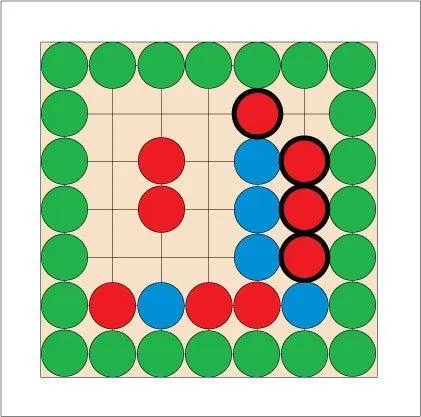

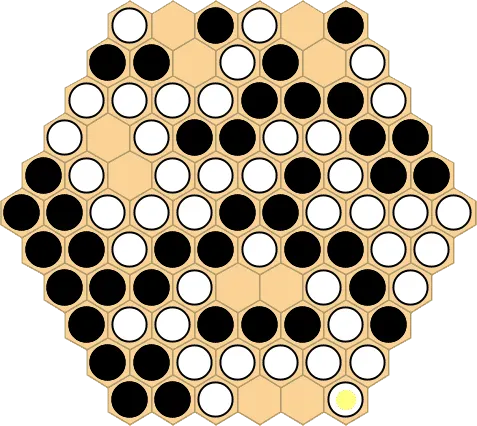
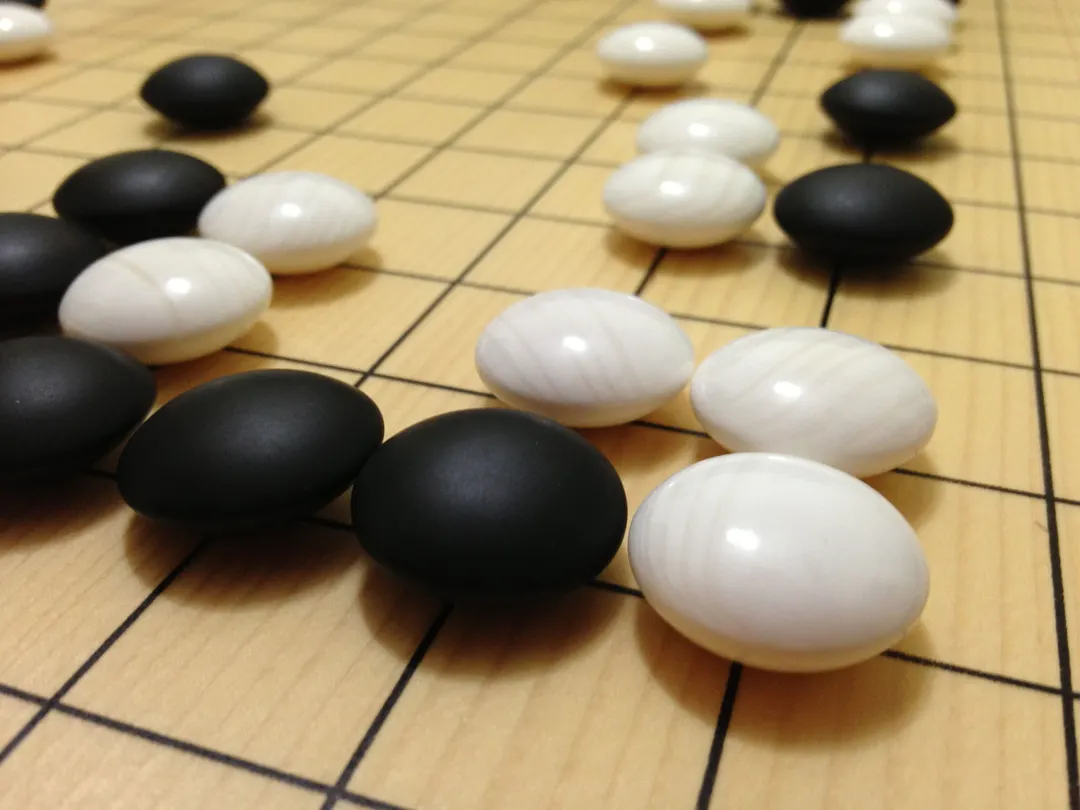
Redstone is a variation of Go in which red stones are used to capture. Red stones are permanent. They cannot themselves be captured. “Adjacent” will mean orthogonally (horizontally or vertically) adjacent here. The two players, Black and White, each have unlimited stones of their own color. They also share an unlimited supply of red stones. Draws cannot occur in Redstone. Luis Bolaños Mures made a material contribution to the design of Redstone. Object of the game You must annihilate your opponent, removing all of his stones from the board. If your placement eliminates all black and white stones from the board, you win. If your placement eliminates all of your own stones while enemy stones remain on the board, you lose. Play Starting with Black, the two players take turns placing stones onto unoccupied points on the board, subject to restrictions, one stone per turn. Passing is not allowed in Redstone. Players will always have a placement available and must make one. A group is an orthogonally interconnected collection of one or more like-colored stones. Only black groups and white groups will be discussed here, not red groups. A liberty is an unoccupied point adjacent to a (black or white) group. A capturing placement results in one or more groups, of either or both colors, having no liberties. Such a placement can only be made with a red stone. Conversely, a red stone can only be placed if it bounds (completely deprives of liberties) one or more groups of either or both colors. Red stones are permanent. They cannot themselves be captured. Self capture is allowed. When multiple groups without liberties result from a placement, all such groups are removed immediately following said placement, regardless of the groups' colors. Unlike Go, if you unbound your own temporarily bounded group by removing a neighboring enemy group, you must still remove your own temporarily bounded group. Pie rule Since Redstone is a game of annihilation, not of point score, Go’s komi can’t be used. Instead, Redstone uses the pie rule for balance.
Redstone supports 2 players according to the catalogue. This is the publisher’s listed player count, so the game is designed for exactly that number of participants. Variants for other group sizes, if any, are described in the rulebook of your edition, so check it before setting up a different configuration.
The listed playing time for Redstone is 20–60 minutes. This is the publisher’s estimate for a full game. The actual duration depends on the group, the player count and familiarity with the rules: first sessions usually run longer, while experienced groups often finish faster. Setup and teaching time are not included in this estimate.
The catalogue lists Redstone for ages 5 and up. This is the publisher’s recommendation and reflects reading demands, rule complexity and small components rather than theme alone. Younger players can often join with help from an adult, so check the age guidance on your edition and consider your group’s experience with board games.
Redstone belongs to these categories: Territory Building and Abstract Strategy. Its main mechanics are Tile Placement, Square Grid, and Enclosure. Categories describe the theme and setting of a game, while mechanics describe what players actually do on their turns. Each mechanic links to a catalogue hub with similar games, which helps when you want something comparable.
The credited designers of Redstone are: Mark Steere. These credits come from the published game data and name the people responsible for the game’s design, not its illustrators or publishers. Designer pages on MeepleRules collect other titles by the same designers, which helps when you enjoy a game and want to find similar ones.
The catalogue lists Redstone as a base game. It can be played on its own with the components in the box and does not require any other title. Expansions, if any exist, add new content or rules on top of it and are listed separately in the catalogue with a link back to this base game.