
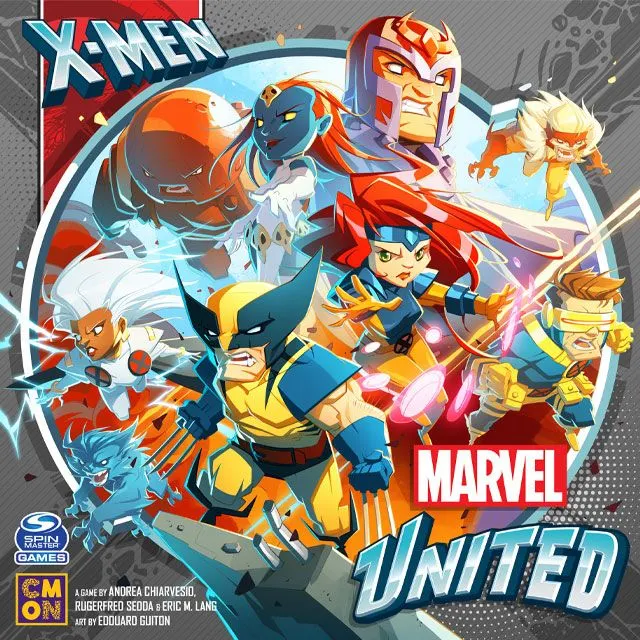
- BGG rank
- BGG #408
- BGG rating
- 8.0
Marvel United: X-Men
- 1–5 players
- 40 min
- Complexity 2.0/5
- 2021
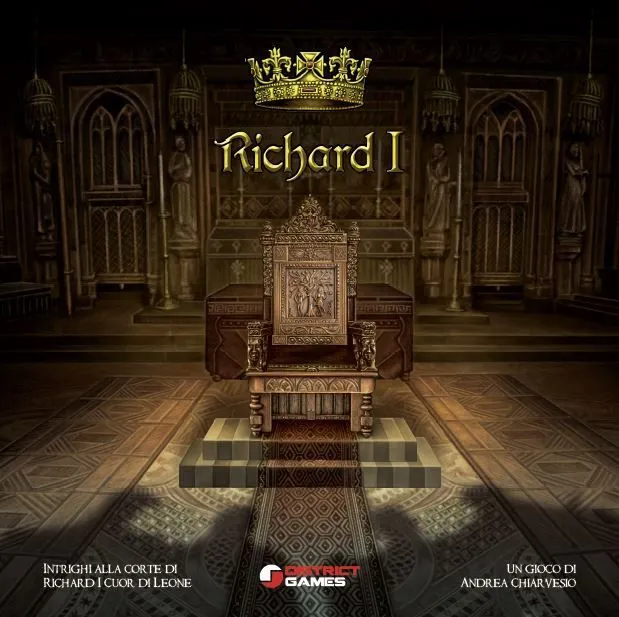
2014
Rules assistance for Richard I
Plain-language explanations of turns, card effects and disputed situations, with official source references and saved question history.
For 3 players
What would you like to know?
Answers come from the official rulebook, with the page to check.
Richard I is a board game released in 2014 for 3–8 players, 60 minutes per game, and ages 12 and up. It was designed by Andrea Chiarvesio and its main mechanics are Variable Player Powers, Cooperative Game, and Team-Based Game.
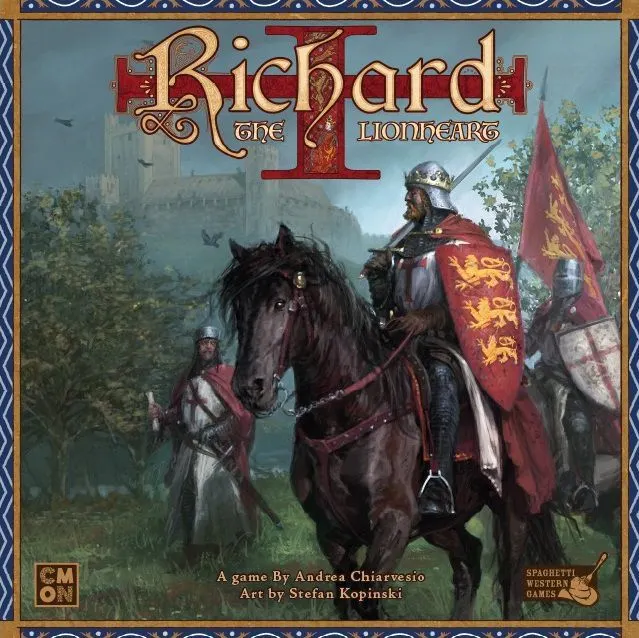
England, a land so harsh that forged heroes and conquerors, where the people are so indomitable that not even the Roman Empire managed to subjugate them. England has built an extensive empire on which the sun never set, vastly extending its domain beyond the British Isles on the spur of the Plantagenets, a royal lineage that dominated much of medieval European history, a dynasty forged from steel and blood, a lineage that would prevail for more than half a millennium. Plantagenet is a name that inspires admiration among enemies and fear among allies. Henry II, the first Plantagenet king to extend and stabilize his domains, contracted a political marriage with Eleanor of Aquitaine, a marriage intended to generate heirs to the throne. This strategic alliance by marriage produced four heirs: children who would rebel against their own father, more than once, leading to war, bloodshed and pacification, the stuff history is made of. Who is going to inherit the throne? Who will prove to be worthy of the illustrious name of Plantagenet? After years of battles and rivalry, only two of the heirs survived. The first, opposed by his own father, is a man with a destiny marked out by his own land, which he rarely set foot on as he was preoccupied for his entire life in conquests beyond the British Isles. The hope of an entire era would depend on his choices. The difference between being the usurper or the chosen one would depend on his actions. He is Richard I of England, better known as Richard the Lionheart. The other, the last born, was far removed from the throne. Overshadowed by his own family, derided by his own people and saddled with the unfortunate title of “Lackland”, John Lackland had the opportunity of a lifetime: Richard left for the Crusades and John could claim the throne for himself in Richard’s absence. But would he have the mettle of a king? Would he surpass his more illustrious brother Richard? Would he be able to counter his brother’s supporters? A wise choice as to with whom to form an alliance is crucial to one’s place in history. Only brave choices will crown the true king of England, and only those who loyally and valiantly supported him in the conquest and administration of the kingdom would be remembered in history. This is a choice that only the strong and the wise would make.This is history. In Richard I, the players assume the role of the characters who remained in England when King Richard I left for the Crusades. They have to decide which side to take without knowing whether Richard I will return home a victor with glory and riches, or he won't come back at all (but there are many possible intermediate outcomes). During the game, the players take turns to influence the different characters available in order to earn prestige points (PPs) for themselves, but also to use their powers to influence the Crusade from far away by sending resources. A player might even decide to betray his own side, if worrying news were to come from the East... At the end of the game, the outcome of the Crusade leads to an increase of PPs for the players who were deployed by the faction which has achieved its goal, but the game has only one winner: the player who has accumulated the most PPs, regardless of the faction to which he belongs! The object of the game is to amass the most Prestige Points (PP) by wisely choosing alliances and exerting influence on the performance of the Crusade.
Richard I supports 3–8 players according to the catalogue. This range comes from the publisher’s listed player count, so the game can be set up for any group size within it. Some setups, rules and scoring details may still vary by player count, so check your edition’s rulebook for the exact configuration.
The listed playing time for Richard I is 60 minutes. This is the publisher’s estimate for a full game. The actual duration depends on the group, the player count and familiarity with the rules: first sessions usually run longer, while experienced groups often finish faster. Setup and teaching time are not included in this estimate.
The catalogue lists Richard I for ages 12 and up. This is the publisher’s recommendation and reflects reading demands, rule complexity and small components rather than theme alone. Younger players can often join with help from an adult, so check the age guidance on your edition and consider your group’s experience with board games.
Richard I has a complexity rating of 2.6 out of 5 from BoardGameGeek players, which makes it a medium-light game. The rating reflects how much rules knowledge, planning and decision-making a typical game demands. Expect a longer first teach for heavier games, and use a preparation guide before game night.
Richard I belongs to these categories: Medieval. Its main mechanics are Variable Player Powers, Cooperative Game, and Team-Based Game. Categories describe the theme and setting of a game, while mechanics describe what players actually do on their turns. Each mechanic links to a catalogue hub with similar games, which helps when you want something comparable.
The credited designers of Richard I are: Andrea Chiarvesio. These credits come from the published game data and name the people responsible for the game’s design, not its illustrators or publishers. Designer pages on MeepleRules collect other titles by the same designers, which helps when you enjoy a game and want to find similar ones.
The catalogue lists Richard I as a base game. It can be played on its own with the components in the box and does not require any other title. Expansions, if any exist, add new content or rules on top of it and are listed separately in the catalogue with a link back to this base game.