- BGG rating
- 6.8
Rockwell: Diamond Cards
- 2–4 players
- 90 min
- Complexity 2.5/5
- 2013

2013
Rules assistance for Rockwell
Plain-language explanations of turns, card effects and disputed situations, with official source references and saved question history.
For 2 players
What would you like to know?
Answers come from the official rulebook, with the page to check.
Rockwell is a board game released in 2013 for 2–4 players, 90 minutes per game, and ages 14 and up. It was designed by Bruno Crépeault and its main mechanics are Area Movement, Area Majority / Influence, and Modular Board.











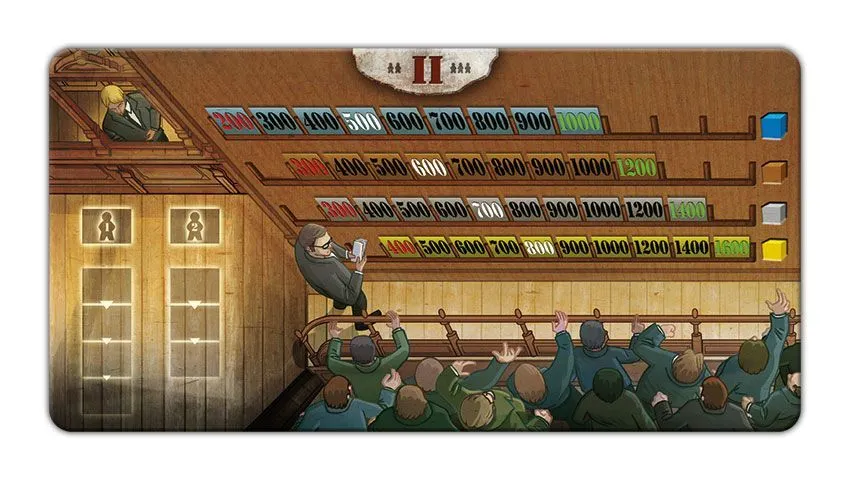
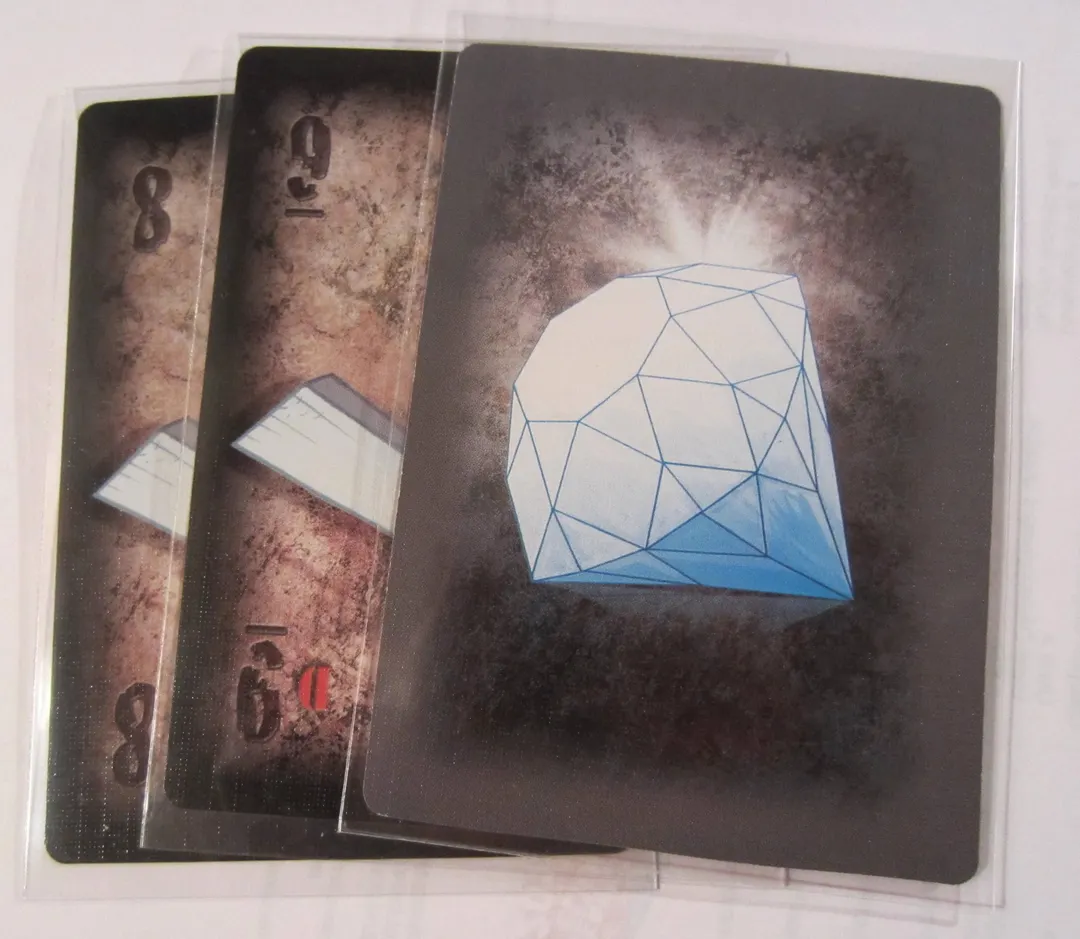
The Rockwell company wants to develop drilling activities, but does not have the necessary teams in-house. Rockwell has decided to buy into specialized companies. In order to determine which one it will put on the most advanced and most profitable projects in the future, Rockwell has elected to make them work together on a single important project: drilling through the depths of the earth’s crust to the core. The company who demonstrates the greatest expertise in the technical and financial management of this contract will ensure a bright future with Rockwell. Goal of the Game... Acquire the most Renown points at the end of the game. There are three ways to achieve this: accomplish achievements (nine in total), make investments, get majorities after the game. Gameplay... Acquire more prestige than your opponents by the end of the game. The prestige is acquired through Production and Delivery tiles, as well as in the final scoring, which will award prestige points for different majorities. The game is divided into three phases that are repeated as many times as necessary until one of two conditions endgame is met: a majority of the players have reached the center of the earth with a drill crew a player has completed the nine Achievements. Then the current round is completed before determining the winner. Each player has two vice presidents he will deploy to act in Phase 1, 2, or 3, in order to perform actions. The order in which the players’ vice presidents are deployed is determined by a closed-fist auction. This is the main phase. Players will move their drill crews are at a rate of one per round (there are four rounds before Phase 2). Depending on the position of your vice president, if you deployed him to act in this phase, you can corrupt opposing drill crews (in order to attract them to the same tile as your active drill crew) or hire a subcontractor (to increase your drilling power). Each tile of the earth's crust has a value indicating its resistance to drilling. If the sum of the drill crews who are present equals or exceeds this value, the tile is excavated and turned over; then draw an Extraction card to see what resources you discovered, which is evenly split between the players who participated in the drilling. The indivisible remainder goes to one of those players (prioritized by whoever has a mine on the tile, then the player who has the greater drilling power, then the one who ttriggered the drilling). Finally, after the four rounds, the mines laid on drilled tiles provide the resources printed on the back of the tile. Players with a vice president here can perform market transactions, which is to say that they can buy or sell resources. In this phase, players can make investments to get renown points and improve their drilling conditions in different ways… augment the drill crews’ power (maximum = 4), place mines in the game (maximum three mines), improve mine safety (in order to avoid wasting resources at extraction time), improve the movement of drill crews.
Rockwell supports 2–4 players according to the catalogue. This range comes from the publisher’s listed player count, so the game can be set up for any group size within it. Some setups, rules and scoring details may still vary by player count, so check your edition’s rulebook for the exact configuration.
The listed playing time for Rockwell is 90 minutes. This is the publisher’s estimate for a full game. The actual duration depends on the group, the player count and familiarity with the rules: first sessions usually run longer, while experienced groups often finish faster. Setup and teaching time are not included in this estimate.
The catalogue lists Rockwell for ages 14 and up. This is the publisher’s recommendation and reflects reading demands, rule complexity and small components rather than theme alone. Younger players can often join with help from an adult, so check the age guidance on your edition and consider your group’s experience with board games.
Rockwell has a complexity rating of 3.2 out of 5 from BoardGameGeek players, which makes it a medium-weight game. The rating reflects how much rules knowledge, planning and decision-making a typical game demands. Expect a longer first teach for heavier games, and use a preparation guide before game night.
Rockwell belongs to these categories: Economic, Number, and Exploration. Its main mechanics are Area Movement, Area Majority / Influence, and Modular Board. Categories describe the theme and setting of a game, while mechanics describe what players actually do on their turns. Each mechanic links to a catalogue hub with similar games, which helps when you want something comparable.
The credited designers of Rockwell are: Bruno Crépeault. These credits come from the published game data and name the people responsible for the game’s design, not its illustrators or publishers. Designer pages on MeepleRules collect other titles by the same designers, which helps when you enjoy a game and want to find similar ones.
The catalogue lists Rockwell as a base game. It can be played on its own with the components in the box and does not require any other title. Expansions, if any exist, add new content or rules on top of it and are listed separately in the catalogue with a link back to this base game.