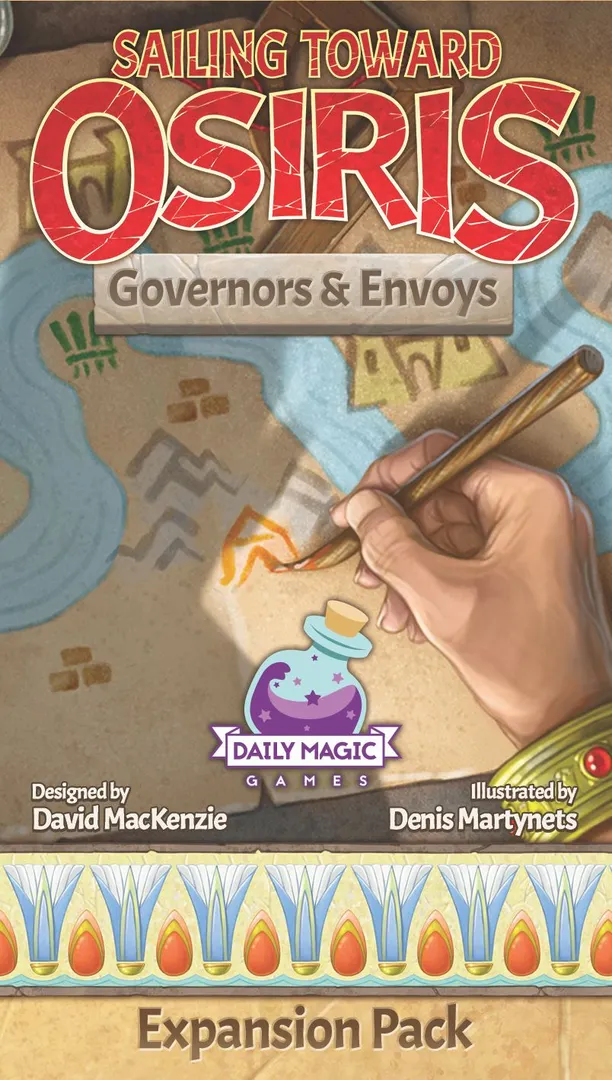
- BGG rating
- 7.5
Sailing Toward Osiris: Governors & Envoys
- 2–5 players
- 60–90 min
- Complexity 2.0/5
- 2018
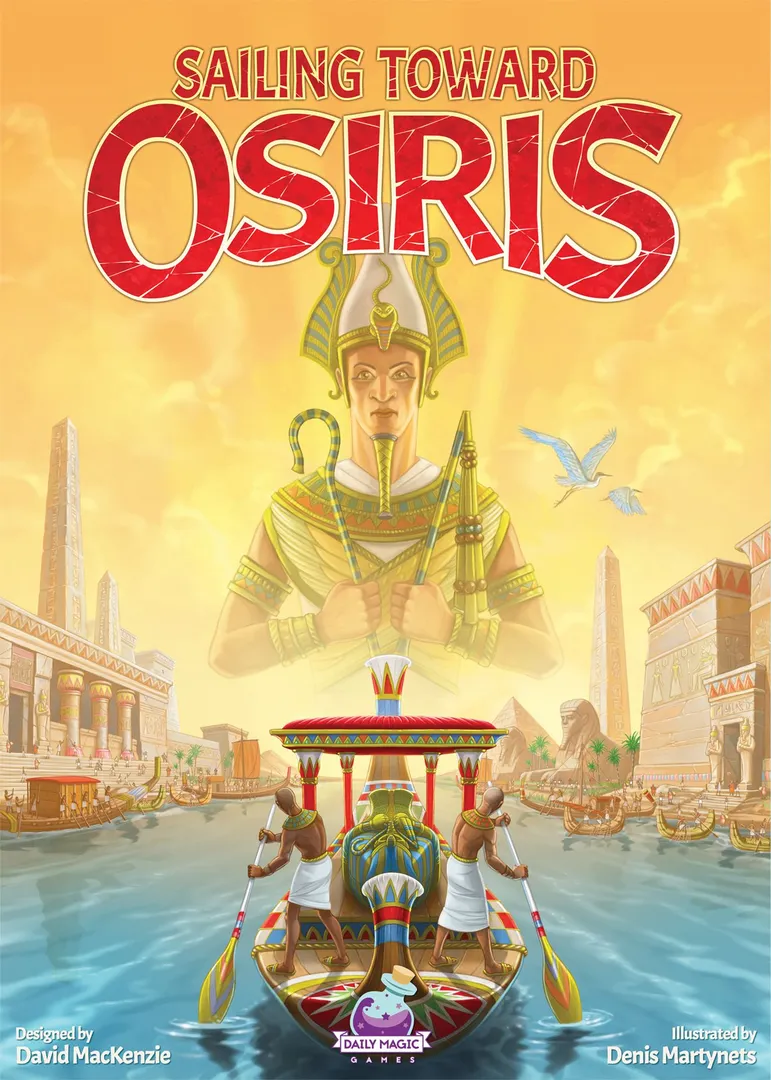
2018
Rules assistance for Sailing Toward Osiris
Plain-language explanations of turns, card effects and disputed situations, with official source references and saved question history.
For 2 players
What would you like to know?
Answers come from the official rulebook, with the page to check.
Sailing Toward Osiris is a board game released in 2018 for 2–5 players, 60–90 minutes per game, and ages 14 and up. It was designed by W. David MacKenzie and its main mechanics are Pattern Building and Worker Placement.






Pharaoh is dead and his funerary barge sails slowly down the Nile toward his tomb where his spirit will stand before the judgement of Osiris. Pharaoh had no offspring so tradition holds that the governors of the land be tasked with building monuments to Pharaoh’s glory so that Osiris will favor his spirit in the afterlife. Accordingly, Pharaoh’s successor will be the governor who builds the greatest tribute to the late king. Resources and laborers are limited, the gods are capricious, and time is short; the memorials must be finished before the barge reaches the temple of Osiris at Men-nefer. Sailing Toward Osiris is a euro-style game with worker placement, resources management, project completion, and no direct conflict. Down-time is kept to a minimum via a single action, round-and-round turn structure that emphasizes timing decisions and subtle strategies. The game takes place over four "seasons" with the movement of Pharaoh's barge tracking the game's progress. Each season, after players draw workers from a communal bag, play begins with each player taking a series of one-action turns from a list of 10 possible actions: 1. Play a worker to harvest resources 2. Play a worker to a city for cards 3. Play a worker to a caravan as leader or follower 4. Hire an extra worker 5. Trade at the market 6. Plan a monument 7. Build a monument 8. Play a city card 9. Play a boon card 10. Withdraw from further actions. Players are working to build sphinxes, obelisks, and pylons to the glory of the late Pharaoh and to earn extra glory by building the monuments on certain river segments and in certain configurations. However, as more monuments are built, resource harvesting becomes less productive and viable locations for future monuments become scarce. By the last season, players will have to be creative to find enough resources or available land on which to build. The player who has amassed the most glory points by the end of the game will be crowned the new Pharaoh. Sailing Toward Osiris was inspired by the real events surrounding the death of Rameses XI at the end of Egypt's 20th Dynasty and the ascension of Smendes, a powerful governor in Lower Egypt.
Sailing Toward Osiris supports 2–5 players according to the catalogue. This range comes from the publisher’s listed player count, so the game can be set up for any group size within it. Some setups, rules and scoring details may still vary by player count, so check your edition’s rulebook for the exact configuration.
The listed playing time for Sailing Toward Osiris is 60–90 minutes. This is the publisher’s estimate for a full game. The actual duration depends on the group, the player count and familiarity with the rules: first sessions usually run longer, while experienced groups often finish faster. Setup and teaching time are not included in this estimate.
The catalogue lists Sailing Toward Osiris for ages 14 and up. This is the publisher’s recommendation and reflects reading demands, rule complexity and small components rather than theme alone. Younger players can often join with help from an adult, so check the age guidance on your edition and consider your group’s experience with board games.
Sailing Toward Osiris has a complexity rating of 2.8 out of 5 from BoardGameGeek players, which makes it a medium-light game. The rating reflects how much rules knowledge, planning and decision-making a typical game demands. Expect a longer first teach for heavier games, and use a preparation guide before game night.
Sailing Toward Osiris belongs to these categories: Ancient and Negotiation. Its main mechanics are Pattern Building and Worker Placement. Categories describe the theme and setting of a game, while mechanics describe what players actually do on their turns. Each mechanic links to a catalogue hub with similar games, which helps when you want something comparable.
The credited designers of Sailing Toward Osiris are: W. David MacKenzie. These credits come from the published game data and name the people responsible for the game’s design, not its illustrators or publishers. Designer pages on MeepleRules collect other titles by the same designers, which helps when you enjoy a game and want to find similar ones.
The catalogue lists Sailing Toward Osiris as a base game. It can be played on its own with the components in the box and does not require any other title. Expansions, if any exist, add new content or rules on top of it and are listed separately in the catalogue with a link back to this base game.