

- BGG rank
- BGG #919
- BGG rating
- 8.3
Empire of the Sun: The Pacific War 1941-1945
- 1–2 players
- 360 min
- Complexity 4.4/5
- 2005
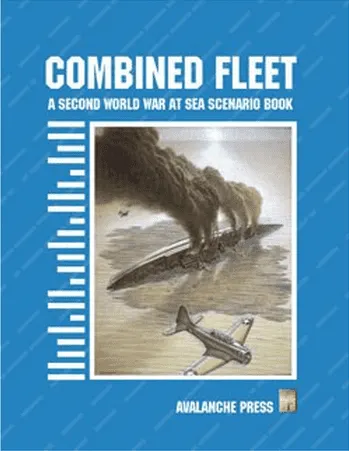
Rules assistance for Second World War at Sea: Combined Fleet
Plain-language explanations of turns, card effects and disputed situations, with official source references and saved question history.
What would you like to know?
Answers come from the official rulebook, with the page to check.
Second World War at Sea: Combined Fleet is an expansion for Second World War at Sea: Coral Sea released in 2010 for 1–2 players, 30 minutes per game, and ages 12 and up. Its main mechanics are Dice Rolling and Hexagon Grid.




(from the APL website :) During the late spring and early summer of 1942, the Imperial Japanese Navy launched a series of aggressive operations. Barely taking time to refuel, Japanese carriers and cruisers struck the Dutch East Indies and Ceylon. Committing a basic error of dividing their forces, the Japanese then split their fleet carriers into two groups for Operations MO and MI, which resulted in the Battles of Midway and the Coral Sea. Combined Fleet is a 64-page book supplement to the Second World War at Sea series, focusing on Japanese and American plans and options for these two climactic battles. There are 20 scenarios, or separate game situations, based on both actual actions and potential battles that could have taken place with the forces that both sides either could have committed or discussed sending to the battle zone. This module is not playable by itself, but requires ownership of Coral Sea and Midway to enjoy most of he scenarios, with some pieces also drawn from Bismarck, Bomb Alley, Strike South and Eastern Fleet. http://www.avalanchepress.com/gameCombinedFleet.php System Description at http://www.avalanchepress.com/line_WWIISea.php
Second World War at Sea: Combined Fleet supports 1–2 players according to the catalogue. This range comes from the publisher’s listed player count, so the game can be set up for any group size within it. Some setups, rules and scoring details may still vary by player count, so check your edition’s rulebook for the exact configuration.
The listed playing time for Second World War at Sea: Combined Fleet is 30 minutes. This is the publisher’s estimate for a full game. The actual duration depends on the group, the player count and familiarity with the rules: first sessions usually run longer, while experienced groups often finish faster. Setup and teaching time are not included in this estimate.
The catalogue lists Second World War at Sea: Combined Fleet for ages 12 and up. This is the publisher’s recommendation and reflects reading demands, rule complexity and small components rather than theme alone. Younger players can often join with help from an adult, so check the age guidance on your edition and consider your group’s experience with board games.
Second World War at Sea: Combined Fleet belongs to these categories: Wargame, Nautical, and World War II. Its main mechanics are Dice Rolling and Hexagon Grid. Categories describe the theme and setting of a game, while mechanics describe what players actually do on their turns. Each mechanic links to a catalogue hub with similar games, which helps when you want something comparable.
The catalogue lists Second World War at Sea: Combined Fleet as an expansion for Second World War at Sea: Coral Sea. Expansions add new content, rules or scenarios to the base game and usually cannot be played on their own, so you need Second World War at Sea: Coral Sea to use it. Check that your edition of Second World War at Sea: Coral Sea is compatible, as some expansions were revised between editions.