- BGG rating
- 8.0
Second World War at Sea: Spice Islands
- 1–2 players
- 30 min
- Complexity 3.0/5
- 2009
2001
Rules assistance for Second World War at Sea: Eastern Fleet
Plain-language explanations of turns, card effects and disputed situations, with official source references and saved question history.
For 2 players
What would you like to know?
Answers come from the official rulebook, with the page to check.
Second World War at Sea: Eastern Fleet is a board game released in 2001 for 2 players, 120 minutes per game, and ages 12 and up. It was designed by Michael Bennighof and its main mechanics are Hexagon Grid.


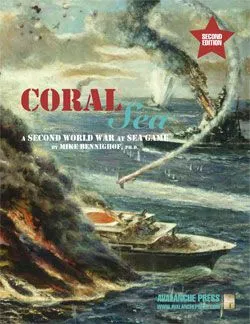


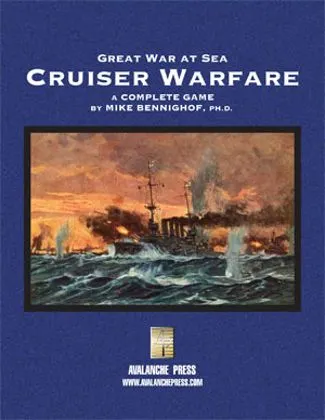


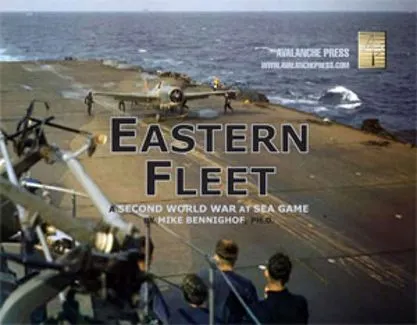
Following their victory at Pearl Harbor, the Imperial Japanese Navy's First Air Fleet moved through the American, Dutch and British colonies of South and East Asia. Having taken the mighty British naval base at Singapore, the next move was to enter the Indian Ocean and challenge the Royal Navy there. Eastern Fleet' is a complete game in the Second World War at Sea series covering these campaigns. Scenarios range from the Japanese invasions of Burma and the Andaman Islands through the massive carrier raids to the planned but never executed invasion of Ceylon. The Japanese often have overwhelming superiority in the air, which the British must counter with guile while trying to lure the enemy into range of his slow but powerful battleships. Pieces represent the ships and aircraft that took part in the campaign. The Japanese fleet is built around its five powerful fleet carriers with their deckloads of Zero fighters, Val dive bombers and Kate torpedo bombers, all wielded by expert pilots and crews. They are supported by four fast battle cruisers, fast but lightly protected heavy cruisers and big destroyers armed with the awesome Long Lance torpedo. The Royal Navy is outnumbered and outgunned in the air, with three fleet carriers — all of them smaller than their Japanese counterparts — and one nearly useless light carrier. The British do have four old and painfully slow R-class battleships and the much more useful Warspite, newly rebuilt in an American shipyard. British cruisers are vastly inferior to those of the Japanese in both numbers and capability, as is the case with the British, Australian and Dutch destroyers. But this is the Royal Navy, with a tradition of victory and a secret base on which it can fall back in the middle of the supposedly empty Indian Ocean. The British cannot be counted out until their last warship is sunk. Contents: Strategic Map Tactical Map 210 counters 2 Airbase Cards 2 Task Force Cards 2 Player Aid Cards 24 page Series Rulebook 20 page Scenario/rulebook with 11 Scenarios (from publisher's website and user's decription)
Second World War at Sea: Eastern Fleet supports 2 players according to the catalogue. This is the publisher’s listed player count, so the game is designed for exactly that number of participants. Variants for other group sizes, if any, are described in the rulebook of your edition, so check it before setting up a different configuration.
The listed playing time for Second World War at Sea: Eastern Fleet is 120 minutes. This is the publisher’s estimate for a full game. The actual duration depends on the group, the player count and familiarity with the rules: first sessions usually run longer, while experienced groups often finish faster. Setup and teaching time are not included in this estimate.
The catalogue lists Second World War at Sea: Eastern Fleet for ages 12 and up. This is the publisher’s recommendation and reflects reading demands, rule complexity and small components rather than theme alone. Younger players can often join with help from an adult, so check the age guidance on your edition and consider your group’s experience with board games.
Second World War at Sea: Eastern Fleet has a complexity rating of 2.7 out of 5 from BoardGameGeek players, which makes it a medium-light game. The rating reflects how much rules knowledge, planning and decision-making a typical game demands. Expect a longer first teach for heavier games, and use a preparation guide before game night.
Second World War at Sea: Eastern Fleet belongs to these categories: Wargame, Nautical, and World War II. Its main mechanics are Hexagon Grid. Categories describe the theme and setting of a game, while mechanics describe what players actually do on their turns. Each mechanic links to a catalogue hub with similar games, which helps when you want something comparable.
The credited designers of Second World War at Sea: Eastern Fleet are: Michael Bennighof. These credits come from the published game data and name the people responsible for the game’s design, not its illustrators or publishers. Designer pages on MeepleRules collect other titles by the same designers, which helps when you enjoy a game and want to find similar ones.
The catalogue lists Second World War at Sea: Eastern Fleet as a base game. It can be played on its own with the components in the box and does not require any other title. Expansions, if any exist, add new content or rules on top of it and are listed separately in the catalogue with a link back to this base game.