
- BGG rating
- 8.4
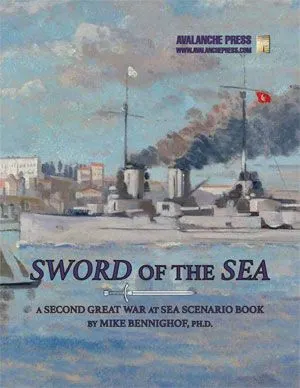
Second Great War at Sea: Sword of the Sea
- 2–4 players
- 30–360 min
- 2023
2013
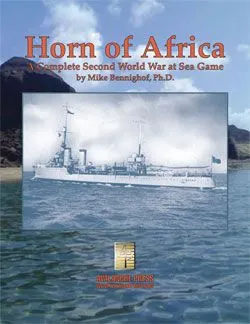
Rules assistance for Second World War at Sea: Horn of Africa
Plain-language explanations of turns, card effects and disputed situations, with official source references and saved question history.
What would you like to know?
Answers come from the official rulebook, with the page to check.
Second World War at Sea: Horn of Africa is a board game released in 2013 for 1–2 players, 30 minutes per game, and ages 12 and up. It was designed by Michael Bennighof and James Stear and its main mechanics are Dice Rolling, Grid Movement, and Secret Unit Deployment.





Thousands of miles from the major theaters of World War II, small British and Italian squadrons struggled to control the entrance to the Red Sea. Cut off from their bases in Europe, the Italian Red Sea Flotilla did its best to close off this vital route leading from India and Australia to the Suez Canal. Horn of Africa takes players to this little-known theatre of the Second World War, the battles between the Royal Navy’s Red Sea Force and the Regia Marina’s Red Sea Flotilla during the East African Campaign of 1940-1941. Ten battle and 15 operational scenarios depict the major actions of the campaign, along with a number of hypothetical situations that examine possible British intervention in the Second Italo-Abyssinian War of 1935-1936, as well as the use of ships on both sides not historically available but which with better preparation in the 1930’s or even on the eve of war could have been present. Horn of Africa is a complete boxed game in the Second World War at Sea series. There are 40 “long” ship pieces and 60 square pieces representing small warships, transports, aircraft and markers needed for play. These include the complete Red Sea Flotilla and Red Sea Force, plus some unusual ships planned but never built (or never re-built) by both the Royal Navy and the Regia Marina. The operational map depicts the Red Sea and Gulf of Aden, including all the major ports and airbases (such as they were) of 1940-42. The tactical map is a generic blue field of hexagons, used to resolve surface combat. There, ships maneuver and fight using their gunnery and torpedo factors. Each player rolls a number of dice according to the ship’s capabilities, hitting on a result of 6. Gunnery and torpedo damage tables give the results: Ships can suffer damage to engines, hull or armament. Air attacks are resolved in similar fashion. The combat systems yield results rapidly but in a historically accurate fashion, giving a good balance of fun and insight.
Second World War at Sea: Horn of Africa supports 1–2 players according to the catalogue. This range comes from the publisher’s listed player count, so the game can be set up for any group size within it. Some setups, rules and scoring details may still vary by player count, so check your edition’s rulebook for the exact configuration.
The listed playing time for Second World War at Sea: Horn of Africa is 30 minutes. This is the publisher’s estimate for a full game. The actual duration depends on the group, the player count and familiarity with the rules: first sessions usually run longer, while experienced groups often finish faster. Setup and teaching time are not included in this estimate.
The catalogue lists Second World War at Sea: Horn of Africa for ages 12 and up. This is the publisher’s recommendation and reflects reading demands, rule complexity and small components rather than theme alone. Younger players can often join with help from an adult, so check the age guidance on your edition and consider your group’s experience with board games.
Second World War at Sea: Horn of Africa has a complexity rating of 2.7 out of 5 from BoardGameGeek players, which makes it a medium-light game. The rating reflects how much rules knowledge, planning and decision-making a typical game demands. Expect a longer first teach for heavier games, and use a preparation guide before game night.
Second World War at Sea: Horn of Africa belongs to these categories: Wargame, Nautical, and World War II. Its main mechanics are Dice Rolling, Grid Movement, and Secret Unit Deployment. Categories describe the theme and setting of a game, while mechanics describe what players actually do on their turns. Each mechanic links to a catalogue hub with similar games, which helps when you want something comparable.
The credited designers of Second World War at Sea: Horn of Africa are: Michael Bennighof and James Stear. These credits come from the published game data and name the people responsible for the game’s design, not its illustrators or publishers. Designer pages on MeepleRules collect other titles by the same designers, which helps when you enjoy a game and want to find similar ones.
The catalogue lists Second World War at Sea: Horn of Africa as a base game. It can be played on its own with the components in the box and does not require any other title. Expansions, if any exist, add new content or rules on top of it and are listed separately in the catalogue with a link back to this base game.