
- BGG rating
- 7.8
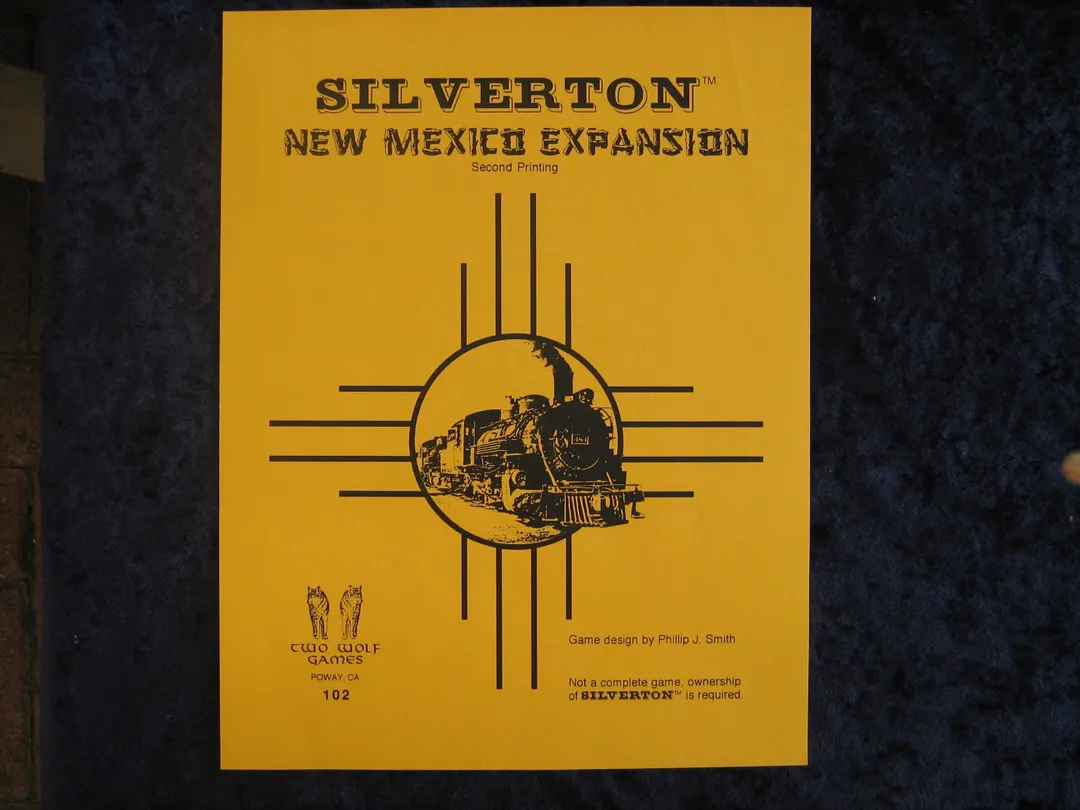
Silverton: New Mexico Expansion
- 1–6 players
- 300 min
- Complexity 3.0/5
- 1993
1991
Rules assistance for Silverton
Plain-language explanations of turns, card effects and disputed situations, with official source references and saved question history.
For 1 player
What would you like to know?
Answers come from the official rulebook, with the page to check.
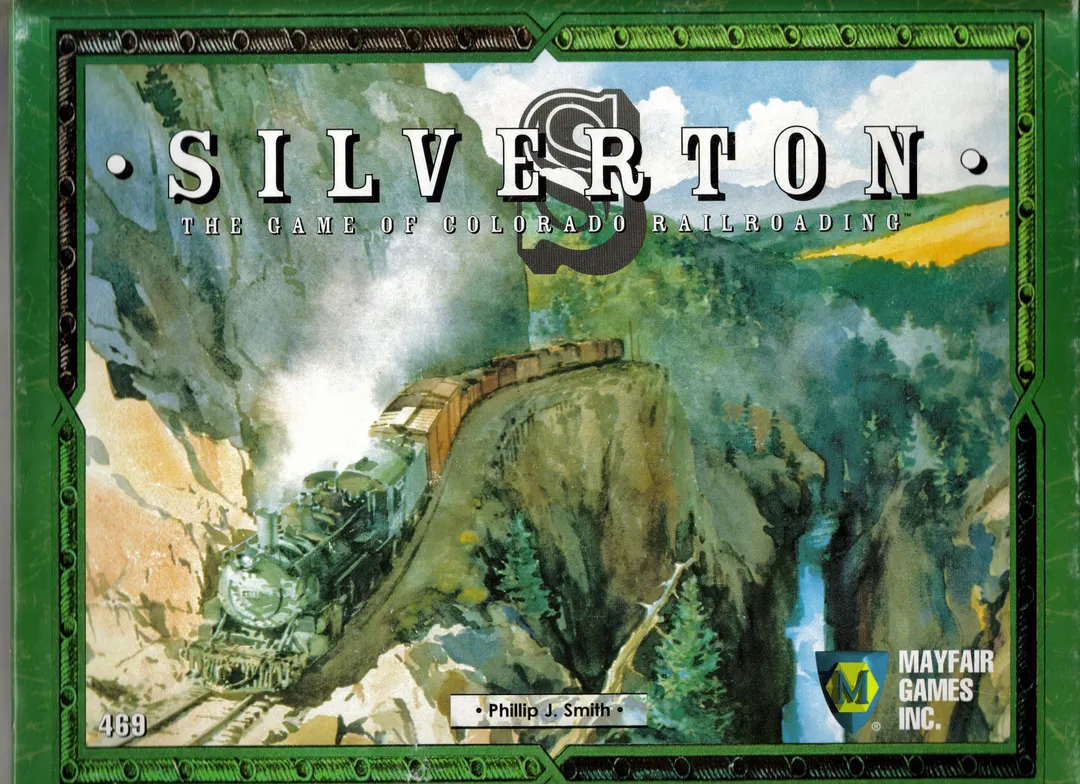
Silverton is a board game released in 1991 for 1–6 players, 180 minutes per game, and ages 12 and up. It was designed by Dori Smith and Phillip John Smith and its main mechanics are Dice Rolling, Network and Route Building, and Commodity Speculation.


Game description by the publisher (2nd Ed.) Set in the historic mining areas of Colorado, New Mexico, and Utah, Silverton is a game of railroading, mining, and commodity market manipulation. Use your surveyor to plot your railroads and your prospector to find your mines. Operate your empire of mines and railroads to position your gold, silver, and other commodities in the right market and at the right time to reap maximum profit. Contains a 17x22 mounted mapboard, Each player will have 32 wooden cubes and 8 wooden disks in one of the following colors. White, Green, Red, Yellow, Blue, Purple, 13 black 5/16" cubes for the price chart, 208 chips - in various colors, two decks, rules book, box and turn marker. User review: Players make money by building a network of railroads to deliver freight and passengers. They may also speculate on the price of precious metals by claiming mines and mills. To play: Each player chooses a color and takes possession of all the surveyors and prospectors of that color. How much money they begin with, in which city the players start, the number of surveyors and prospectors they begin with depends on the turn order and the number of players in the game. A game turn is divided into seven phases: First phase - The turn order cards are shuffled and dealt to the players. Second phase - Players may place prospectors and surveyors on the game board in turn order. Third phase - Disputes are resolved between players who placed surveyors in the same box on the game board. Fourth phase - Players pay for construction and claims made by their prospectors in turn order. Players can collect revenue for passenger cards and deliver and sell freight for up to two claims. Fifth phase - The dice are rolled to determine price changes for each mine. Sixth phase - Claims and passenger cards taken by the players are replaced. At the end of the sixth phase, it is determined whether anyone met the victory condition for the scenario chosen. Availability : The original Two Wolf version is long-since out of print, but the newer-released Mayfair has a wider distribution. The New Mexico expansion is available for the Two Wolf game, but the Mayfair version has the expansion included with the base game. Expanded by: Silverton New Mexico Expansion (Two Wolf version only, Mayfair version includes the expansion)
Silverton supports 1–6 players according to the catalogue. This range comes from the publisher’s listed player count, so the game can be set up for any group size within it. Some setups, rules and scoring details may still vary by player count, so check your edition’s rulebook for the exact configuration.
The listed playing time for Silverton is 180 minutes. This is the publisher’s estimate for a full game. The actual duration depends on the group, the player count and familiarity with the rules: first sessions usually run longer, while experienced groups often finish faster. Setup and teaching time are not included in this estimate.
The catalogue lists Silverton for ages 12 and up. This is the publisher’s recommendation and reflects reading demands, rule complexity and small components rather than theme alone. Younger players can often join with help from an adult, so check the age guidance on your edition and consider your group’s experience with board games.
Silverton has a complexity rating of 3.2 out of 5 from BoardGameGeek players, which makes it a medium-weight game. The rating reflects how much rules knowledge, planning and decision-making a typical game demands. Expect a longer first teach for heavier games, and use a preparation guide before game night.
Silverton belongs to these categories: Economic, American West, and Trains. Its main mechanics are Dice Rolling, Network and Route Building, and Commodity Speculation. Categories describe the theme and setting of a game, while mechanics describe what players actually do on their turns. Each mechanic links to a catalogue hub with similar games, which helps when you want something comparable.
The credited designers of Silverton are: Dori Smith and Phillip John Smith. These credits come from the published game data and name the people responsible for the game’s design, not its illustrators or publishers. Designer pages on MeepleRules collect other titles by the same designers, which helps when you enjoy a game and want to find similar ones.
The catalogue lists Silverton as a base game. It can be played on its own with the components in the box and does not require any other title. Expansions, if any exist, add new content or rules on top of it and are listed separately in the catalogue with a link back to this base game.