
- BGG rank
- BGG #5,153
- BGG rating
- 7.9
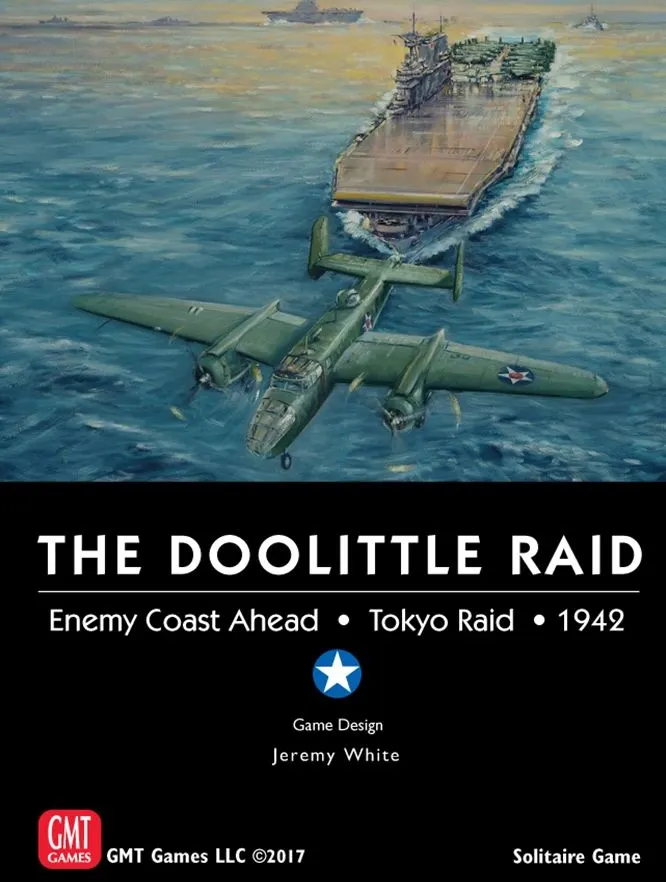
Enemy Coast Ahead: The Doolittle Raid
- 1–3 players
- 20–360 min
- Complexity 3.0/5
- 2017
2018
Rules assistance for Skies Above the Reich
Plain-language explanations of turns, card effects and disputed situations, with official source references and saved question history.
For 1 player
What would you like to know?
Answers come from the official rulebook, with the page to check.
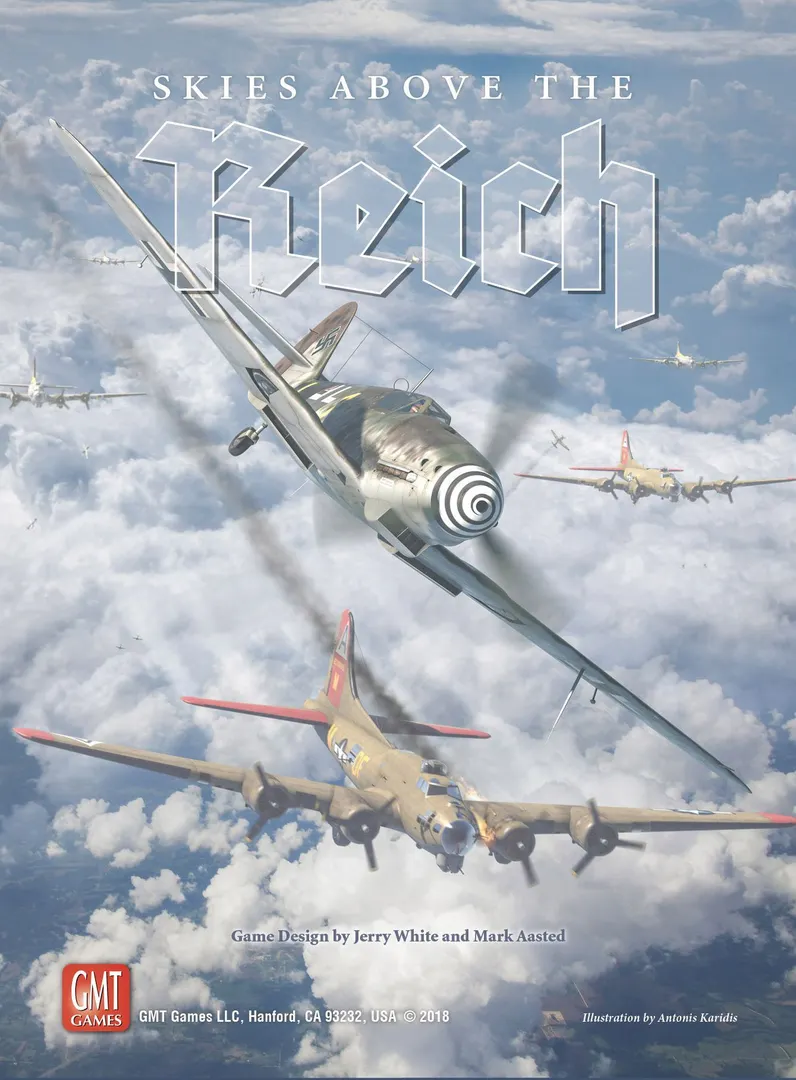
Skies Above the Reich is a board game released in 2018 for 1–2 players, 30–60 minutes per game, and ages 12 and up. It was designed by Jeremy White and Mark Aasted and its main mechanics are Dice Rolling, Simulation, and Solo / Solitaire Game.





Skies Above the Reich is a solitaire game depicting a Luftwaffe squadron of Bf109s struggling to deter and destroy the relentless daylight raids over Germany during World War Two. The player’s individual aircraft, each represented by a stickered block, must confront the mighty “combat box” formation of the United States Army Air Force, a deadly terrain of B-17 Flying Fortresses. The game is a broad strokes depiction that presents the arc of the desperate air war. Stretching from late 1942 to early 1945, Skies Above the Reich follows that trajectory in a series of missions strung together to make a campaign. Each mission will take a half hour or more to play, while a campaign can last anywhere between 6 to 60 missions. The Mission You select pilots and “attachments,” such as gun pods, rockets, or added armor. You may also augment your attack with auxiliary aircraft such as Ju88s, Fw190s, or later in the war, jet propelled Me262s, the answer to the deadly P-51 escort fighter. Time in a mission is limited, so you must do your best to wreck the bomber formation as quickly as possible, while bringing home as many pilots as you can in order to muster a force for the next mission. The mission is played on a formation map that depicts as many as twenty-one B-17 bombers in a tight array. The game comes with two double-sided map boards (four maps in all) that as a set chronicle the development and increasing lethality of the bomber formation. Each map is a bigger and more lethal terrain than its predecessor. Will you strike the formation from the nose or from the tail? Will your fighters make a dead-level attack or will they drop bombs on the formation from above? Will you split your squadron to attack from multiple angles, or will they charge at the bombers in successive waves? Will you even have time for this kind of maneuver? What if you encounter the bombers’ “little friends,” fighter escort lurking nearby? How will you handle them if you do, or will you even try? Will you organize part of your force to tangle with escort, or will you arm your entire contingent to focus on the bombers? The Campaign As tough as each mission can be, the real challenge is the campaign where you watch as your roster of pilots gradually shrinks. Some pilots will survive long enough to acquire ace skills, but you will be forced to replace downed or wounded pilots, and those young newcomers come “green”. Some campaigns will end simply because you run out of pilots. Full Campaigns follow the chronology of “seasons,” each comprising a number of missions that your squadron flies striving to disrupt the American bomber raids. In a full campaign you must endure all seven seasons, keeping your squadron intact while making an impact on the relentless wave of bomber formations roaring over your homeland. A short campaign challenges you to win a single season, although you may wish to extend it to a second or third season depending on how well you fare. Each season represents a distinct period of the war, as the campaign traverses the history of the air war. Bombers become more heavily armed but so too do your own Bf109 fighters. Early seasons are characterized by smaller formations, while seasons in the middle of the war are notable for the lack of fighter escort. And later seasons will put the squeeze on your squadron. Basic and Advanced Games In the basic game your goal is to knock bombers out of formation, or destroy them outright. The advanced game adds “pursuit” where you dispatch fighters to chase after and intercept bombers knocked out of the formation. Played out on an 8.5” x 11” map depicting a single bomber, pursuit makes the advanced game even more challenging. The Two Player Game You may also play this as a (un)cooperative game. Players each command a squadron of fighters and attack a formation of bombers together. Although players may lose together, even if they win the campaign only one of them may be declared the victor. "No one who experienced them will ever forget them – those streams of Flying Fortresses. Suddenly we saw [them] ahead in a great swarm. I confess the sight put me into a bit of a flap, and the others felt the same. We seemed so puny against these four-engined giants. Then we attacked from the beam." – Cajus Bekker, The Luftwaffe War Diaries TIME SCALE: Each turn = seconds and minutes MAP SCALE: Area movement UNIT SCALE: Individual fighters NUMBER OF PLAYERS: 1 - 4 COMPONENTS: 17” x 22” map board (double sided) 22” x 34” map board (double sided) Pilot Roster Pad Three Player Aid Cards Rulebook Situation Manual Two ten-sided dice (from GMT webpage)
Skies Above the Reich supports 1–2 players according to the catalogue. This range comes from the publisher’s listed player count, so the game can be set up for any group size within it. Some setups, rules and scoring details may still vary by player count, so check your edition’s rulebook for the exact configuration.
The listed playing time for Skies Above the Reich is 30–60 minutes. This is the publisher’s estimate for a full game. The actual duration depends on the group, the player count and familiarity with the rules: first sessions usually run longer, while experienced groups often finish faster. Setup and teaching time are not included in this estimate.
The catalogue lists Skies Above the Reich for ages 12 and up. This is the publisher’s recommendation and reflects reading demands, rule complexity and small components rather than theme alone. Younger players can often join with help from an adult, so check the age guidance on your edition and consider your group’s experience with board games.
Skies Above the Reich has a complexity rating of 3.1 out of 5 from BoardGameGeek players, which makes it a medium-weight game. The rating reflects how much rules knowledge, planning and decision-making a typical game demands. Expect a longer first teach for heavier games, and use a preparation guide before game night.
Skies Above the Reich belongs to these categories: Wargame, World War II, and Aviation / Flight. Its main mechanics are Dice Rolling, Simulation, and Solo / Solitaire Game. Categories describe the theme and setting of a game, while mechanics describe what players actually do on their turns. Each mechanic links to a catalogue hub with similar games, which helps when you want something comparable.
The credited designers of Skies Above the Reich are: Jeremy White and Mark Aasted. These credits come from the published game data and name the people responsible for the game’s design, not its illustrators or publishers. Designer pages on MeepleRules collect other titles by the same designers, which helps when you enjoy a game and want to find similar ones.
The catalogue lists Skies Above the Reich as a base game. It can be played on its own with the components in the box and does not require any other title. Expansions, if any exist, add new content or rules on top of it and are listed separately in the catalogue with a link back to this base game.