- BGG rating
- 5.5
SkirmishCampaigns: North Africa '40-'41 – Italian Misadventure and Arrival of the DAK
2004
Rules assistance for SkirmishCampaigns: North Africa '40-'41 – Italian Misadventure and Arrival of the DAK
Plain-language explanations of turns, card effects and disputed situations, with official source references and saved question history.
- 2–4 players
- 12+

Rules assistant for SkirmishCampaigns: North Africa '40-'41 – Italian Misadventure and Arrival of the DAK
What would you like to know?
Answers come from the official rulebook, with the page to check.
SkirmishCampaigns: North Africa '40-'41 – Italian Misadventure and Arrival of the DAK is a board game expansion released in 2004 for 2–4 players and ages 12 and up. It was designed by Scott Fisher and Nathan Forney and its main mechanics are Simulation and Scenario / Mission / Campaign Game.
About the game
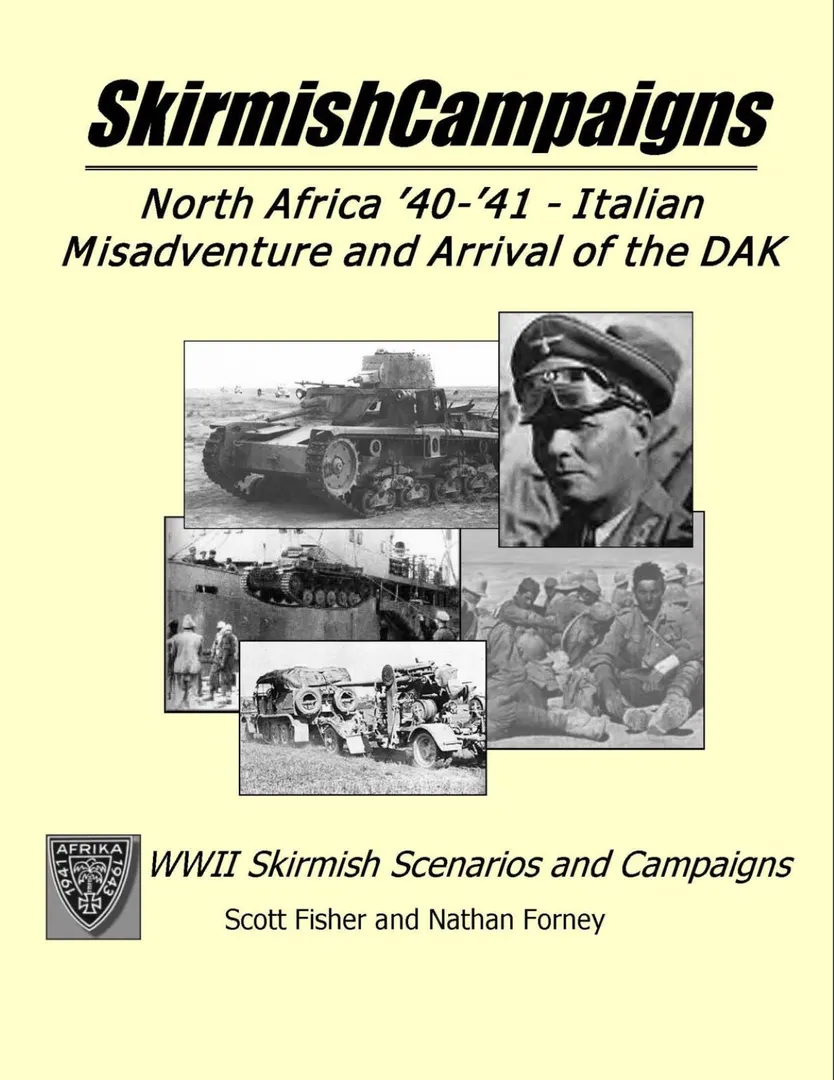
SkirmishCampaigns North Africa '40-'41 - Italian Misadventure and the Arrival of the DAK is a complete book for recreating skirmish-level battles and campaigns centered on the opening fighting in North Africa and the entry of the German Africa Corps (DAK). The book includes twelve scenarios that can be played alone or together in one of five campaigns. Maximum Replayability: the SkirmishCampaigns system features a realistic variable order of battle for each scenario, guaranteeing countless unique scenario and campaign replays. Generic Order of Battle: this book also includes a unique generic order of battle listing that can be translated to almost any skirmish rule system. Historical Research: this book includes several introduction sections that contain background information on the campaign for North Africa. This book also features a bibliography of sources. Includes: 12 Scenarios, 5 Campaigns —description from the publisher
Designers
Publishers
- SkirmishCampaigns
Questions and answers
SkirmishCampaigns: North Africa '40-'41 – Italian Misadventure and Arrival of the DAK supports 2–4 players according to the catalogue. This range comes from the publisher’s listed player count, so the game can be set up for any group size within it. Some setups, rules and scoring details may still vary by player count, so check your edition’s rulebook for the exact configuration.
The catalogue lists SkirmishCampaigns: North Africa '40-'41 – Italian Misadventure and Arrival of the DAK for ages 12 and up. This is the publisher’s recommendation and reflects reading demands, rule complexity and small components rather than theme alone. Younger players can often join with help from an adult, so check the age guidance on your edition and consider your group’s experience with board games.
SkirmishCampaigns: North Africa '40-'41 – Italian Misadventure and Arrival of the DAK belongs to these categories: Wargame, Miniatures, and World War II. Its main mechanics are Simulation and Scenario / Mission / Campaign Game. Categories describe the theme and setting of a game, while mechanics describe what players actually do on their turns. Each mechanic links to a catalogue hub with similar games, which helps when you want something comparable.
The credited designers of SkirmishCampaigns: North Africa '40-'41 – Italian Misadventure and Arrival of the DAK are: Scott Fisher and Nathan Forney. These credits come from the published game data and name the people responsible for the game’s design, not its illustrators or publishers. Designer pages on MeepleRules collect other titles by the same designers, which helps when you enjoy a game and want to find similar ones.
The catalogue lists SkirmishCampaigns: North Africa '40-'41 – Italian Misadventure and Arrival of the DAK as an expansion. Expansions add new content, rules or scenarios to an existing base game and usually cannot be played on their own. Check the box or publisher description for the exact base game required, and make sure your edition of that game is compatible with this expansion.