
- BGG rank
- BGG #284
- BGG rating
- 7.5
Skull King
- 2–8 players
- 30 min
- Complexity 1.7/5
- 2013
Rules assistance for Skitgubbe
Plain-language explanations of turns, card effects and disputed situations, with official source references and saved question history.
For 2 players
What would you like to know?
Answers come from the official rulebook, with the page to check.
Skitgubbe is a board game for 2–8 players, 15 minutes per game, and ages 7 and up. Its main mechanics are Hand Management and Trick-taking.



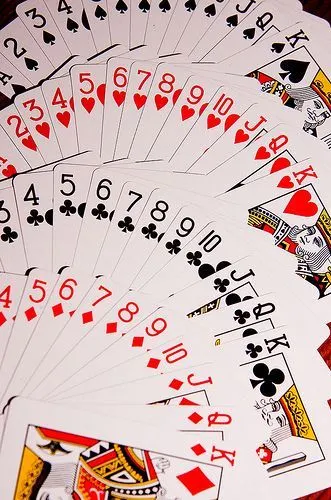
This popular Swedish game for three players is also known as Mjölnarmatte or Mas and in Norwegian it is called Mattis. Players, cards and deal The game is best for three players, but it is also possible for two or four to play. A standard 52 card pack, without joker, is used. The cards rank in the usual order: A (highest) K Q J T 9 8 7 6 5 4 3 2 (lowest). Deal and play are clockwise. Each player receives 3 cards. The rest of the cards are laid face down in a pile on the table (stock). Object of the game Skitgubbe has two phases. In the first phase players collect cards for the second phase. In the second phase the object is to get rid of one's cards as fast as possible. The last player left with cards in hand is the loser and becomes the skitgubbe. Play in the first phase The first phase consists of tricks of 2 cards. The player to dealer's left leads first. Any card can be led and the player to the left of the leader plays any card to complete the trick. At this stage the suits have no significance and there is no requirement to follow suit. Each player draws a card from the stock immediately after playing, so that each player always has a hand of three cards so long as there are still cards in the stock. Whoever played the higher card wins the trick, places the two cards face down in front of himself, and leads to the next trick. If the player who led wins the trick, he leads again and the same two players are involved in the next trick. If the two cards played to a trick are equal it is called a stunsa (bounce); the cards are left on the table, the two players each draw a card from the stock and the same player leads again. This continues until one of the players wins the trick and takes all the cards played, including the cards from the tied tricks. In this first phase, the second player to a trick is under no obligation to try to beat the card led. If a low card is led the second player may wish to play lower and give the trick to the leader, for it is important to collect strong cards in the first phase of the game, so gain an advantage in the second phase. Throughout the first phase, when it is your turn to play and there is still more than one card in the stock, instead of playing from your hand you may turn up the top card of the stock. If you turn a card from the stock you must play it - you may not put it in your hand. The last card from the stock determines the trump suit for the second phase. The player who has to draw this card takes it but does not add it to his hand but keeps it face down until the first phase is over. When the stock is exhausted, the play continues as long as possible with the cards players have in their hands. If some players have cards left in hand at the end of the first phase they keep them for the second phase. If the final trick of the first phase is a bounce, the players take back the cards they played to it and keep them for the second phase. Play in the second phase The players have now divided the 52 cards between themselves, but the cards are probably not divided equally; some players have more cards than others. The player who drew the trump card leads. The object is to get rid of one's cards as fast as possible. Now you must either beat the previous card played or pick it up. A card may be beaten by a higher card of the same suit, and a non-trump may be beaten by any trump. It is never lawful to duck. If you cannot or do not wish to beat the card in front of you, you must take it up into your hand, and it is then the next player's turn to lead to a new trick. If there is more than one card lying on the table and you cannot beat the last card played, it is only this last card which you must take up into your hand. It is then the next player's turn to beat the card which was underneath it. A trick is complete when either: the number of cards in it is equal to the number of players who were in the game when the trick began, or all its cards have been picked up. In the first case, the cards in the trick are set aside and the player who played last (and therefore highest) to the trick leads to the next. In the second case, the player to the left of the player who picked up the last card leads to a new trick. Suppose there are 3 players; player A has led and player B beaten A's card. If C now beats B's card, C puts aside the cards and leads to the next trick; but if C does not beat B's card but picks it up, it is now A's turn to beat the card showing on the table (which is in fact A's own lead). If A does this, and then B beats A's card, it is B who has completed the trick; B sets aside the three cards and leads to the next trick. Another possibility is: A leads, B beats A's card, C picks up B's card, and A picks up his own card. It is now B's lead. Note that as players run out of cards, the number of cards in each trick reduces. If there are three players, one of whom runs out of cards during a trick, that trick still requires three cards to be completed (or all its cards to be picked up), but the next trick will require only two cards. For example suppose there are 3 players: A, B, C. A leads his last card, B beats it, C picks B's card up, B beats A's card again, and now C beats B's card. The trick is now over, and C leads to the next trick. As there are now only two players, the new trick will have only two cards. Another example with three players: A leads; B beats with his last card, C picks this card up, and A picks up the card he led. It is now B's lead and the next trick will be complete with two cards. A player who gets rid of all his cards can draw a sigh of relief, for he is not the loser. The loser is the player who is left with the last card in his hand, and is called "Skitgubbe" (or "Mas" or "Mattis"). Skitgubbe means "dirty old man" (in the sense of unwashed, rather than obscence); Mas and Mattis mean fool." - Description and rules credited to John McLeod from his excellent website here: http://www.pagat.com/beating/mattis.html
Skitgubbe supports 2–8 players according to the catalogue. This range comes from the publisher’s listed player count, so the game can be set up for any group size within it. Some setups, rules and scoring details may still vary by player count, so check your edition’s rulebook for the exact configuration.
The listed playing time for Skitgubbe is 15 minutes. This is the publisher’s estimate for a full game. The actual duration depends on the group, the player count and familiarity with the rules: first sessions usually run longer, while experienced groups often finish faster. Setup and teaching time are not included in this estimate.
The catalogue lists Skitgubbe for ages 7 and up. This is the publisher’s recommendation and reflects reading demands, rule complexity and small components rather than theme alone. Younger players can often join with help from an adult, so check the age guidance on your edition and consider your group’s experience with board games.
Skitgubbe has a complexity rating of 1.3 out of 5 from BoardGameGeek players, which makes it a light game. The rating reflects how much rules knowledge, planning and decision-making a typical game demands. Expect a longer first teach for heavier games, and use a preparation guide before game night.
Skitgubbe belongs to these categories: Card Game. Its main mechanics are Hand Management and Trick-taking. Categories describe the theme and setting of a game, while mechanics describe what players actually do on their turns. Each mechanic links to a catalogue hub with similar games, which helps when you want something comparable.
The catalogue lists Skitgubbe as a base game. It can be played on its own with the components in the box and does not require any other title. Expansions, if any exist, add new content or rules on top of it and are listed separately in the catalogue with a link back to this base game.