
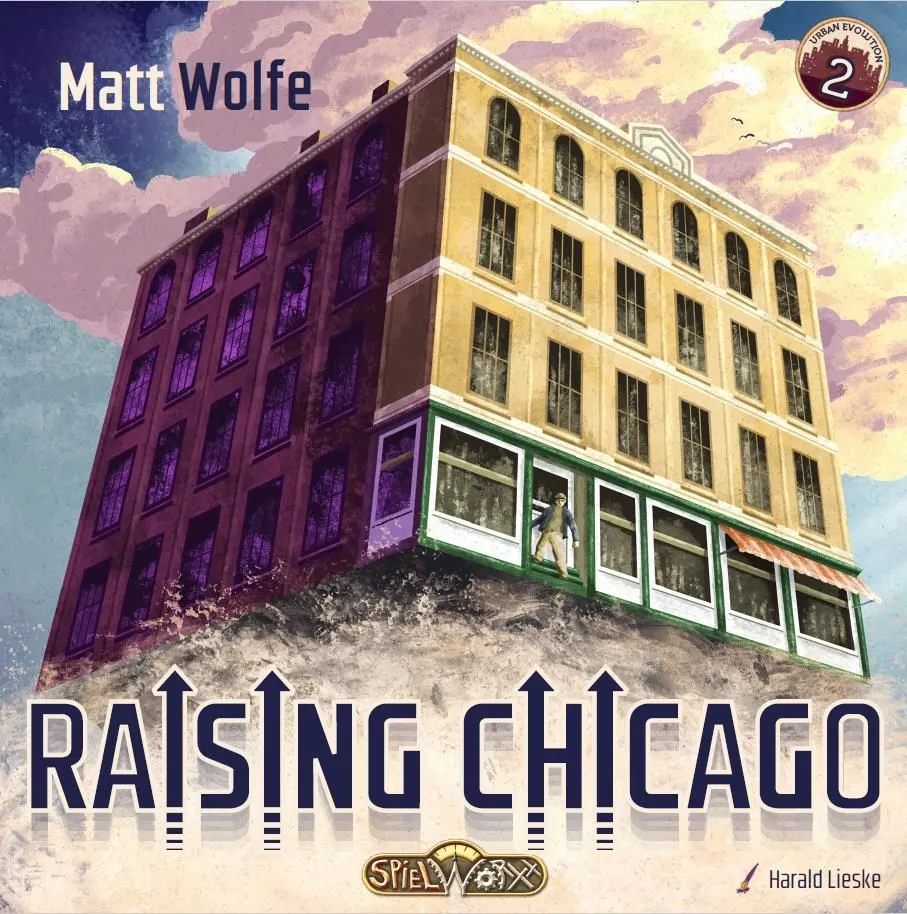
- BGG rank
- BGG #8,484
- BGG rating
- 7.3
Raising Chicago
- 2–4 players
- 75–120 min
- Complexity 3.5/5
- 2025
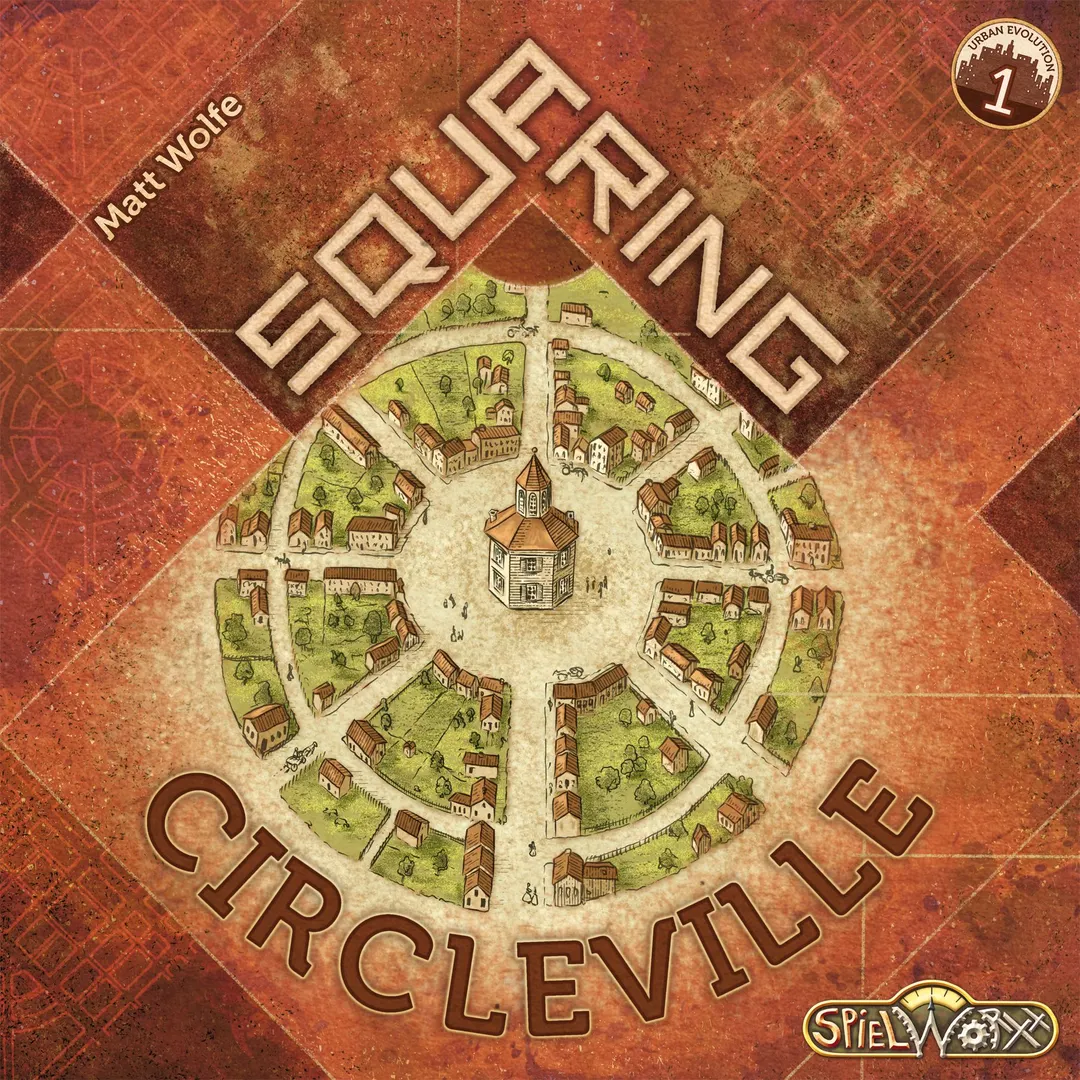
2021
Rules assistance for Squaring Circleville
Plain-language explanations of turns, card effects and disputed situations, with official source references and saved question history.
For 1 player
What would you like to know?
Answers come from the official rulebook, with the page to check.
Squaring Circleville is a board game released in 2021 for 1–4 players and 90–120 minutes per game. It was designed by Matt Wolfe and its main mechanics are Area Majority / Influence and Rondel.




Established in 1810, Circleville, Ohio derives its name from the circular portion of a large Hopewell earthwork upon which it was built. The Circleville earthworks, as described in 1772, comprised an 1,100-foot diameter circle connected to a 900-foot square. Town director Daniel Dreisbach plotted the town directly atop the earthworks, integrating the town plan into the landscape. An octagonal courthouse stood directly in the center of the circular road system in the center of town. To the dismay of Dreisbach, however, the people of Circleville hated the circular roads. People complained that the round roads forced everyone to build on oddly-shaped lots and caused confusion. By the mid-1830s, enough dissatisfaction arose with Circleville's unique radial concentric road layout that the townsfolk petitioned the State Assembly to change it. The Circleville Squaring Company, authorized in 1837, undertook a project to convert the "peculiar" town plan into a more conventional grid. Circleville occupies a unique place in the history of American town planning as one of the earliest examples of urban redevelopment in the United States. In Squaring Circleville, you work for the Circleville Squaring Company to manage the process of deconstructing and reconstructing the town of Circleville. You will move around the courthouse rondel getting permits to perform work, such as deconstructing and constructing roads and demolishing and building structures. As the game proceeds, you become more experienced and are able to do an amazing amount of work in the same amount of time. In the end, only one player will be recognized as the best at "squaring the circle" and wins. —description from the publisher
Squaring Circleville supports 1–4 players according to the catalogue. This range comes from the publisher’s listed player count, so the game can be set up for any group size within it. Some setups, rules and scoring details may still vary by player count, so check your edition’s rulebook for the exact configuration.
The listed playing time for Squaring Circleville is 90–120 minutes. This is the publisher’s estimate for a full game. The actual duration depends on the group, the player count and familiarity with the rules: first sessions usually run longer, while experienced groups often finish faster. Setup and teaching time are not included in this estimate.
Squaring Circleville has a complexity rating of 3.1 out of 5 from BoardGameGeek players, which makes it a medium-weight game. The rating reflects how much rules knowledge, planning and decision-making a typical game demands. Expect a longer first teach for heavier games, and use a preparation guide before game night.
Squaring Circleville belongs to these categories: City Building. Its main mechanics are Area Majority / Influence and Rondel. Categories describe the theme and setting of a game, while mechanics describe what players actually do on their turns. Each mechanic links to a catalogue hub with similar games, which helps when you want something comparable.
The credited designers of Squaring Circleville are: Matt Wolfe. These credits come from the published game data and name the people responsible for the game’s design, not its illustrators or publishers. Designer pages on MeepleRules collect other titles by the same designers, which helps when you enjoy a game and want to find similar ones.
The catalogue lists Squaring Circleville as a base game. It can be played on its own with the components in the box and does not require any other title. Expansions, if any exist, add new content or rules on top of it and are listed separately in the catalogue with a link back to this base game.