

- BGG rank
- BGG #7,803
- BGG rating
- 7.0
Queensland
- 1–4 players
- 45 min
- Complexity 2.3/5
- 2022
2025
Rules assistance for Raising Chicago
Plain-language explanations of turns, card effects and disputed situations, with official source references and saved question history.
For 2 players
What would you like to know?
Answers come from the official rulebook, with the page to check.
Raising Chicago is a board game released in 2025 for 2–4 players, 75–120 minutes per game, and ages 12 and up. It was designed by Matt Wolfe and its main mechanics are Tile Placement and Investment.










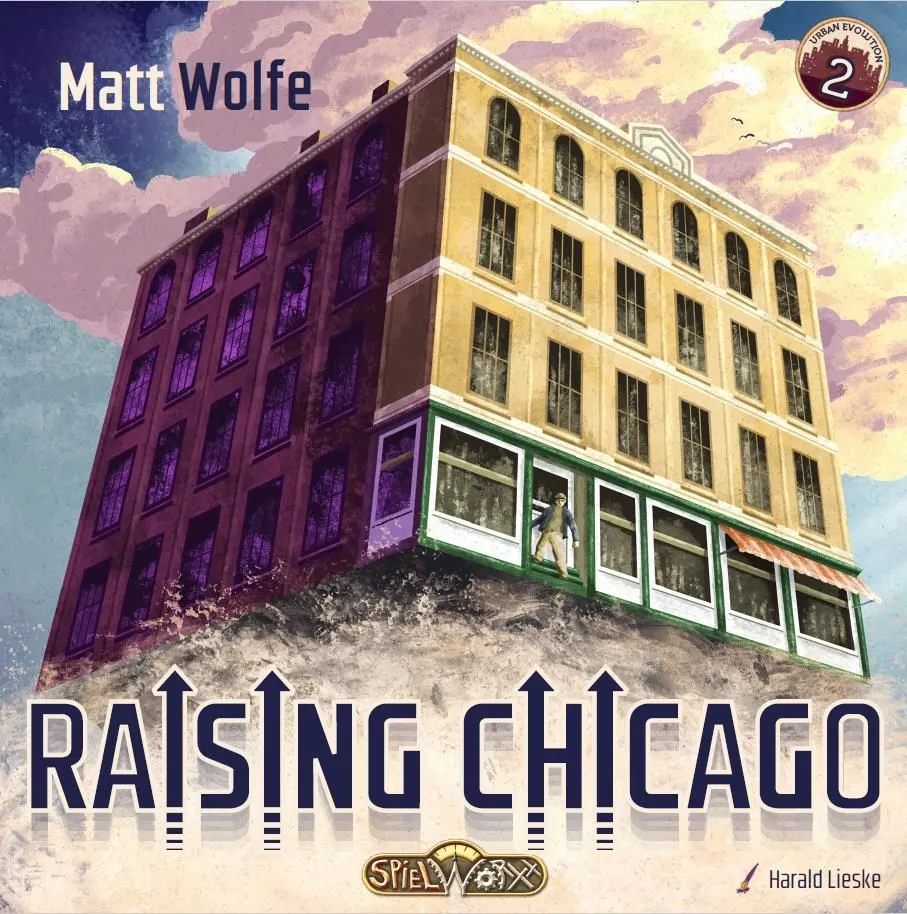
During the 19th century, the elevation of the Chicago area was just a few feet higher than the shoreline of Lake Michigan. For many years, there was little or no naturally occurring drainage from the city surface, and this lack of drainage caused unpleasant living conditions. Standing water harbored pathogens that caused numerous epidemics including typhoid fever and dysentery, culminating in the 1854 outbreak of cholera that killed six percent of the city's population. The crisis forced the city to take the drainage problem seriously. In 1856, engineer Ellis S. Chesbrough drafted a plan for the installation of a citywide sewerage system and submitted it to the city council, which adopted the plan. However, due to the minimal elevation above the lake, the sewer could not be built underground and had to be built at street level. The city council then decided to implement a radical idea: Prevented from digging down, they instead decreed the buildings of the city would be raised to allow the new sewer system to be hidden under the new street level. Representing one of the four companies that were created to tackle the problem of raising the buildings of Chicago, it's up to you to gather resources, take on the most attractive projects, and help solve the sanitation crisis of the city. On your turn in Raising Chicago, you place a tile on a resource slot associated with one of five building projects, then claim the resource you covered. After all players have placed tiles, each project is evaluated. The winning player pays resources to complete the project, claims the project reward, then places all of their tiles associated with that project as levels underneath the building onto a space on the board. Players earn points for placing buildings cleverly, doing the most work in a ward, and meeting the demands of council people. Only the most successful player will win, so play strategically to prove you can raise buildings the best in Raising Chicago! —description from the publisher
Raising Chicago supports 2–4 players according to the catalogue. This range comes from the publisher’s listed player count, so the game can be set up for any group size within it. Some setups, rules and scoring details may still vary by player count, so check your edition’s rulebook for the exact configuration.
The listed playing time for Raising Chicago is 75–120 minutes. This is the publisher’s estimate for a full game. The actual duration depends on the group, the player count and familiarity with the rules: first sessions usually run longer, while experienced groups often finish faster. Setup and teaching time are not included in this estimate.
The catalogue lists Raising Chicago for ages 12 and up. This is the publisher’s recommendation and reflects reading demands, rule complexity and small components rather than theme alone. Younger players can often join with help from an adult, so check the age guidance on your edition and consider your group’s experience with board games.
Raising Chicago has a complexity rating of 3.5 out of 5 from BoardGameGeek players, which makes it a medium-weight game. The rating reflects how much rules knowledge, planning and decision-making a typical game demands. Expect a longer first teach for heavier games, and use a preparation guide before game night.
Raising Chicago belongs to these categories: Economic, Territory Building, and City Building. Its main mechanics are Tile Placement and Investment. Categories describe the theme and setting of a game, while mechanics describe what players actually do on their turns. Each mechanic links to a catalogue hub with similar games, which helps when you want something comparable.
The credited designers of Raising Chicago are: Matt Wolfe. These credits come from the published game data and name the people responsible for the game’s design, not its illustrators or publishers. Designer pages on MeepleRules collect other titles by the same designers, which helps when you enjoy a game and want to find similar ones.
The catalogue lists Raising Chicago as a base game. It can be played on its own with the components in the box and does not require any other title. Expansions, if any exist, add new content or rules on top of it and are listed separately in the catalogue with a link back to this base game.