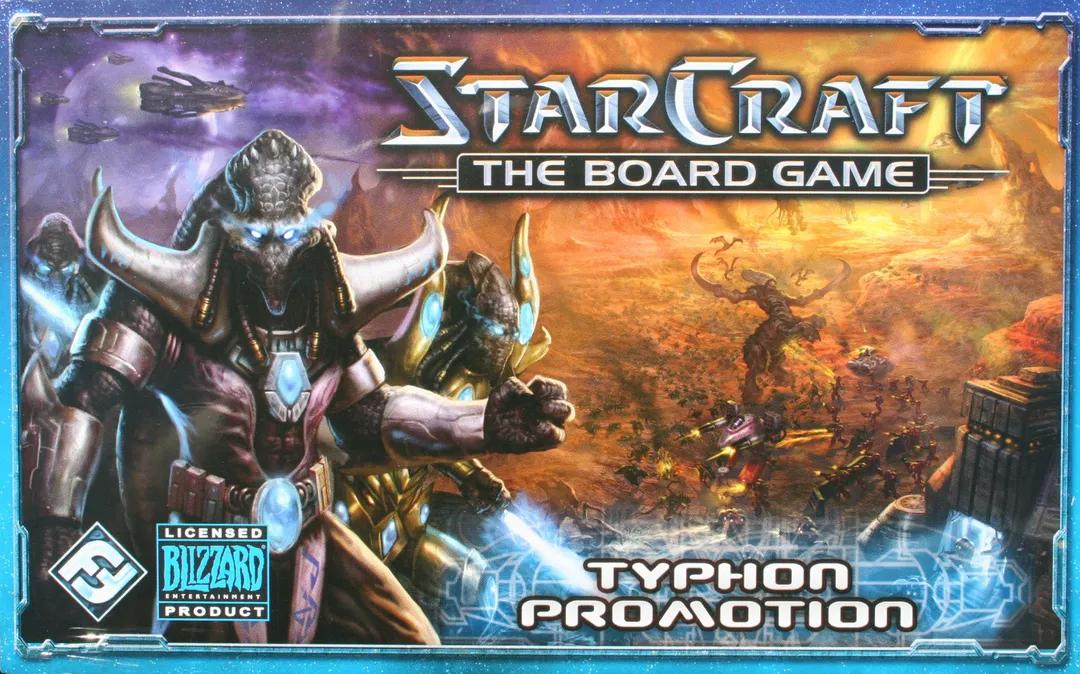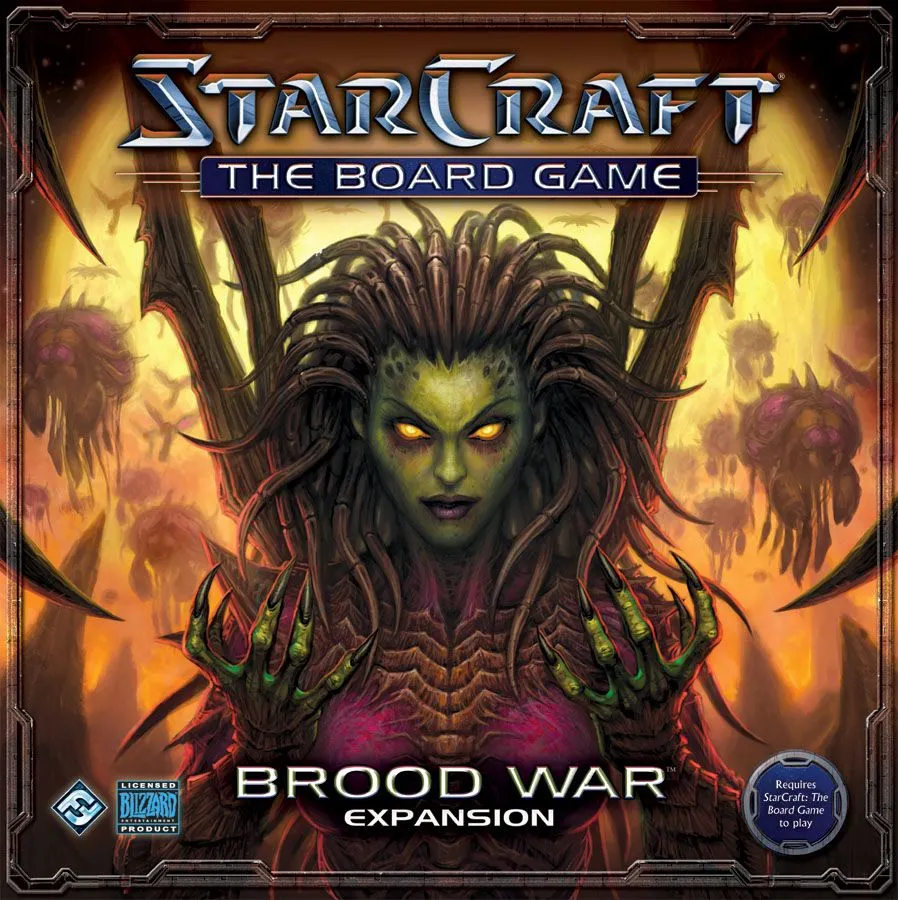
- BGG rating
- 8.3
StarCraft: The Board Game – Brood War Expansion
- 2–6 players
- 180 min
- Complexity 3.9/5
- 2008
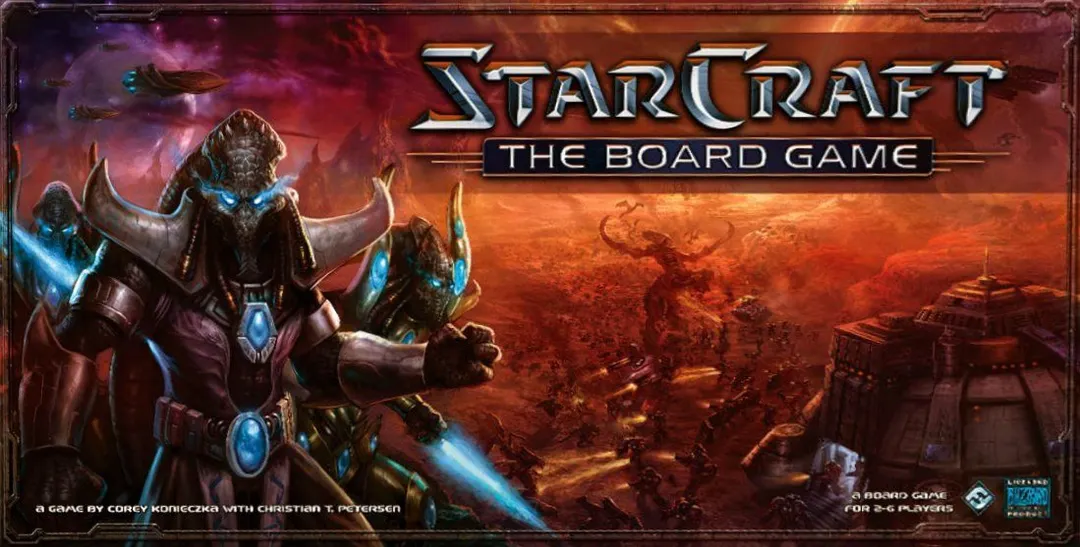
2007
Rules assistance for StarCraft: The Board Game
Plain-language explanations of turns, card effects and disputed situations, with official source references and saved question history.
For 2 players
What would you like to know?
Answers come from the official rulebook, with the page to check.
StarCraft: The Board Game is a board game released in 2007 for 2–6 players, 180–240 minutes per game, and ages 12 and up. It was designed by Corey Konieczka and Christian T. Petersen and its main mechanics are Variable Player Powers, Area Movement, and Area Majority / Influence.


Publisher blurb Including a total of 180 plastic figures and dozens of unit types, Starcraft: The Board Game features an innovative modular board of varying sizes, which guarantees a new experience each and every game. An exciting card driven combat system allows players to modify and upgrade their faction with a wealth of powerful technologies. Players can unleash a Zergling rush, use powerful Protoss shields to halt an enemy invasion, or even send cloaked Ghosts out to guide nuclear missiles to their target. Description In StarCraft: The Board Game, players battle for galactic domination on a dynamic board of interconnected planets. Planetary setup is already part of the game - every player gets two planets to place, and will place their starting base on one of them. Planets are connected with direct and "Z-Axis" connections that are placed during setup, but can sometimes later be modified during the game, and movement is only possible within planets and through those connections (by means of purpose-built transports). Each player controls a faction out of six, that belongs to one race out of three - Humans, Zerg, and Protoss. Each faction has a unique special victory condition, but all factions can also win through victory points that are gained by controlling special areas on some of the planets. Players build units and base upgrades with the resources they gather from the planetary areas that they control, and gain access to additional unit types through those upgrades. Each turn is subdivided into first a planning phase, then an execution phase, and finally a regrouping phase (used for cleanup). In the planning phase, players take turns playing a number of order tokens into stacks on each planet, with orders placed later obstructing the ones that were placed before them. This allows players to set up combos of their own, but also to obstruct plans of other players. In the execution phase then, players take turns again, and when a player's turn comes up he can choose one of his order tokens on top of any stack and execute that one - if all of their orders are obstructed, they skip their action and draw an event card instead. The execution phase isn't over until all players executed all of their orders. Possible orders are Build (used for building both units and buildings), Mobilize (used for moving units and attacking enemies) and Research (see below), and orders can always be Standard Orders or Special Orders, with the special orders having prerequisites but stronger effects. Players can also research new technologies and thus improve their combat deck in a precursor to more recent deck building mechanisms. Each player is given a combat deck unique for their race at the start of the game, and when they research new technologies then matching cards are added to that deck. This allows the players to customize what cards they will draw; when the last card of the deck is drawn, the deck is reshuffled. Most cards remain in the combat deck once researched, though some researched technologies add effects that are always in play, while some particularly strong combat cards are discarded after one use. "Reimplements" StarCraft (video game)
StarCraft: The Board Game supports 2–6 players according to the catalogue. This range comes from the publisher’s listed player count, so the game can be set up for any group size within it. Some setups, rules and scoring details may still vary by player count, so check your edition’s rulebook for the exact configuration.
The listed playing time for StarCraft: The Board Game is 180–240 minutes. This is the publisher’s estimate for a full game. The actual duration depends on the group, the player count and familiarity with the rules: first sessions usually run longer, while experienced groups often finish faster. Setup and teaching time are not included in this estimate.
The catalogue lists StarCraft: The Board Game for ages 12 and up. This is the publisher’s recommendation and reflects reading demands, rule complexity and small components rather than theme alone. Younger players can often join with help from an adult, so check the age guidance on your edition and consider your group’s experience with board games.
StarCraft: The Board Game has a complexity rating of 3.9 out of 5 from BoardGameGeek players, which makes it a heavy game. The rating reflects how much rules knowledge, planning and decision-making a typical game demands. Expect a longer first teach for heavier games, and use a preparation guide before game night.
StarCraft: The Board Game belongs to these categories: Fighting, Wargame, and Territory Building. Its main mechanics are Variable Player Powers, Area Movement, and Area Majority / Influence. Categories describe the theme and setting of a game, while mechanics describe what players actually do on their turns. Each mechanic links to a catalogue hub with similar games, which helps when you want something comparable.
The credited designers of StarCraft: The Board Game are: Corey Konieczka and Christian T. Petersen. These credits come from the published game data and name the people responsible for the game’s design, not its illustrators or publishers. Designer pages on MeepleRules collect other titles by the same designers, which helps when you enjoy a game and want to find similar ones.
The catalogue lists StarCraft: The Board Game as a base game. It can be played on its own with the components in the box and does not require any other title. Expansions, if any exist, add new content or rules on top of it and are listed separately in the catalogue with a link back to this base game.