
- BGG rank
- BGG #7,844
- BGG rating
- 8.1
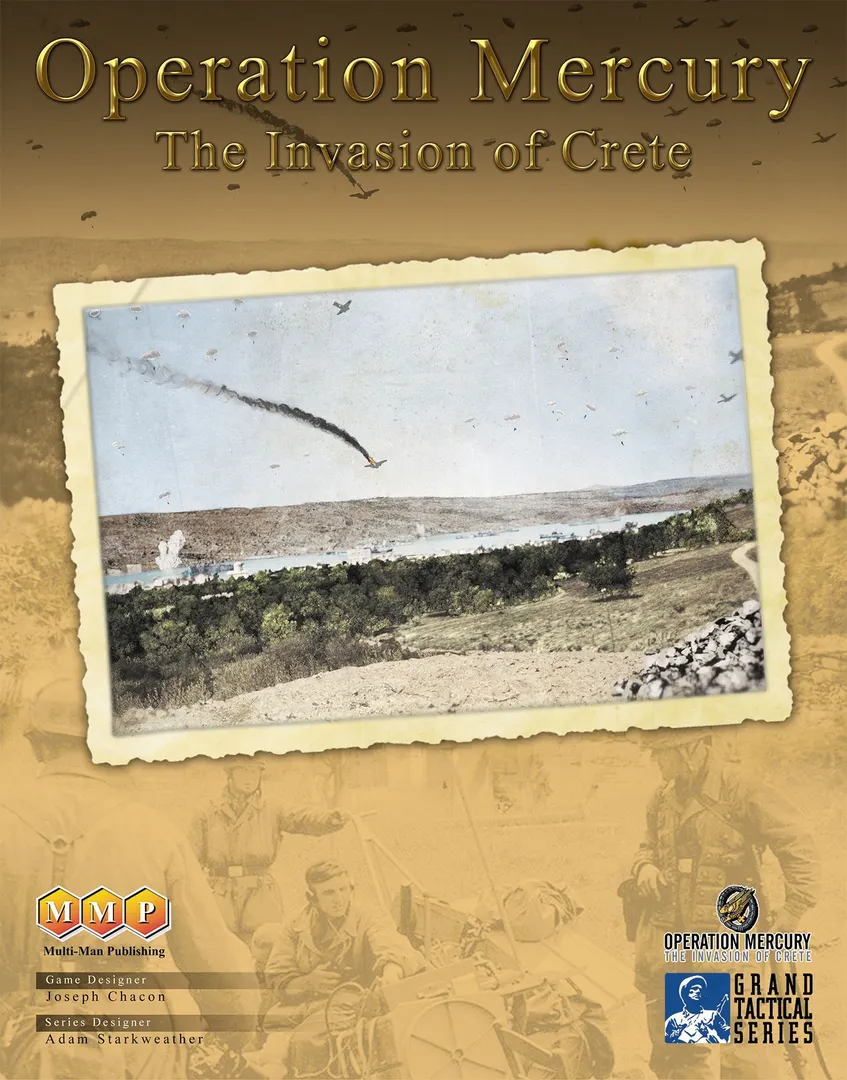
Operation Mercury: The Invasion of Crete
- 2 players
- 60–1710 min
- Complexity 3.9/5
- 2017
2023
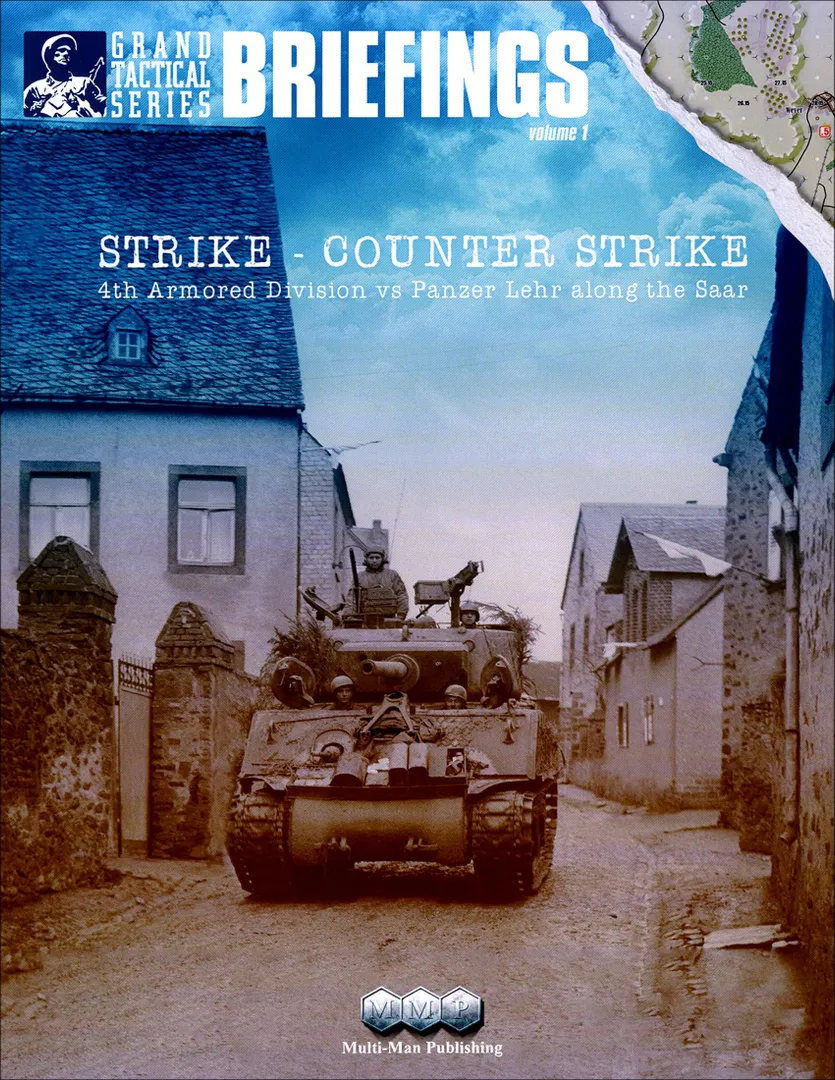
Rules assistance for Strike: Counter Strike – 4th Armored Division vs Panzer Lehr along the Saar
Plain-language explanations of turns, card effects and disputed situations, with official source references and saved question history.
For 1 player
What would you like to know?
Answers come from the official rulebook, with the page to check.
Strike: Counter Strike – 4th Armored Division vs Panzer Lehr along the Saar is a board game released in 2023 for 1–2 players, 120–1500 minutes per game, and ages 14 and up. It was designed by Joe Chacon and its main mechanics are Dice Rolling, Hexagon Grid, and Chit-Pull System.
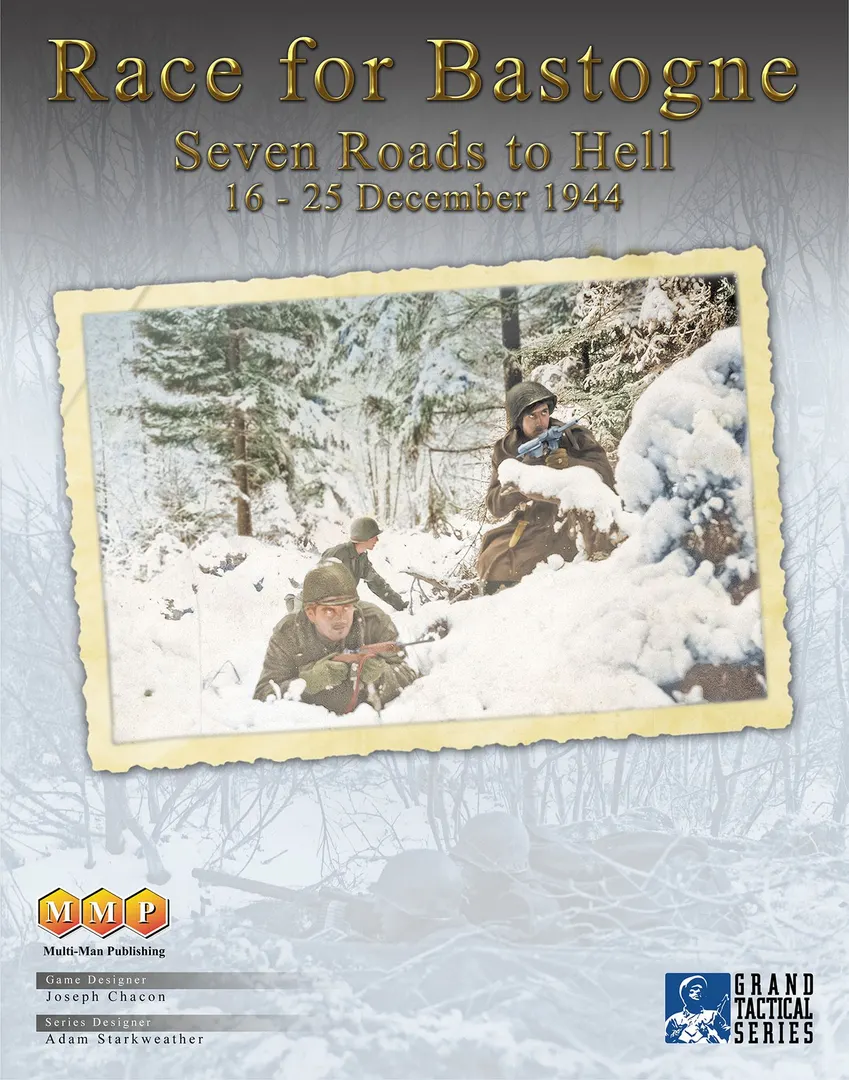




Strike - Counter Strike: 4th Armored Division vs Panzer Lehr along the Saar is designed as an entry-level game as an introduction to the Series: Grand Tactical (MMP) by Multi-Man Publishing. Strike - Counter Strike is a small footprint, low counter density Grand Tactical Series game with minimal exclusive rules meant to provide a quick, easy introduction to the Grand Tactical Series. The game highlights the elegance and fun of the GTS at gaming maneuver warfare at the company level. The Saar battle was chosen as a topic of interest because of the size of the forces involved, the limited battlespace and time period, and most importantly, because it pits two mobile forces against each other, both with the chance to attack and defend. In November 1944, the advances of the US Army XII Corps and XV Corps threatened the boundary between the German First and Nineteenth Armies. General Balck, Commander of German Army Group G ordered Generalleutnant Bayerlein's Panzer Lehr Division to attack southward along the Saar River into the flank of the US Army XV Corps to stop its advance east. Unknown to Bayerlein, the situation of the Panzer Lehr was precarious. While the German division was moving south, the XII Corps' 4th Armored Division, commanded by Maj. Gen. John S. "P" Wood, advanced west toward the Saar River before advancing north. Judging the soggy ground west of the Saar River to be unsuitable for armored operations, Maj. Gen. Wood obtained permission to have the American armored unit's CCB move eastward across the Saar River into the XV Corps' zone, before swinging north toward Sarre-Union. A clash between the two opposing armored formations was inevitable. Strike - Counter Strike simulates the attack of the Panzer Lehr Division into the flank of the US XV Corps, the delaying actions by 106th Cavalry Group, the defense by the 44th Infantry Division, and the counterattack by the 4th Armored Division. The game covers the afternoon of 23 November to the afternoon of 27 November 1944. The German commands the Panzer Lehr Division and the American player commands parts of two divisions an a single map. Originally published in the 44 page magazine GTS Briefing Vol 1 (May 2023) by Multi-Man Publishing Game Scale: Game Turn: 2 hours daylight / 8 - 12 hours night time Hex: 547 yards / 500 meters Units: Platoon to Company Game Inventory: One 22 x 34" full color mapsheet Two dual-side printed full countersheets (352 5/8" counters) One dual-side printed half countersheet (88 5/8" counters) One 24-page Strike - Counter Strike Exclusive rulebook Two dual-side printed CRT/TEC player aid cards Solitaire Playability: Medium Complexity Level: Medium Players: 2 or more Playing Time: 2-4 hours Note 1: Players will need to provide Grand Tactical Series Rules v2.0c to play. Note 2: Players will need to provide one 10-sided die for game play.
Strike: Counter Strike – 4th Armored Division vs Panzer Lehr along the Saar supports 1–2 players according to the catalogue. This range comes from the publisher’s listed player count, so the game can be set up for any group size within it. Some setups, rules and scoring details may still vary by player count, so check your edition’s rulebook for the exact configuration.
The listed playing time for Strike: Counter Strike – 4th Armored Division vs Panzer Lehr along the Saar is 120–1500 minutes. This is the publisher’s estimate for a full game. The actual duration depends on the group, the player count and familiarity with the rules: first sessions usually run longer, while experienced groups often finish faster. Setup and teaching time are not included in this estimate.
The catalogue lists Strike: Counter Strike – 4th Armored Division vs Panzer Lehr along the Saar for ages 14 and up. This is the publisher’s recommendation and reflects reading demands, rule complexity and small components rather than theme alone. Younger players can often join with help from an adult, so check the age guidance on your edition and consider your group’s experience with board games.
Strike: Counter Strike – 4th Armored Division vs Panzer Lehr along the Saar has a complexity rating of 2.8 out of 5 from BoardGameGeek players, which makes it a medium-light game. The rating reflects how much rules knowledge, planning and decision-making a typical game demands. Expect a longer first teach for heavier games, and use a preparation guide before game night.
Strike: Counter Strike – 4th Armored Division vs Panzer Lehr along the Saar belongs to these categories: Wargame. Its main mechanics are Dice Rolling, Hexagon Grid, and Chit-Pull System. Categories describe the theme and setting of a game, while mechanics describe what players actually do on their turns. Each mechanic links to a catalogue hub with similar games, which helps when you want something comparable.
The credited designers of Strike: Counter Strike – 4th Armored Division vs Panzer Lehr along the Saar are: Joe Chacon. These credits come from the published game data and name the people responsible for the game’s design, not its illustrators or publishers. Designer pages on MeepleRules collect other titles by the same designers, which helps when you enjoy a game and want to find similar ones.
The catalogue lists Strike: Counter Strike – 4th Armored Division vs Panzer Lehr along the Saar as a base game. It can be played on its own with the components in the box and does not require any other title. Expansions, if any exist, add new content or rules on top of it and are listed separately in the catalogue with a link back to this base game.