
- BGG rank
- BGG #19,951
- BGG rating
- 6.8
Shining Path: The Struggle for Peru
- 2 players
- 90–240 min
- Complexity 3.0/5
- 1997
2014
Rules assistance for The Greek Civil War, 1947-49
Plain-language explanations of turns, card effects and disputed situations, with official source references and saved question history.
For 2 players
What would you like to know?
Answers come from the official rulebook, with the page to check.
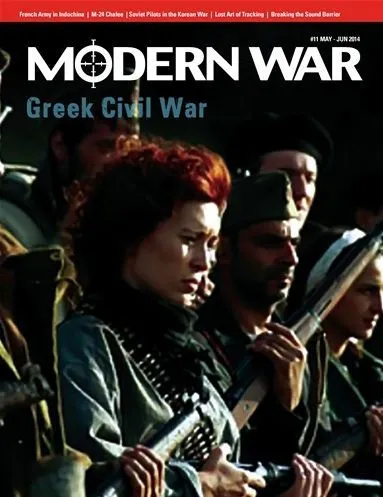
The Greek Civil War, 1947-49 is a board game released in 2014 for 2 players and 120–240 minutes per game. It was designed by Brian Train and its main mechanics are Area Movement, Area Majority / Influence, and Hexagon Grid.



The Greek Civil War, 1947-49 is a game for two players simulating the 1947-49 conflict between the government of Greece and the DSE (Dimokratikos Stratos Elladas, or “Greek Democratic Army”), the fighting organization controlled by the Greek Communist Party. During the game, the DSE Player tries to erode the power of the Greek authorities and replace their governing structures with his own, while the Government player tries to contain this threat to civil society with civilian police and the servicemen and reservists of the Greek National Army (GNA). Central to play of the game is the Political Index (PI). Both players maintain each maintain their own PI during the game. A player’s PI is a quantification of the level of support or commitment the Greek “man in the taverna” is willing to give him (as opposed to other political movements or methods) as an agent of social change – or guarantor of security. For the Government player, his PI is also a measure of the stability of the political regime. PIs are measured in Political Points (PP) and recorded on the Record Track. PIs change constantly during the course of the game depending on events and who controls various territory. The highest level is 99, and the lowest is 0. If either player's PI reaches 0 at any point in the game, he is deemed to have reached the point of political collapse for his side, and the game ends. The game map shows mainland Greece, divided into Regions, and parts of the adjoining countries to the north (Albania, Yugoslavia, Bulgaria). Components: One 22" x 34" map & 280 counters Published with Modern War #11 (March 2014).
The Greek Civil War, 1947-49 supports 2 players according to the catalogue. This is the publisher’s listed player count, so the game is designed for exactly that number of participants. Variants for other group sizes, if any, are described in the rulebook of your edition, so check it before setting up a different configuration.
The listed playing time for The Greek Civil War, 1947-49 is 120–240 minutes. This is the publisher’s estimate for a full game. The actual duration depends on the group, the player count and familiarity with the rules: first sessions usually run longer, while experienced groups often finish faster. Setup and teaching time are not included in this estimate.
The Greek Civil War, 1947-49 has a complexity rating of 3.0 out of 5 from BoardGameGeek players, which makes it a medium-weight game. The rating reflects how much rules knowledge, planning and decision-making a typical game demands. Expect a longer first teach for heavier games, and use a preparation guide before game night.
The Greek Civil War, 1947-49 belongs to these categories: Wargame, Modern Warfare, and Civil War. Its main mechanics are Area Movement, Area Majority / Influence, and Hexagon Grid. Categories describe the theme and setting of a game, while mechanics describe what players actually do on their turns. Each mechanic links to a catalogue hub with similar games, which helps when you want something comparable.
The credited designers of The Greek Civil War, 1947-49 are: Brian Train. These credits come from the published game data and name the people responsible for the game’s design, not its illustrators or publishers. Designer pages on MeepleRules collect other titles by the same designers, which helps when you enjoy a game and want to find similar ones.
The catalogue lists The Greek Civil War, 1947-49 as a base game. It can be played on its own with the components in the box and does not require any other title. Expansions, if any exist, add new content or rules on top of it and are listed separately in the catalogue with a link back to this base game.