

- BGG rank
- BGG #22,585
- BGG rating
- 6.6
Red Dragon, Blue Dragon: The Huaihai, 1948-1949
- 1–2 players
- Complexity 2.8/5
- 2016
2009
Rules assistance for Battle for China, 1937-1941 (Second Edition)
Plain-language explanations of turns, card effects and disputed situations, with official source references and saved question history.
What would you like to know?
Answers come from the official rulebook, with the page to check.
Battle for China, 1937-1941 (Second Edition) is a board game released in 2009 for 2–3 players, 240 minutes per game, and ages 12 and up. It was designed by Brian Train, Ty Bomba, Terence Co, and Earl Dixon and its main mechanics are Area Movement and Hexagon Grid.

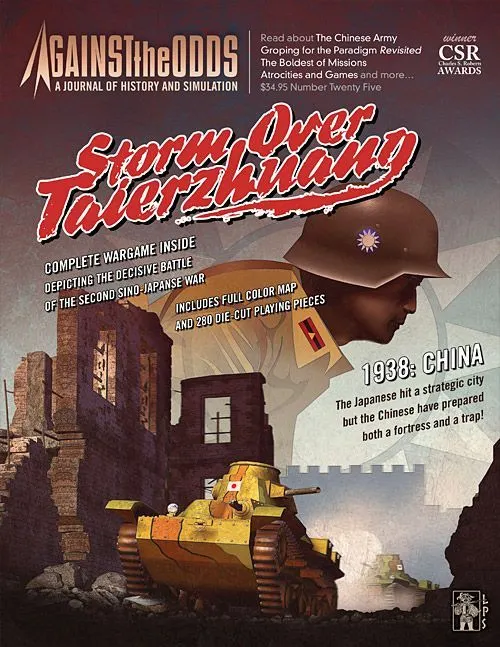
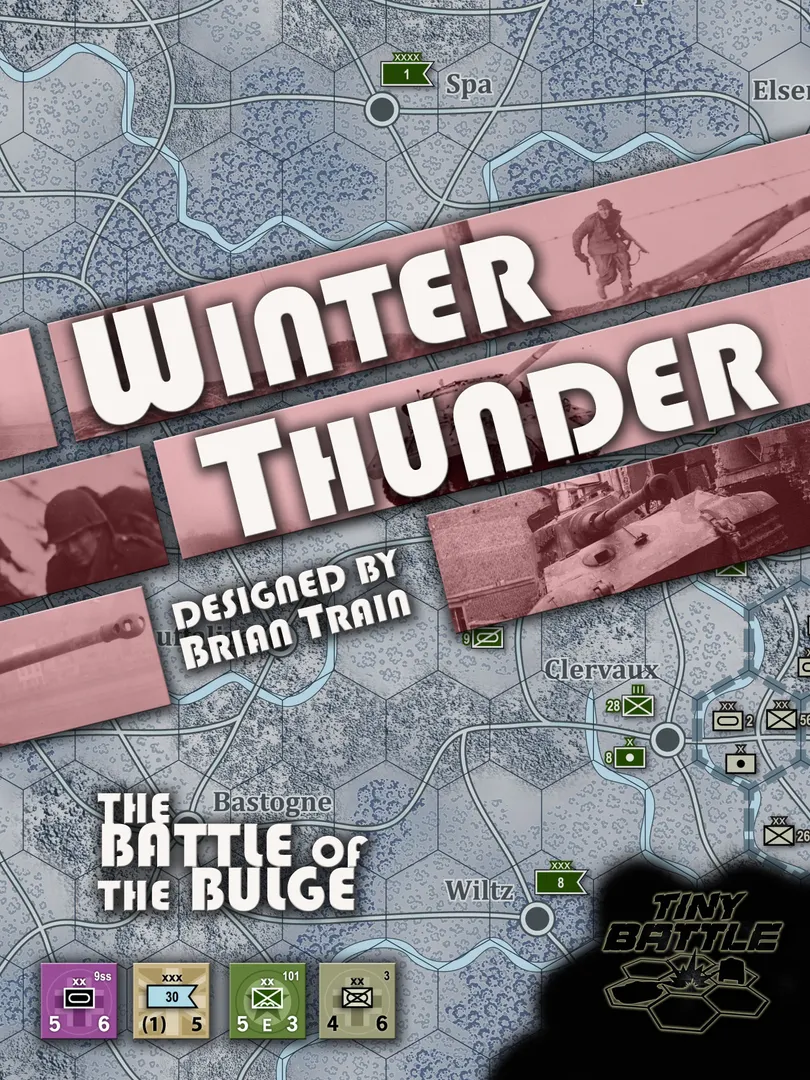
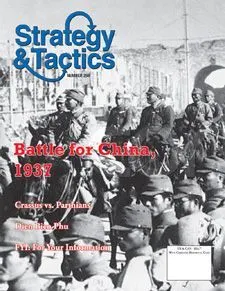
Battle for China is an intermediate-complexity wargame, designed by Brian Train, of what that people call their "War of Resistance Against Japan," specifically covering the struggle from the initial Japanese invasion in July 1937 to the end of 1941. The game is for two players, one directing the military forces acting to defend China against the Japanese, and the other commanding the forces of imperial Japan. The game can also be played with a third player taking the Chinese Communist forces. The area map is drawn at approximately 75 miles to the inch. Units of maneuver are brigades, divisions, corps and armies. Specialist units (air, armor and artillery) are represented by abstract markers representing concentrations of those formations. There are 280 small-size iconic units. The 18 game turns are seasonal. The system is an evolution of the one found in Arriba Espana, which will have appeared in World at War number nine. Two experienced players can complete a game in about four to five hours. Rules cover: KMT factionalism, anti-guerrilla operations, Japanese puppet forces, truces, foreign support and intervention, peasant revolts, atrocities, desertions and defections, famine, disease, off-map border clashes with the Soviets, united fronts, the Burma Road, the Indo-China railway, US lend-lease, the broader war in the Pacific, floods, amphibious assaults, fortification, cadres, shifting initiative, and more. S&T issue 259
Battle for China, 1937-1941 (Second Edition) supports 2–3 players according to the catalogue. This range comes from the publisher’s listed player count, so the game can be set up for any group size within it. Some setups, rules and scoring details may still vary by player count, so check your edition’s rulebook for the exact configuration.
The listed playing time for Battle for China, 1937-1941 (Second Edition) is 240 minutes. This is the publisher’s estimate for a full game. The actual duration depends on the group, the player count and familiarity with the rules: first sessions usually run longer, while experienced groups often finish faster. Setup and teaching time are not included in this estimate.
The catalogue lists Battle for China, 1937-1941 (Second Edition) for ages 12 and up. This is the publisher’s recommendation and reflects reading demands, rule complexity and small components rather than theme alone. Younger players can often join with help from an adult, so check the age guidance on your edition and consider your group’s experience with board games.
Battle for China, 1937-1941 (Second Edition) has a complexity rating of 2.6 out of 5 from BoardGameGeek players, which makes it a medium-light game. The rating reflects how much rules knowledge, planning and decision-making a typical game demands. Expect a longer first teach for heavier games, and use a preparation guide before game night.
Battle for China, 1937-1941 (Second Edition) belongs to these categories: Wargame and World War II. Its main mechanics are Area Movement and Hexagon Grid. Categories describe the theme and setting of a game, while mechanics describe what players actually do on their turns. Each mechanic links to a catalogue hub with similar games, which helps when you want something comparable.
The credited designers of Battle for China, 1937-1941 (Second Edition) are: Brian Train, Ty Bomba, Terence Co, and Earl Dixon. These credits come from the published game data and name the people responsible for the game’s design, not its illustrators or publishers. Designer pages on MeepleRules collect other titles by the same designers, which helps when you enjoy a game and want to find similar ones.
The catalogue lists Battle for China, 1937-1941 (Second Edition) as a base game. It can be played on its own with the components in the box and does not require any other title. Expansions, if any exist, add new content or rules on top of it and are listed separately in the catalogue with a link back to this base game.