
- BGG rank
- BGG #6,660
- BGG rating
- 7.3
The Fires of Midway: The Carrier Battles of 1942
- 1–4 players
- 60 min
- Complexity 2.5/5
- 2010
2009
Rules assistance for The Hell of Stalingrad
Plain-language explanations of turns, card effects and disputed situations, with official source references and saved question history.
For 1 player
What would you like to know?
Answers come from the official rulebook, with the page to check.
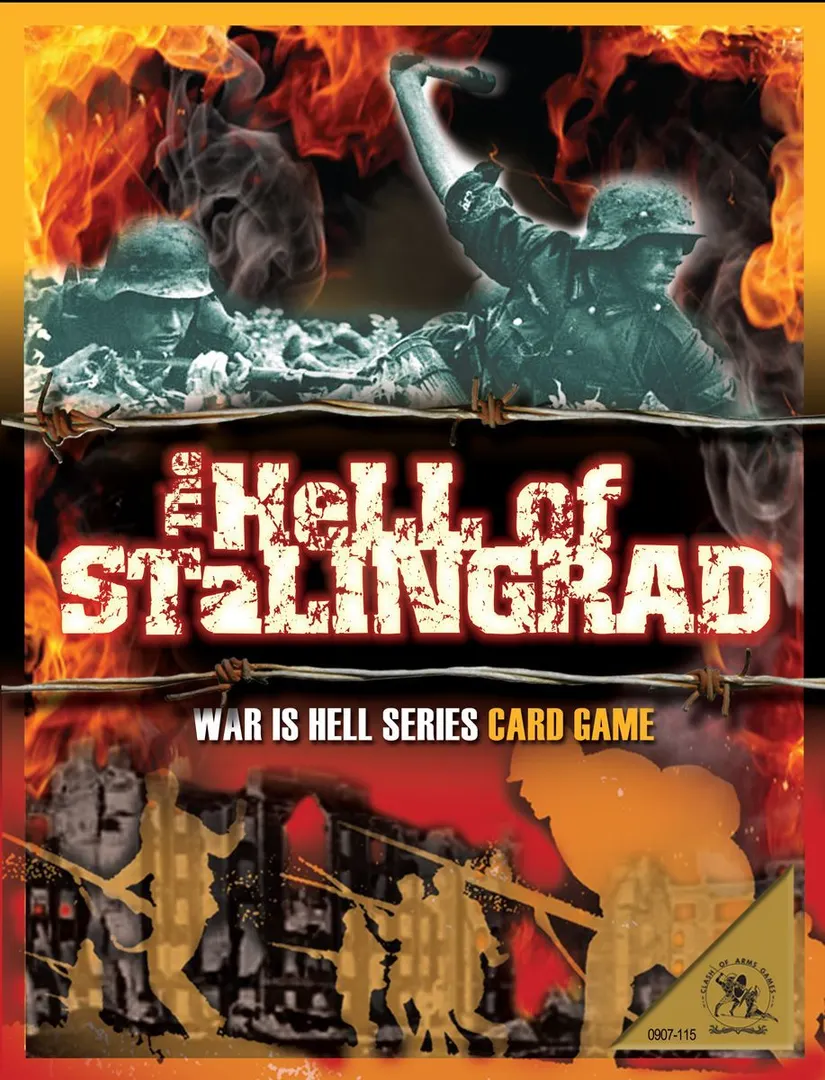
The Hell of Stalingrad is a board game released in 2009 for 1–4 players, 90 minutes per game, and ages 10 and up. It was designed by Steven Cunliffe and its main mechanics are Hand Management and Solo / Solitaire Game.
The Hell of Stalingrad is an historical card-driven game simulating the massive urban battle that changed the course of WWII. The Hell of Stalingrad uses revolutionary mechanics to put players directly in the action as they commit division Formations and battalion Units. The focus of the game is combat over colorful Building Cards representing actual Stalingrad locations bitterly contested during the battle such as the Grain Elevator, the Traktor Factory and Pavlov’s House. The German commander will use his disciplined veterans and German Doctrines to batter through the fortified strongholds and reach the Volga River. Assisting him will be Panzer Divisions, Kampfgruppen and elite Pioneer assault teams. The Soviet commander must hold the city with a battered army of patriotic conscripts. Reinforcements must brave Luftwaffe attacks as they attempt to cross the Volga River and reach Stalingrad. Those who survive will be thrown into the carnage. The Soviets must hold out and prevent the invaders from capturing the entire city at all costs. The tide of the war depends on their resolve! The Hell of Stalingrad focuses on key aspects of the battle: Historical commanders leading the armies. General Paulus commands the German 6th Army and General Lopitan the Soviet 62nd. However, Hitler and Stalin want immediate victory and will replace them if they fail! The role of historical formations such as Kampfgruppe Stahl and the 10th NKVD. Fires from bombardment and shelling aids the Germans and turns Stalingrad into a massive inferno of ruins. The influence of Strategic level events on player's decisions in tactical battles. The timely acts of heroes such as Panzer ace Von Loringhoven and Soviet sniper Vasilli Zaitsev affecting a battle. Components: 200 Combat, Formation and Campaign Cards divided into Basic, Expert and Advanced, adding to play dynamics and subtlety of tactics. 30 Stalingrad Building & Tracking Cards 219 Game Counters Rules of Play, QRS Sheets
The Hell of Stalingrad supports 1–4 players according to the catalogue. This range comes from the publisher’s listed player count, so the game can be set up for any group size within it. Some setups, rules and scoring details may still vary by player count, so check your edition’s rulebook for the exact configuration.
The listed playing time for The Hell of Stalingrad is 90 minutes. This is the publisher’s estimate for a full game. The actual duration depends on the group, the player count and familiarity with the rules: first sessions usually run longer, while experienced groups often finish faster. Setup and teaching time are not included in this estimate.
The catalogue lists The Hell of Stalingrad for ages 10 and up. This is the publisher’s recommendation and reflects reading demands, rule complexity and small components rather than theme alone. Younger players can often join with help from an adult, so check the age guidance on your edition and consider your group’s experience with board games.
The Hell of Stalingrad has a complexity rating of 2.7 out of 5 from BoardGameGeek players, which makes it a medium-light game. The rating reflects how much rules knowledge, planning and decision-making a typical game demands. Expect a longer first teach for heavier games, and use a preparation guide before game night.
The Hell of Stalingrad belongs to these categories: Card Game, Wargame, and World War II. Its main mechanics are Hand Management and Solo / Solitaire Game. Categories describe the theme and setting of a game, while mechanics describe what players actually do on their turns. Each mechanic links to a catalogue hub with similar games, which helps when you want something comparable.
The credited designers of The Hell of Stalingrad are: Steven Cunliffe. These credits come from the published game data and name the people responsible for the game’s design, not its illustrators or publishers. Designer pages on MeepleRules collect other titles by the same designers, which helps when you enjoy a game and want to find similar ones.
The catalogue lists The Hell of Stalingrad as a base game. It can be played on its own with the components in the box and does not require any other title. Expansions, if any exist, add new content or rules on top of it and are listed separately in the catalogue with a link back to this base game.