
- BGG rank
- BGG #10,215
- BGG rating
- 7.0
World War II: Pacific Theater of Operations
- 1–4 players
- 360 min
- Complexity 4.1/5
- 1991
1988
Rules assistance for The Hunt for Red October
Plain-language explanations of turns, card effects and disputed situations, with official source references and saved question history.
For 2 players
What would you like to know?
Answers come from the official rulebook, with the page to check.
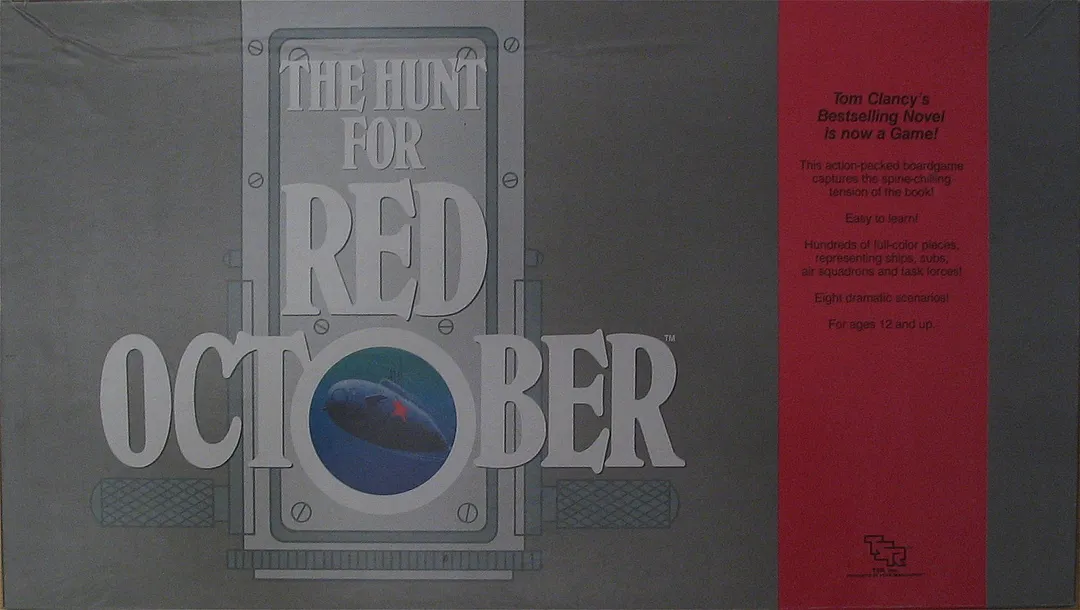
The Hunt for Red October is a board game released in 1988 for 2 players, 60 minutes per game, and ages 12 and up. It was designed by Douglas Niles and its main mechanics are Area Movement, Dice Rolling, and Secret Unit Deployment.
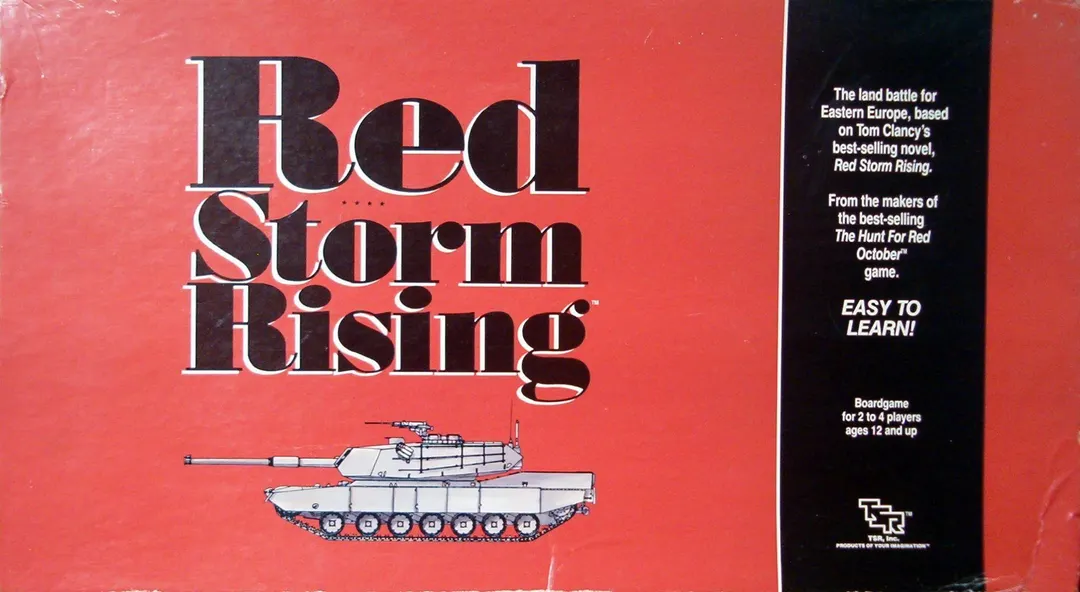
The Hunt for Red October depicts "modern" naval combat in the North Atlantic, Soviets vs. Nato. The game contains 8 scenarios that place various combinations of aircraft, surface ships, and submarines at the players' disposal. The map is broken up into irregular "spaces" containing land, shallow or deep sea. Land spaces may contain airbases and/or ports; sea spaces may contain standing detection patrols (SOSUS, etc). Pieces are double sided cardboard of 3 different sizes (capital ships/task forces, small ships/submarines, and aircraft) with the back only giving the basic information (a formation of aircraft, a submarine silhouette or a Task Force symbol) to keep the specific information of the unit secret from the opponent. Each unit has a detection rating and an attack rating. Each side starts each turn with a random number of detection attempts (2+d10 for NATO, 2+d6 for Soviet). Pieces are moved on the board (ships/subs up to 3 spaces, aircraft up to 1, 4, or 8 depending on type). As opposing pieces are moved into the same spaces, detection attempts are spent trying to locate the enemy units in the space (usually d10 <= detection rating). Detected units are turned sideways so both sides can see it. Once units are found combat may be initiated. Combat is done in two attack phases. Dice are rolled vs. the attack rating of the attacking unit(s) (usually 1 d10 but there are exceptions) and hits are determined and resolved simultaneously. Ships that did not fire in the first phase conduct a second attack phase. Units can be in combat if not detected but upon firing become detected (which means undetected units almost invariably shoot in the second phase). Hits are again determined. 1, 2 or 3 hits (subs, small surface ships, large surface ships) are required to destroy a unit. Aircraft are destroyed only if the hit on them was a rolled 1 or 2. Victory is determined by scenario conditions. There are several optional rules, none of which appear to significantly increase the complexity of the game.
The Hunt for Red October supports 2 players according to the catalogue. This is the publisher’s listed player count, so the game is designed for exactly that number of participants. Variants for other group sizes, if any, are described in the rulebook of your edition, so check it before setting up a different configuration.
The listed playing time for The Hunt for Red October is 60 minutes. This is the publisher’s estimate for a full game. The actual duration depends on the group, the player count and familiarity with the rules: first sessions usually run longer, while experienced groups often finish faster. Setup and teaching time are not included in this estimate.
The catalogue lists The Hunt for Red October for ages 12 and up. This is the publisher’s recommendation and reflects reading demands, rule complexity and small components rather than theme alone. Younger players can often join with help from an adult, so check the age guidance on your edition and consider your group’s experience with board games.
The Hunt for Red October has a complexity rating of 2.5 out of 5 from BoardGameGeek players, which makes it a medium-light game. The rating reflects how much rules knowledge, planning and decision-making a typical game demands. Expect a longer first teach for heavier games, and use a preparation guide before game night.
The Hunt for Red October belongs to these categories: Wargame, Nautical, and Novel-based. Its main mechanics are Area Movement, Dice Rolling, and Secret Unit Deployment. Categories describe the theme and setting of a game, while mechanics describe what players actually do on their turns. Each mechanic links to a catalogue hub with similar games, which helps when you want something comparable.
The credited designers of The Hunt for Red October are: Douglas Niles. These credits come from the published game data and name the people responsible for the game’s design, not its illustrators or publishers. Designer pages on MeepleRules collect other titles by the same designers, which helps when you enjoy a game and want to find similar ones.
The catalogue lists The Hunt for Red October as a base game. It can be played on its own with the components in the box and does not require any other title. Expansions, if any exist, add new content or rules on top of it and are listed separately in the catalogue with a link back to this base game.