- BGG rating
- 7.0
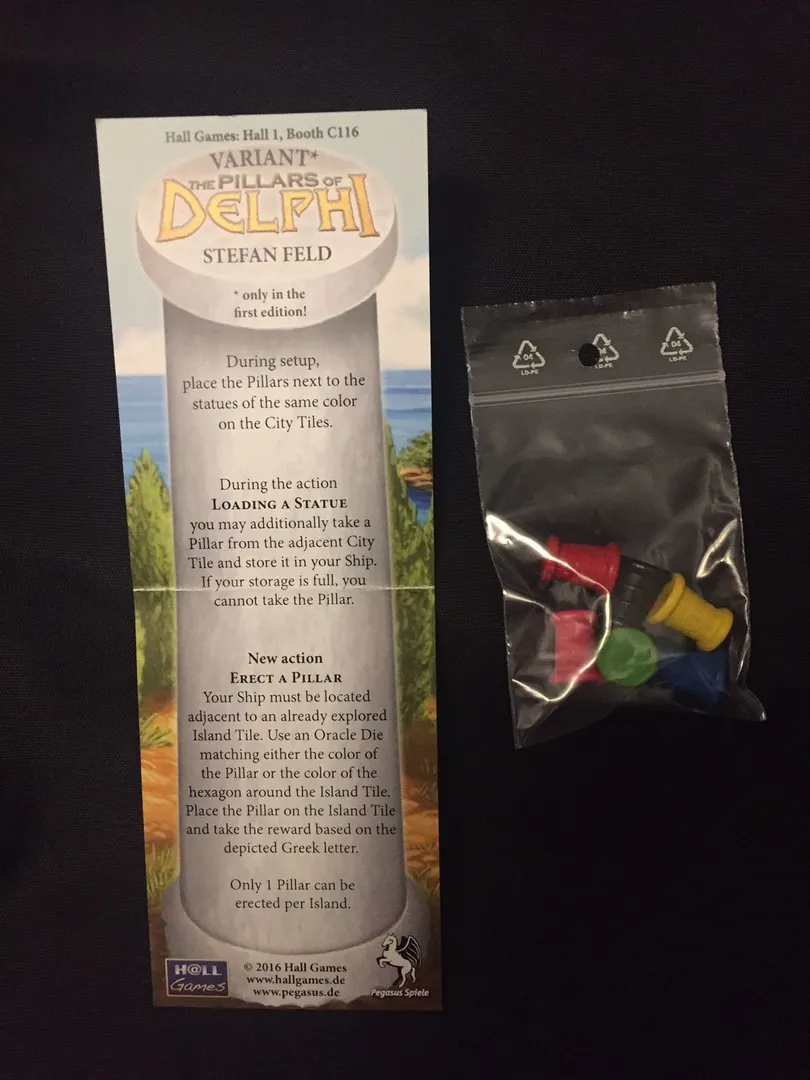
The Oracle of Delphi: The Pillars of Delphi Variant
- 2–4 players
- 70–100 min
- 2016
2016
Rules assistance for The Oracle of Delphi
Plain-language explanations of turns, card effects and disputed situations, with official source references and saved question history.
For 2 players
What would you like to know?
Answers come from the official rulebook, with the page to check.
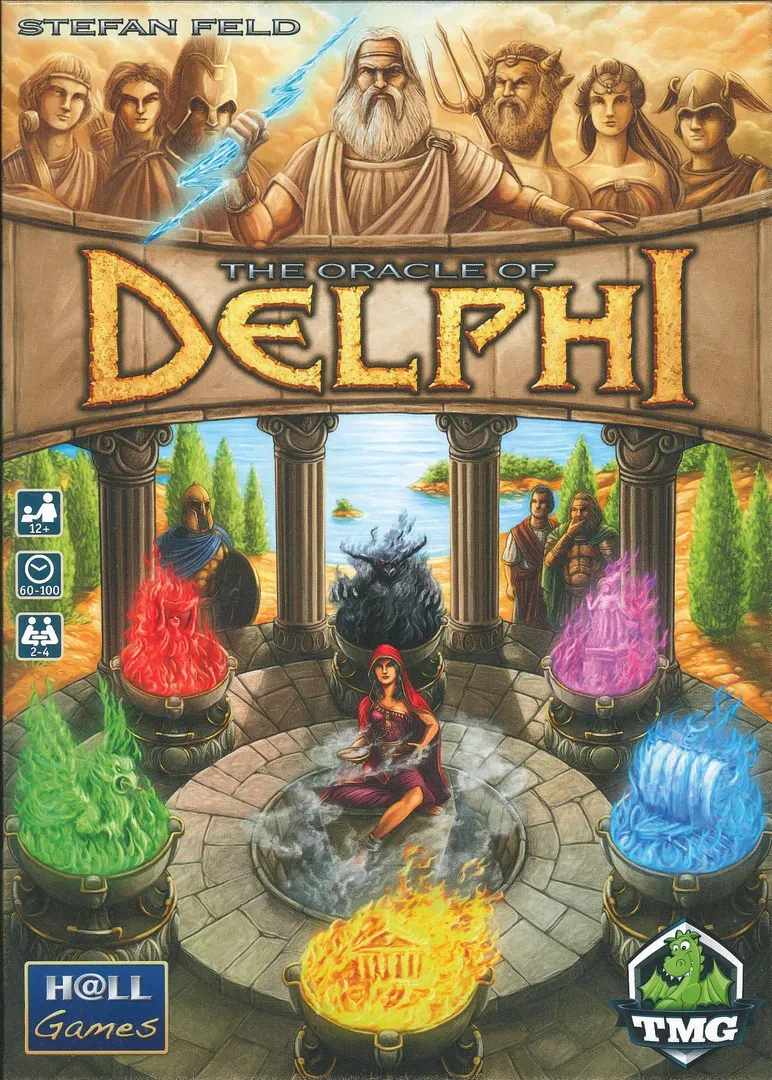
The Oracle of Delphi is a board game released in 2016 for 2–4 players, 70–100 minutes per game, and ages 12 and up. It was designed by Stefan Feld and its main mechanics are Variable Player Powers, Race, and Push Your Luck.






Description from the publisher: "For once, Zeus, Greek god of thunder and sky, is in high spirits. Hence, he decides to offer a generous gift to a worthy mortal and invite him, or her, to his realm, to Olympus. To determine a sufficient candidate, Zeus hosts a competition for his entertainment. Twelve legendary tasks are imposed upon the fearless participants: to erect graceful statues, to raise awe-inspiring sanctuaries, to offer capacious offerings, and to slay the most fearsome monsters. The first participant to master all the posed assignments wins the favor of the father of the gods himself. Indubitably, you will not pass up this golden opportunity, so you clear your ship and rally your crew to follow on the trails of legendary Odysseus through the dangerous waters of the Aegean. But how could you find the righteous path onward? There is but one who can help you. Visit the mysterious oracle of Delphi and let her answers guide your ways. In Stefan Feld's new game The Oracle of Delphi, the player's ships travel across a large variable game board of hexagonal tiles showing islands and the surrounding waters. Each player aims to reach certain islands to perform the twelve tasks given by Zeus: e.g., to collect offerings of different colors and to deliver them to corresponding temples, or to slay monsters of a specific type (and color), all of which can be discovered on the islands. In order to execute these color-dependent actions, you are given three colored dice each turn, the so-called "oracle dice". Rolling the dice (at the start of the turn) is equivalent to consulting the oracle, whereas the results represent her answers. The answers determine which actions you will be able to take, but you will always have three actions per turn. However, a slight divergence from your fate is often possible. In addition to the oracle, you can request support from the gods and you can acquire favor tokens, companions, and other special abilities that will help you win the race against other competitors. Differently equipped ships and the variable set-up of the game board will offer new challenging and interesting strategic and tactical decisions with every new game of The Oracle of Delphi that you play.
The Oracle of Delphi supports 2–4 players according to the catalogue. This range comes from the publisher’s listed player count, so the game can be set up for any group size within it. Some setups, rules and scoring details may still vary by player count, so check your edition’s rulebook for the exact configuration.
The listed playing time for The Oracle of Delphi is 70–100 minutes. This is the publisher’s estimate for a full game. The actual duration depends on the group, the player count and familiarity with the rules: first sessions usually run longer, while experienced groups often finish faster. Setup and teaching time are not included in this estimate.
The catalogue lists The Oracle of Delphi for ages 12 and up. This is the publisher’s recommendation and reflects reading demands, rule complexity and small components rather than theme alone. Younger players can often join with help from an adult, so check the age guidance on your edition and consider your group’s experience with board games.
The Oracle of Delphi has a complexity rating of 3.0 out of 5 from BoardGameGeek players, which makes it a medium-weight game. The rating reflects how much rules knowledge, planning and decision-making a typical game demands. Expect a longer first teach for heavier games, and use a preparation guide before game night.
The Oracle of Delphi belongs to these categories: Nautical, Ancient, and Mythology. Its main mechanics are Variable Player Powers, Race, and Push Your Luck. Categories describe the theme and setting of a game, while mechanics describe what players actually do on their turns. Each mechanic links to a catalogue hub with similar games, which helps when you want something comparable.
The credited designers of The Oracle of Delphi are: Stefan Feld. These credits come from the published game data and name the people responsible for the game’s design, not its illustrators or publishers. Designer pages on MeepleRules collect other titles by the same designers, which helps when you enjoy a game and want to find similar ones.
The catalogue lists The Oracle of Delphi as a base game. It can be played on its own with the components in the box and does not require any other title. Expansions, if any exist, add new content or rules on top of it and are listed separately in the catalogue with a link back to this base game.