
- BGG rank
- BGG #1,690
- BGG rating
- 7.7
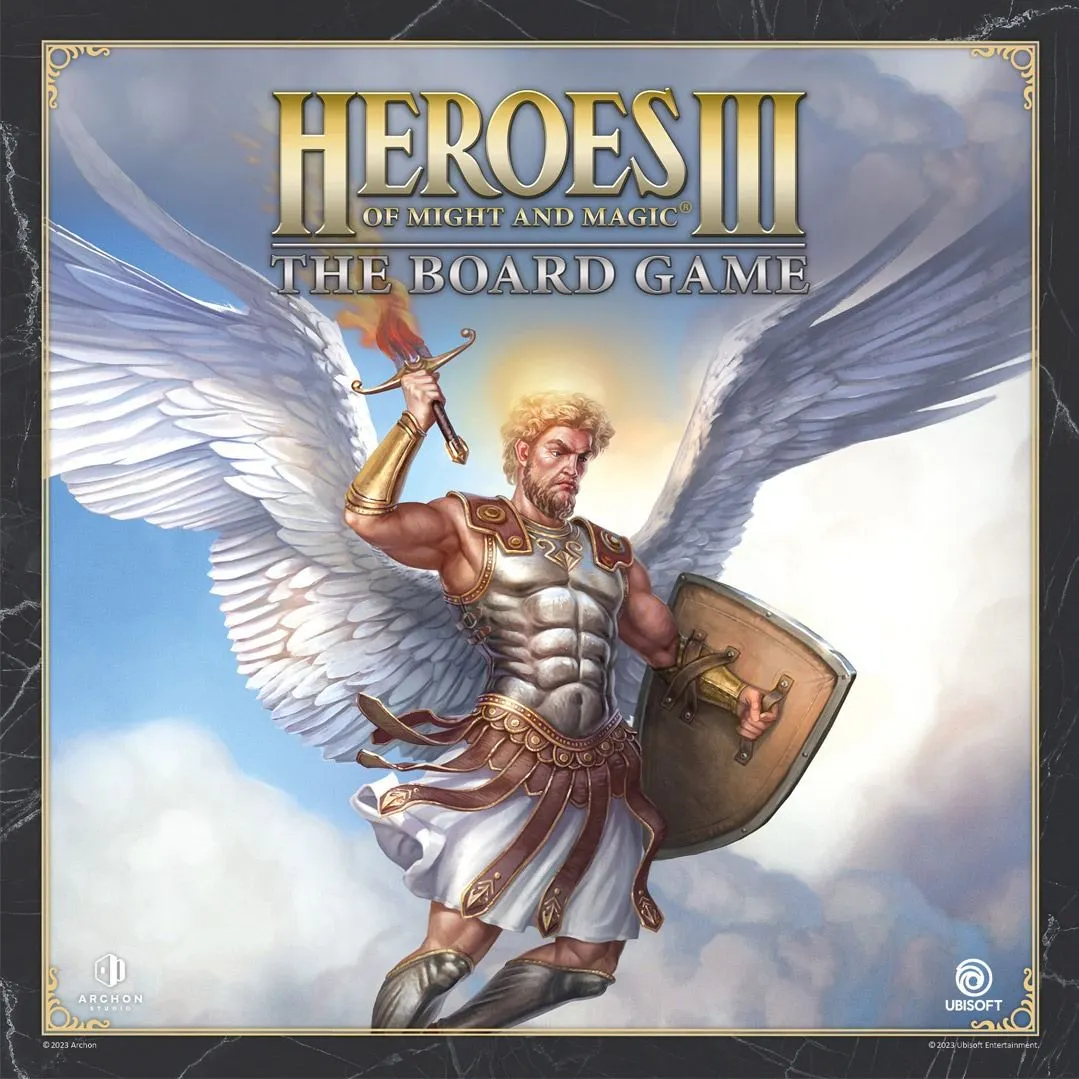
Heroes of Might and Magic III: The Board Game
- 1–3 players
- 90–120 min
- Complexity 3.5/5
- 2024
1989
Rules assistance for The Siege of Jerusalem (Third Edition)
Plain-language explanations of turns, card effects and disputed situations, with official source references and saved question history.
For 2 players
What would you like to know?
Answers come from the official rulebook, with the page to check.
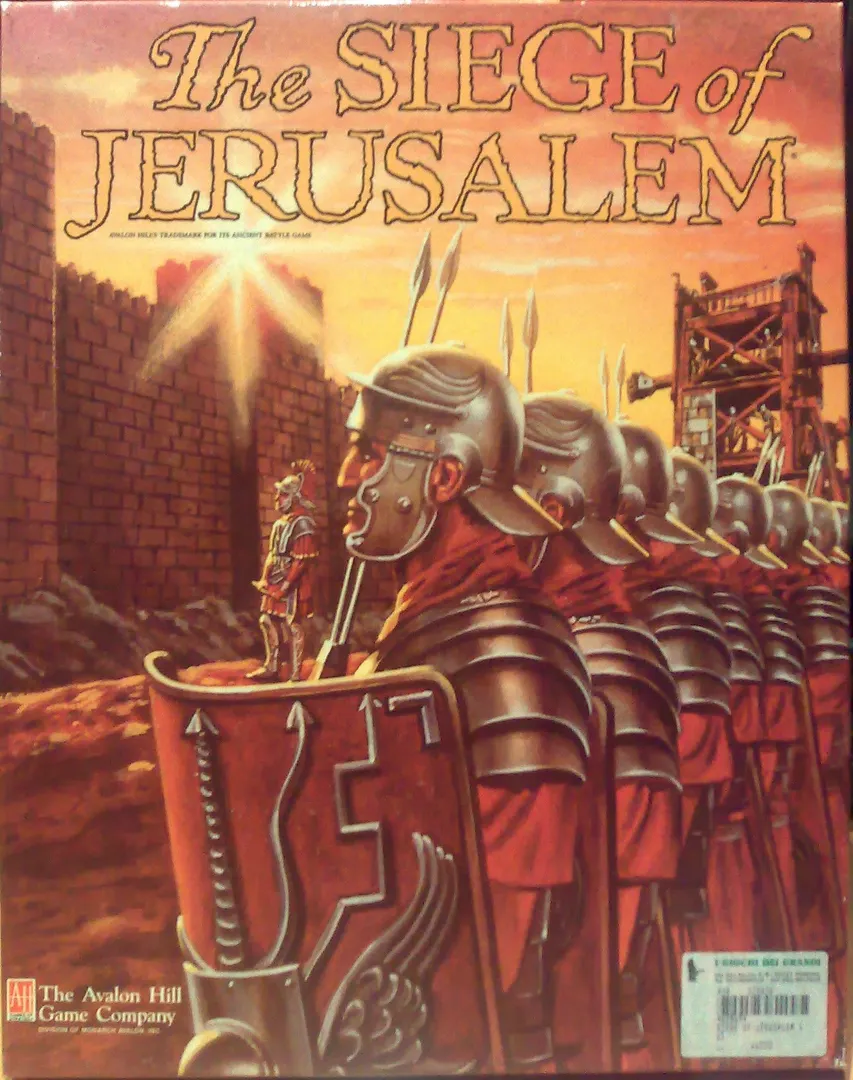
The Siege of Jerusalem (Third Edition) is a board game released in 1989 for 2 players, 300 minutes per game, and ages 12 and up. It was designed by Fred Schachter and Steve Weiss and its main mechanics are Dice Rolling, Hexagon Grid, and Solo / Solitaire Game.





Published by Avalon Hill in 1989 (for the Third edition). (from MMP's web site:) It is 70 A.D. Dawn breaks on the combined might of four Legions arrayed on the heights of Mount Scopus, starting their methodical advance across the valley to the ancient walled city of Jerusalem. Siege lines have been secured tight about the city. There is no hope of escape. The besieged must persist behind their stout walls or perish before a vengeful Rome. Five grueling years of campaigning in Judea is now culminating in the Siege of Jerusalem. But the fortified city defies even the might of Rome. The thick walls atop the steep slopes literally bristle with natural and manmade fortifications. It will take all of Rome's considerable engineering skills to winch their war machines into position for an assault up the slopes to the city. Only here in the north plain can the city's walls be taken by escalade. The rhythmic approach of the Legions is muted by the rumble of the siege engines as an assortment of towers, rams, and artillery precede the maniples. The distant walls seethe with the frenzied activity of an alerted populace as the antagonists draw near. This majestic view is abruptly halted by the blare of trumpets which soon gives way to the cacophony of the clash of arms and screams of the dying. Morning turns to dusk before the walls are breached and the weary legions exact their vengeance. The sky turns bright again, aglow in the reflection of a thousand fires as the northern outskirts burn. But what price victory? Another day such as this will break the Roman Army and only one of the city's ten walled sections has fallen this day. They will have to find another way. Shafts must be dug to undermine the walls or earthen ramps built with which to scale them. It will be a long campaign. This is The Siege of Jerusalem...An epic battle simulation with all the trappings and majesty of a Cecil B. DeMille film spectacular. Facing the greatest army of antiquity, the Judeans must rely on the stoutness of their walls to halt the unbeatable Roman legions and therein lies the fascination: the immovable object vs the unstoppable force. As Eliezar Ben Yair, leader of the Zealots, you must conduct a skilled defense of the city's ever shrinking perimeter - exacting from the Romans a price so terrible that they will be forced to lift their siege - or break out to continue your struggle for freedom at Massada. As Titus, commander of the Roman army, you must decide when, where and how to renew the assault - gauging your troop needs against the progress of your siege works and the press of time caused by outside threats. More than just conducting tactical combat, the Roman must formulate an overall strategic plan for the conduct of the siege. Vastly revised from its 1st & 2nd edition printing from Historical Perspectives in the 70's, Siege of Jerusalem now boasts two-sided counters, a continuous combat system, a strategic interphase for conducting the entire siege, and the morale / panic rules so important in portraying ancient warfare. An Introductory Scenario depicting the abortive assault of Gallus with the XII Legion three years previous allows players to learn how to handle a legion in a single day's play while training for eventual participation in the conduct of the epic siege.
The Siege of Jerusalem (Third Edition) supports 2 players according to the catalogue. This is the publisher’s listed player count, so the game is designed for exactly that number of participants. Variants for other group sizes, if any, are described in the rulebook of your edition, so check it before setting up a different configuration.
The listed playing time for The Siege of Jerusalem (Third Edition) is 300 minutes. This is the publisher’s estimate for a full game. The actual duration depends on the group, the player count and familiarity with the rules: first sessions usually run longer, while experienced groups often finish faster. Setup and teaching time are not included in this estimate.
The catalogue lists The Siege of Jerusalem (Third Edition) for ages 12 and up. This is the publisher’s recommendation and reflects reading demands, rule complexity and small components rather than theme alone. Younger players can often join with help from an adult, so check the age guidance on your edition and consider your group’s experience with board games.
The Siege of Jerusalem (Third Edition) has a complexity rating of 3.9 out of 5 from BoardGameGeek players, which makes it a heavy game. The rating reflects how much rules knowledge, planning and decision-making a typical game demands. Expect a longer first teach for heavier games, and use a preparation guide before game night.
The Siege of Jerusalem (Third Edition) belongs to these categories: Wargame and Ancient. Its main mechanics are Dice Rolling, Hexagon Grid, and Solo / Solitaire Game. Categories describe the theme and setting of a game, while mechanics describe what players actually do on their turns. Each mechanic links to a catalogue hub with similar games, which helps when you want something comparable.
The credited designers of The Siege of Jerusalem (Third Edition) are: Fred Schachter and Steve Weiss. These credits come from the published game data and name the people responsible for the game’s design, not its illustrators or publishers. Designer pages on MeepleRules collect other titles by the same designers, which helps when you enjoy a game and want to find similar ones.
The catalogue lists The Siege of Jerusalem (Third Edition) as a base game. It can be played on its own with the components in the box and does not require any other title. Expansions, if any exist, add new content or rules on top of it and are listed separately in the catalogue with a link back to this base game.