
- BGG rating
- 7.0
Tiny Epic Quest: Quest for the Golden Mushrooms
- 1–4 players
- 30–60 min
- Complexity 3.0/5
- 2017
2017
Rules assistance for Tiny Epic Quest
Plain-language explanations of turns, card effects and disputed situations, with official source references and saved question history.
For 1 player
What would you like to know?
Answers come from the official rulebook, with the page to check.
Tiny Epic Quest is a board game released in 2017 for 1–4 players, 30–60 minutes per game, and ages 14 and up. It was designed by Scott Almes and its main mechanics are Push Your Luck, Area Movement, and Dice Rolling.



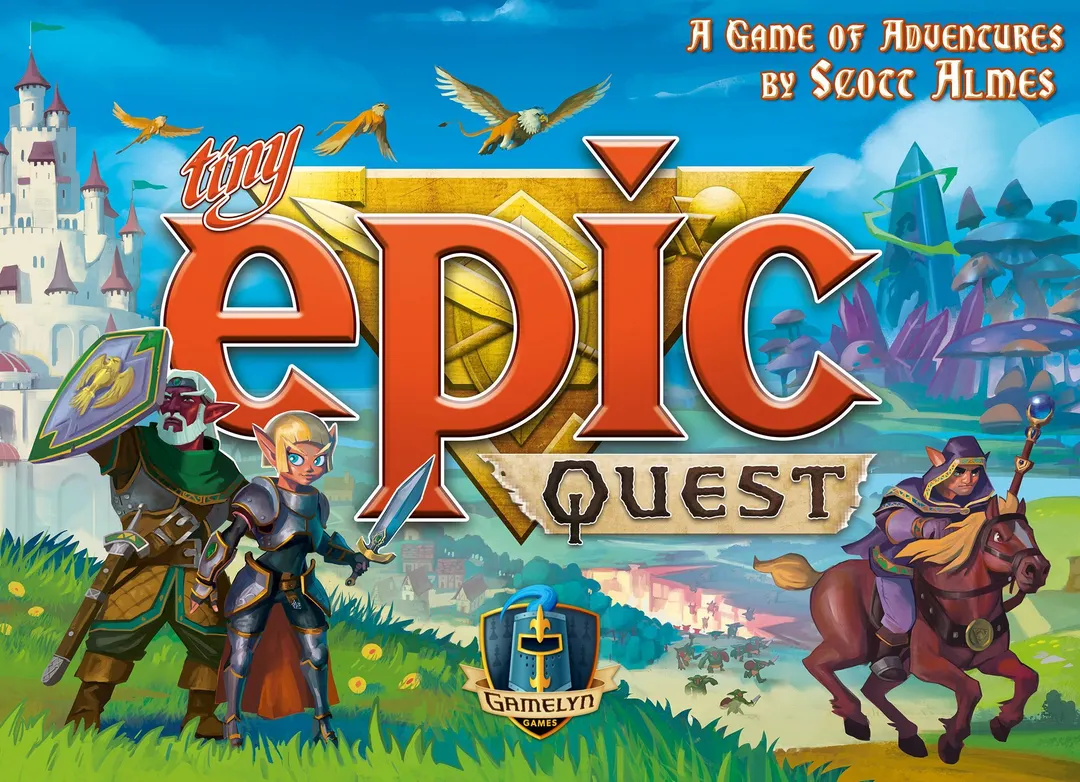
A world of peace has been torn asunder by the opening of a vile portal from the goblin kingdom. Nasty goblins pour into the peaceful groves and villages of the elf world, setting the realm ablaze. Now you, the heroes, must quest in order to right this wrong. There are two paths to victory: closing the portal or slaying all the goblins. Which one will you choose? Either way, your quests will be aided by the help of the surviving mushroom folk — and by the epic items that have been lost in the realm's deep dungeons. The world is ending quickly, so you must act fast to save it, but you also need to know when your luck will run out... In Tiny Epic Quest, players embark on a sandbox adventure. Each player controls a band of three elf heroes questing to save the world and the sacred mushroom folk from the intruding goblins. Each round is broken into two phases: day and night. During the day, players travel far and wide, visiting villages to acquire quests, monuments to learn powerful spells, mushroom groves to seek guidance, and treacherous locations in search of artifacts! Acquiring artifacts empower the heroes with unique abilities; this may improve a heroes' movement or combat, or their ability to learn spells or mitigate harmful dice rolls. Heroes must travel by foot, by horse, by raft, by boat and by gryphon to get to everywhere they need to go to satisfy their quests — or to position themselves for what night brings. As each type of movement is different, and limited, players need to take careful consideration when traveling, and how they travel, if they wish to accomplish all of their goals. During the night, players must face the challenge of their quests, and decisions, by rolling dice, hoping for fortune, and knowing when to quit. Will you press on? Or is it time to save your progress and rest? Tomorrow is another day. The game ends once the portal is closed or all the goblins have been eradicated. The player who has acquired the most victory points by slaying goblins, learning spells, and completing quests is crowned the winner! For a deluxe edition of this game, see Tiny Epic Quest: Deluxe Edition
Tiny Epic Quest supports 1–4 players according to the catalogue. This range comes from the publisher’s listed player count, so the game can be set up for any group size within it. Some setups, rules and scoring details may still vary by player count, so check your edition’s rulebook for the exact configuration.
The listed playing time for Tiny Epic Quest is 30–60 minutes. This is the publisher’s estimate for a full game. The actual duration depends on the group, the player count and familiarity with the rules: first sessions usually run longer, while experienced groups often finish faster. Setup and teaching time are not included in this estimate.
The catalogue lists Tiny Epic Quest for ages 14 and up. This is the publisher’s recommendation and reflects reading demands, rule complexity and small components rather than theme alone. Younger players can often join with help from an adult, so check the age guidance on your edition and consider your group’s experience with board games.
Tiny Epic Quest has a complexity rating of 2.7 out of 5 from BoardGameGeek players, which makes it a medium-light game. The rating reflects how much rules knowledge, planning and decision-making a typical game demands. Expect a longer first teach for heavier games, and use a preparation guide before game night.
Tiny Epic Quest belongs to these categories: Fantasy, Fighting, and Video Game Theme. Its main mechanics are Push Your Luck, Area Movement, and Dice Rolling. Categories describe the theme and setting of a game, while mechanics describe what players actually do on their turns. Each mechanic links to a catalogue hub with similar games, which helps when you want something comparable.
The credited designers of Tiny Epic Quest are: Scott Almes. These credits come from the published game data and name the people responsible for the game’s design, not its illustrators or publishers. Designer pages on MeepleRules collect other titles by the same designers, which helps when you enjoy a game and want to find similar ones.
The catalogue lists Tiny Epic Quest as a base game. It can be played on its own with the components in the box and does not require any other title. Expansions, if any exist, add new content or rules on top of it and are listed separately in the catalogue with a link back to this base game.