
- BGG rank
- BGG #3,750
- BGG rating
- 6.8
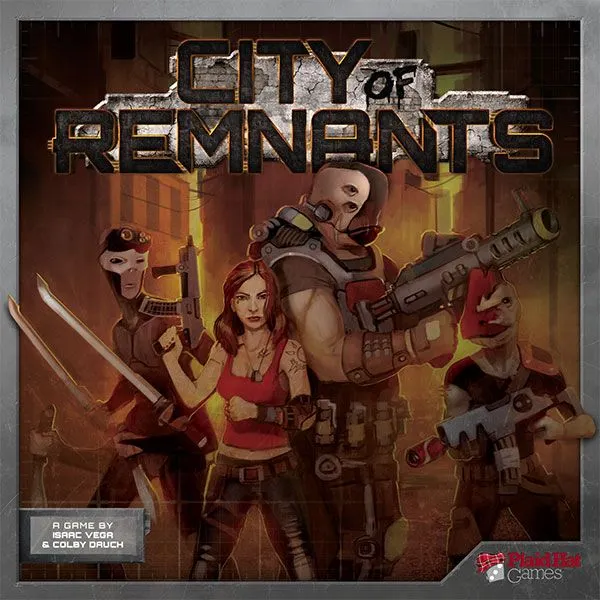
City of Remnants
- 2–4 players
- 90 min
- Complexity 3.1/5
- 2013
2018
Rules assistance for True Messiah
Plain-language explanations of turns, card effects and disputed situations, with official source references and saved question history.
For 2 players
What would you like to know?
Answers come from the official rulebook, with the page to check.
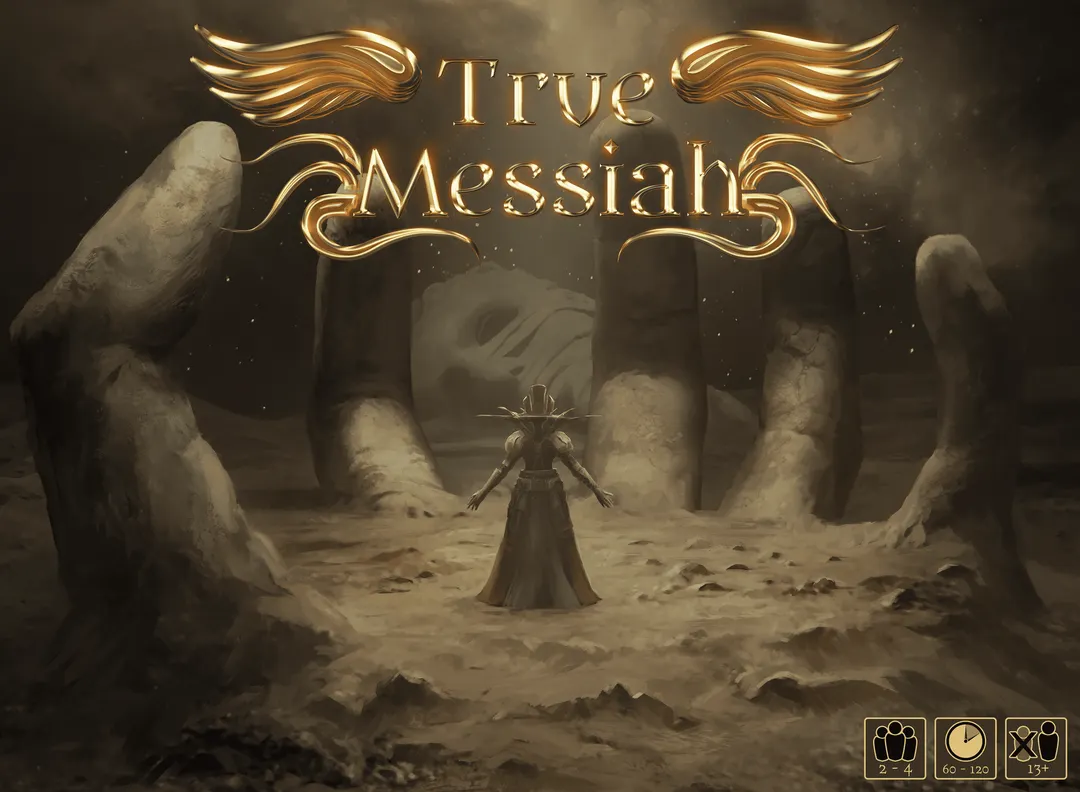
True Messiah is a board game released in 2018 for 2–4 players, 60–120 minutes per game, and ages 13 and up. It was designed by Craig Stern and its main mechanics are Hand Management, Auction / Bidding, and Tile Placement.
"It is the near future; Earth. Years ago, scientists successfully constructed the Belief Engine, a machine that warps reality based on peoples’ strongly held beliefs. The machine was turned on for testing, but it proved too sensitive: widespread belief in the depravity of man and fears of social collapse suddenly took on the full force of objective fact, and science skepticism rendered the Engine’s creators helpless to intervene. Without resort to a shared external reality, civilization crumbled like a sand castle in the tide. "From the ruins have now arisen cults led by charismatic, messianic figures possessed of seemingly divine powers derived from the still-functioning Engine. You are one such a figure—the true one, the Messiah. It is God’s will that you build temples and marshal followers, then mold their beliefs to perform miracles and destroy your rivals. They’ll be doing the same, but don’t worry–God is on your side…" How it's played Rounds go player by player, with each individual player turn broken up into phases: 1) Beginning (reset any praying followers to active status; recruit followers and build temples; draw back up to 6 cards); 2) Action (move units, have followers on temples pray to produce belief, use belief to perform miracles); 3) Combat (adjacent enemy units attack one another according to deterministic rules); 4) End (discard down to 3 cards, loot any empty enemy temple you have units left adjacent to, make sure you have enough units left to support the continued functioning of your own temples). Each round ends with the Market, in which players make secret bids on an assortment of 5-7 miracle cards. Bidders get to spend their bid on up to 2 cards, with high bidders buying first. Purchased cards are placed into each player's discard pile, eventually to be cycled back into their decks Dominion-style. A player wins by slaying an enemy messiah, by reducing an enemy to less than 4 followers, by capturing an enemy's holy city, or by reducing an enemy to less than 8 miracle cards.
True Messiah supports 2–4 players according to the catalogue. This range comes from the publisher’s listed player count, so the game can be set up for any group size within it. Some setups, rules and scoring details may still vary by player count, so check your edition’s rulebook for the exact configuration.
The listed playing time for True Messiah is 60–120 minutes. This is the publisher’s estimate for a full game. The actual duration depends on the group, the player count and familiarity with the rules: first sessions usually run longer, while experienced groups often finish faster. Setup and teaching time are not included in this estimate.
The catalogue lists True Messiah for ages 13 and up. This is the publisher’s recommendation and reflects reading demands, rule complexity and small components rather than theme alone. Younger players can often join with help from an adult, so check the age guidance on your edition and consider your group’s experience with board games.
True Messiah has a complexity rating of 3.3 out of 5 from BoardGameGeek players, which makes it a medium-weight game. The rating reflects how much rules knowledge, planning and decision-making a typical game demands. Expect a longer first teach for heavier games, and use a preparation guide before game night.
True Messiah belongs to these categories: Fighting, Horror, and Science Fiction. Its main mechanics are Hand Management, Auction / Bidding, and Tile Placement. Categories describe the theme and setting of a game, while mechanics describe what players actually do on their turns. Each mechanic links to a catalogue hub with similar games, which helps when you want something comparable.
The credited designers of True Messiah are: Craig Stern. These credits come from the published game data and name the people responsible for the game’s design, not its illustrators or publishers. Designer pages on MeepleRules collect other titles by the same designers, which helps when you enjoy a game and want to find similar ones.
The catalogue lists True Messiah as a base game. It can be played on its own with the components in the box and does not require any other title. Expansions, if any exist, add new content or rules on top of it and are listed separately in the catalogue with a link back to this base game.