- BGG rating
- 7.3
Villagers & Villains: The Borderlands
- 2–5 players
- 30 min
- Complexity 2.0/5
- 2014
2011
Rules assistance for Villagers & Villains
Plain-language explanations of turns, card effects and disputed situations, with official source references and saved question history.
For 2 players
What would you like to know?
Answers come from the official rulebook, with the page to check.
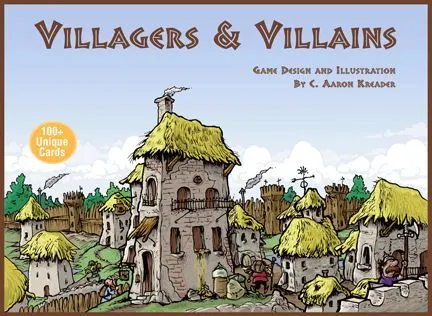
Villagers & Villains is a board game released in 2011 for 2–5 players, 30 minutes per game, and ages 9 and up. It was designed by C. Aaron Kreader and its main mechanics are Variable Player Powers, Set Collection, and Dice Rolling.
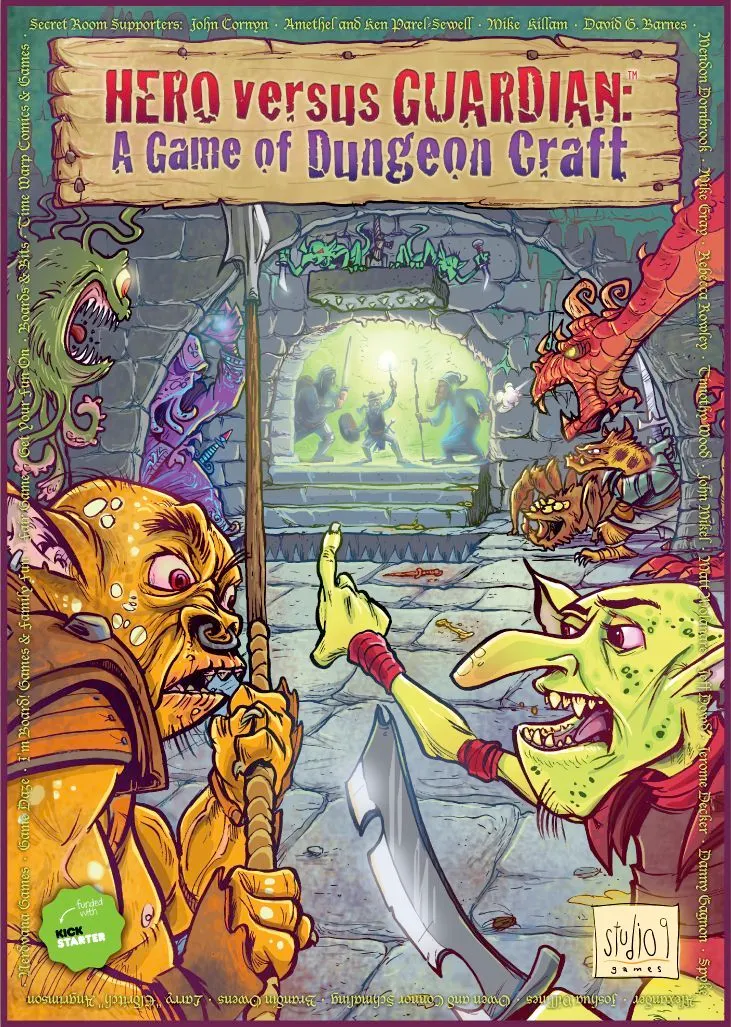



Theme: "In the untamed wild, villains lurk in wait, terrors haunt dark lairs, tradesfolk seek riches, and heroes come to prove their valor." As the mayor of a frontier town, you stand in the center, eyeing the roads for talent and trouble. Will you take on challenges or hire help, develop your town or command its heroes? Your strategies, risks, and fortune can transform your village into a thriving city or forgotten ruins. Overview: Villagers and Villains is a card game with over 100 unique cards. The game is played over several rounds. Each round has 6 distinct Phases. During each Phase, all players (Mayors) have a chance to take specific actions. The Mayor who builds the most successful village wins. Game play: Villagers and Villains is a building game. In the 1st phase players recruit cards from a common pool neutral to all players. 4 classes of cards could appear in the pool: Challenges, citizens, buildings, and heroes. Each card has different game play applications and different effects on end scoring. In the 2nd phase each player has a chance to defend their town from challenges. In the 3rd phase challenges loot towns left unprotected. The 4th phase is when each town earns money. In the 5th phase money can be spent to expand a town by hiring heroes and citizens or creating buildings. The final phase resets the board for a new round of phases. The starting player changes and rounds continue until a town reaches a fixed size. At that time the game is scored. Goal: In the end each town is scored based on a variety of facets and features. Players have to assess which facet will score the most points as the game is played--and circumstances dictate. Features: The game ships with a basic and advanced version for experienced and novice gamers and special 2-player game rules. In the advanced game players gain access to the king's favor, special card powers, and pairing options for final scoring. In addition, the home site offers a variety of rules variations for added game play. While chance plays a part in the game (via a die-roll for certain elements) choices in recruiting, and how to use town's abilities and resources play a large role. The game includes: 100 different playing cards (challenges, citizens, heroes, buildings) 10 starting cards (5 citizens, 5 angry mobs) 5 player aid cards a die 1 kings favor token 1 start marker 1 score pad 2 punch-out sheets of gold coin tokens rules sheet.
Villagers & Villains supports 2–5 players according to the catalogue. This range comes from the publisher’s listed player count, so the game can be set up for any group size within it. Some setups, rules and scoring details may still vary by player count, so check your edition’s rulebook for the exact configuration.
The listed playing time for Villagers & Villains is 30 minutes. This is the publisher’s estimate for a full game. The actual duration depends on the group, the player count and familiarity with the rules: first sessions usually run longer, while experienced groups often finish faster. Setup and teaching time are not included in this estimate.
The catalogue lists Villagers & Villains for ages 9 and up. This is the publisher’s recommendation and reflects reading demands, rule complexity and small components rather than theme alone. Younger players can often join with help from an adult, so check the age guidance on your edition and consider your group’s experience with board games.
Villagers & Villains has a complexity rating of 1.8 out of 5 from BoardGameGeek players, which makes it a light game. The rating reflects how much rules knowledge, planning and decision-making a typical game demands. Expect a longer first teach for heavier games, and use a preparation guide before game night.
Villagers & Villains belongs to these categories: Card Game, Fantasy, and Fighting. Its main mechanics are Variable Player Powers, Set Collection, and Dice Rolling. Categories describe the theme and setting of a game, while mechanics describe what players actually do on their turns. Each mechanic links to a catalogue hub with similar games, which helps when you want something comparable.
The credited designers of Villagers & Villains are: C. Aaron Kreader. These credits come from the published game data and name the people responsible for the game’s design, not its illustrators or publishers. Designer pages on MeepleRules collect other titles by the same designers, which helps when you enjoy a game and want to find similar ones.
The catalogue lists Villagers & Villains as a base game. It can be played on its own with the components in the box and does not require any other title. Expansions, if any exist, add new content or rules on top of it and are listed separately in the catalogue with a link back to this base game.