
- Puesto en BGG
- BGG #11.680
- Puntuación BGG
- 7,8
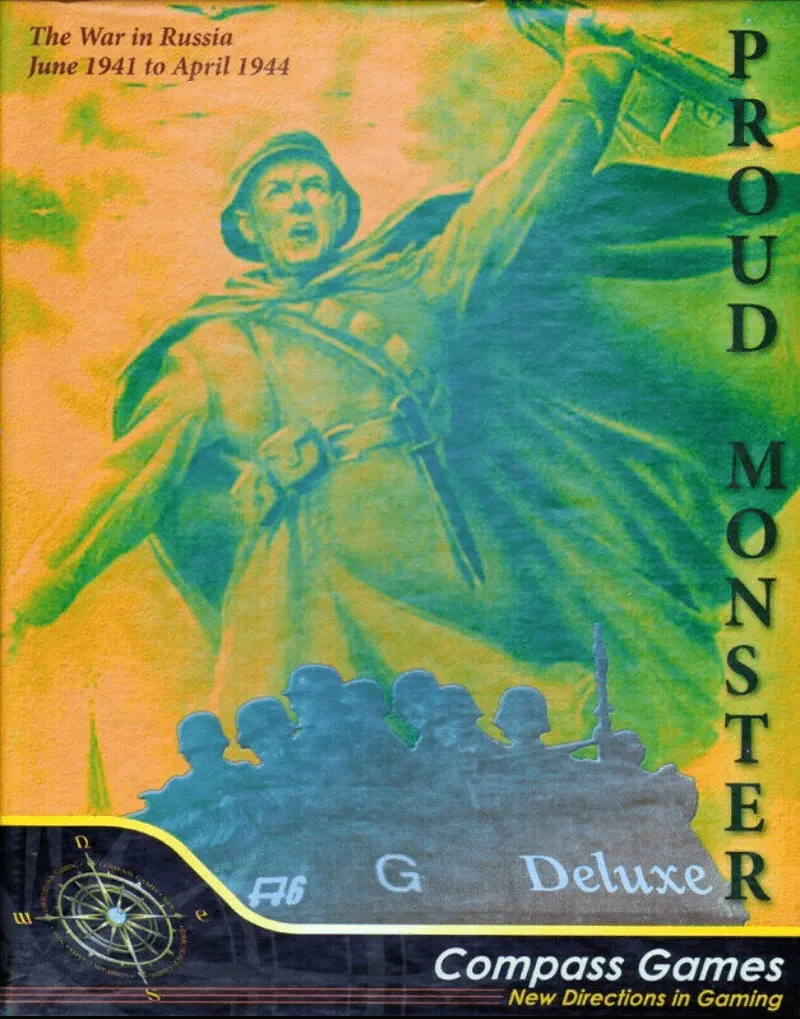
Proud Monster Deluxe
- 2–6 jugadores
- 1500 min
- Complejidad 3,5/5
- 2011
2010
Ayuda con las reglas de 1940: What If Germany Went East?
Explicaciones claras de turnos, efectos de cartas y situaciones dudosas, con referencias a fuentes oficiales e historial de preguntas guardado.
¿Qué quieres saber?
Las respuestas salen del reglamento oficial, con la página para comprobarlo.
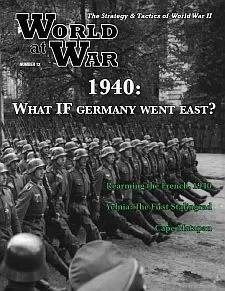
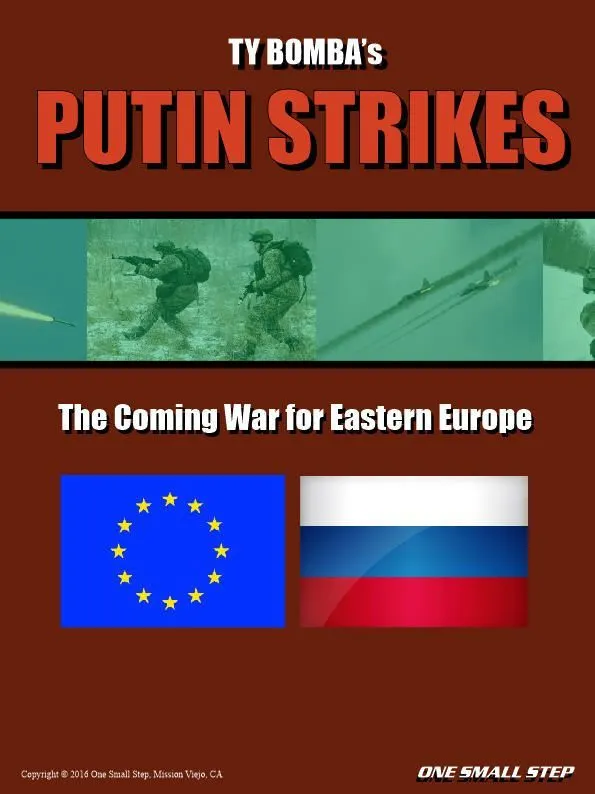
1940: What If Germany Went East? es un juego de mesa publicado en 2010 para 2–4 jugadores, con partidas de 240 minutos y a partir de 12 años. Fue diseñado por Ty Bomba y sus mecánicas principales son Hexagon Grid, Simulation y Ratio / Combat Results Table.


En inglés
The conjectured departure from the historic timeline that resulted in this alternative history wargame is assumed to have taken place in mid-September 1939. At that time, as his forces are completing the conquest of Poland, Hitler receives a flash of intuition. That is, he can’t help but notice the strategic paralysis of the Anglo-French, who do nothing to try to prevent the downfall of their fast-disappearing eastern ally Poland. From that he concludes it would be a waste of time to redeploy the Wehrmacht to the western front in 1940. He tells his generals: “The time will never be better to destroy the Bolshevik power than in the coming year. We will continue to have nothing to fear in the west. The British and French simply do not want war; they are afraid of it. Once we’ve taken Moscow, we’ll take Paris and London by telephone.” Accordingly, he also tells his foreign minister to drop all negotiations aimed at revising the original territorial split set out in the accords with the USSR the previous month. Most importantly, Lithuania, originally in the German “sphere of interest,” is not traded for a further slice of Polish territory. All of which has resulted in this low-complexity, strategic-level, alternative history wargame. In it, two to four players can investigate the possibilities inherent in a changed German strategy for 1940. The West Front map is scaled at 16 miles per hexagon. The Eastern Front map is scaled at 25 miles per hex. All Soviet units are armies; all other forces in the game are corps. Each game turn on both maps equals half a month. This game can be played by two, three or four. If two play, one commands the Germans, while the other commands both the Anglo-French and Soviets. If played by three, one player commands the Germans, one player commands the Anglo-French, and the third commands the Soviets. If four play, one player commands the Germans on the west map; the second commands the Germans on the east map; the third commands the Soviets, and the fourth commands the Anglo-French. The rules contain some 17,000 words, which means experienced players can finish it in about four hours. Rules cover such things as: neutrals, fog of war, airpower, 7th Flieger Corps, Soviet 1st Shock Army, fortifications, and more. The turn sequence is as follows. German Player Turn A. German Airpower & Strategic Transfer Phase B. German West Front Movement Phase C. German West Front Combat Phase D. German East Front Movement or Combat Phase E. German East Front Combat or Movement Phase F. German Replacement Phase G. German Moscow-Capture Resolution Phase H. German Terminal Supply Check Phase Soviet Player Turn A. Soviet Movement Phase B. Soviet Combat Phase C. Soviet Grand-Strategy Phase 1. Resolve Far East Front 2. Resolve Arctic Front 3. Resolve Southwest Front D. Soviet Terminal Supply Check Phase E. Soviet Reinforcement & Replacement Placement Phase Anglo-French Player Turn A. Anglo-French Armor Doctrine Phase B. Anglo-French Movement Phase C. Anglo-French Combat Phase D. Anglo-French Terminal Supply Check Phase E. Anglo-French Replacement Phase
Según el catálogo, 1940: What If Germany Went East? admite de 2 a 4 jugadores. Este intervalo corresponde al número de jugadores indicado por la editorial, así que el juego puede prepararse para cualquier grupo dentro de ese margen. La preparación, algunas reglas y la puntuación pueden variar según el número de jugadores; consulta la configuración exacta en el reglamento de tu edición.
La duración indicada para 1940: What If Germany Went East? es de 240 minutos, la estimación de la editorial para una partida completa. El tiempo real depende del grupo, del número de jugadores y del conocimiento de las reglas: las primeras partidas suelen alargarse y los grupos con experiencia terminan antes. La preparación y la explicación de las reglas no están incluidas.
El catálogo indica 1940: What If Germany Went East? a partir de 12 años. Es la recomendación de la editorial y refleja la lectura necesaria, la complejidad de las reglas y las piezas pequeñas, no solo el tema. Los más pequeños a menudo pueden jugar con ayuda de un adulto: comprueba la edad recomendada en tu edición y la experiencia de tu grupo.
1940: What If Germany Went East? tiene una puntuación de complejidad de 2,0 sobre 5 según los jugadores de BoardGameGeek, lo que lo convierte en un juego algo ligero. La puntuación refleja cuánto conocimiento de reglas, planificación y toma de decisiones exige una partida típica. Los juegos exigentes requieren una explicación inicial más larga, así que conviene usar una guía de preparación.
1940: What If Germany Went East? pertenece a estas categorías: Wargame y World War II. Sus mecánicas principales son Hexagon Grid, Simulation y Ratio / Combat Results Table. Las categorías describen el tema y la ambientación de un juego, mientras que las mecánicas describen lo que los jugadores hacen realmente en su turno. Cada mecánica lleva a una página del catálogo con juegos similares.
Los autores acreditados de 1940: What If Germany Went East? son: Ty Bomba. Estos créditos proceden de los datos publicados del juego y nombran a las personas responsables de su diseño, no a ilustradores ni editoriales. Las páginas de autor de MeepleRules reúnen otros títulos de los mismos autores, algo útil cuando un juego te gusta y buscas otros parecidos.
El catálogo clasifica 1940: What If Germany Went East? como juego base. Se juega por sí solo con los componentes de la caja y no requiere ningún otro título. Las expansiones, si existen, añaden contenido o reglas nuevas y aparecen por separado en el catálogo con un enlace a este juego base.