
- Puesto en BGG
- BGG #1094
- Puntuación BGG
- 7,8
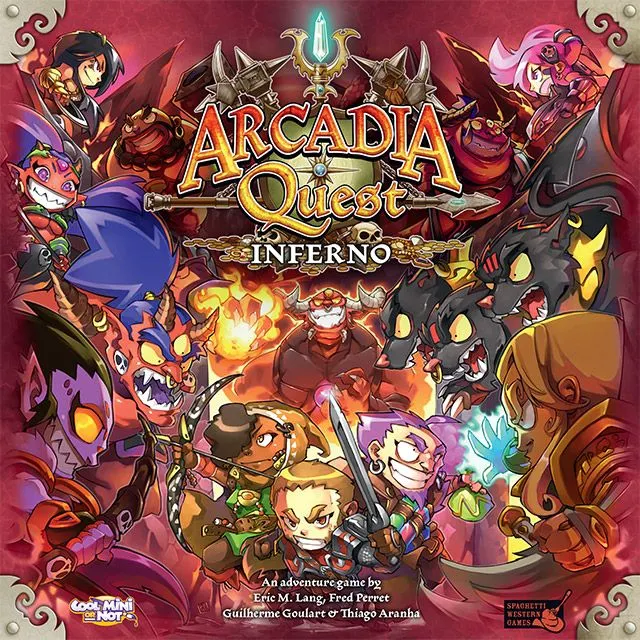
Arcadia Quest: Infierno
- 2–4 jugadores
- 60–120 min
- Complejidad 2,5/5
- 2017
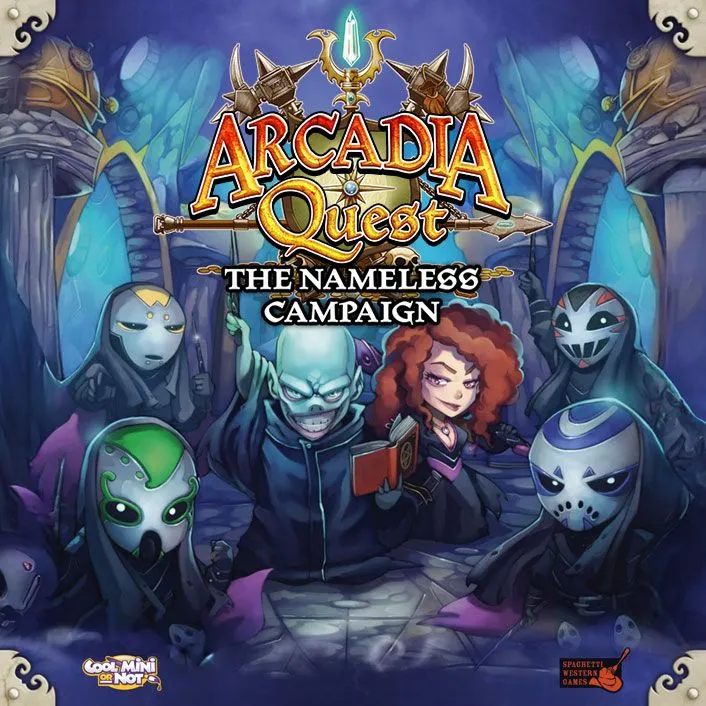
Ayuda con las reglas de Arcadia Quest: The Nameless Campaign
Explicaciones claras de turnos, efectos de cartas y situaciones dudosas, con referencias a fuentes oficiales e historial de preguntas guardado.
¿Qué quieres saber?
Las respuestas salen del reglamento oficial, con la página para comprobarlo.
Arcadia Quest: The Nameless Campaign es una expansión de Arcadia Quest publicada en 2014 para 2–4 jugadores, con partidas de 60 minutos y a partir de 13 años. Fue diseñado por Eric M. Lang, Guilherme Goulart, Thiago Aranha y Fred Perret y sus mecánicas principales son Variable Player Powers, Dice Rolling y Grid Movement.




En inglés
Kickstarter exclusive campaign: Lord Fang fled and the victorious Guild threw their Heroes a party (and let the losers attend to drown their sorrows). The party went long. Perhaps, a bit too long. For, when they all awoke after a drink or ten, they’d been banished! The sun was gone once more! And monsters stood on the walls and jeered. The Nameless' plan was simple: drug the enemy with strong spirits and bedazzle them with festive party favors. The Nameless’s mighty horde descended from the mountains and piled the snoozing heroes beyond the gates. Eternal Night fell once again! Now, in this darker time within the darkest time, the heroes must face this despicable Nameless Threat in yet another Arcadia Quest! More monsters! More loot! More glory! (And, perhaps just a nice dinner party afterwards this time, hmm?) 6 exclusive figures and rules - an alternate boss and minions for your Arcadia Quest campaign!
Según el catálogo, Arcadia Quest: The Nameless Campaign admite de 2 a 4 jugadores. Este intervalo corresponde al número de jugadores indicado por la editorial, así que el juego puede prepararse para cualquier grupo dentro de ese margen. La preparación, algunas reglas y la puntuación pueden variar según el número de jugadores; consulta la configuración exacta en el reglamento de tu edición.
La duración indicada para Arcadia Quest: The Nameless Campaign es de 60 minutos, la estimación de la editorial para una partida completa. El tiempo real depende del grupo, del número de jugadores y del conocimiento de las reglas: las primeras partidas suelen alargarse y los grupos con experiencia terminan antes. La preparación y la explicación de las reglas no están incluidas.
El catálogo indica Arcadia Quest: The Nameless Campaign a partir de 13 años. Es la recomendación de la editorial y refleja la lectura necesaria, la complejidad de las reglas y las piezas pequeñas, no solo el tema. Los más pequeños a menudo pueden jugar con ayuda de un adulto: comprueba la edad recomendada en tu edición y la experiencia de tu grupo.
Arcadia Quest: The Nameless Campaign tiene una puntuación de complejidad de 2,3 sobre 5 según los jugadores de BoardGameGeek, lo que lo convierte en un juego algo ligero. La puntuación refleja cuánto conocimiento de reglas, planificación y toma de decisiones exige una partida típica. Los juegos exigentes requieren una explicación inicial más larga, así que conviene usar una guía de preparación.
Arcadia Quest: The Nameless Campaign pertenece a estas categorías: Fantasy, Fighting y Adventure. Sus mecánicas principales son Variable Player Powers, Dice Rolling y Grid Movement. Las categorías describen el tema y la ambientación de un juego, mientras que las mecánicas describen lo que los jugadores hacen realmente en su turno. Cada mecánica lleva a una página del catálogo con juegos similares.
Los autores acreditados de Arcadia Quest: The Nameless Campaign son: Eric M. Lang, Guilherme Goulart, Thiago Aranha y Fred Perret. Estos créditos proceden de los datos publicados del juego y nombran a las personas responsables de su diseño, no a ilustradores ni editoriales. Las páginas de autor de MeepleRules reúnen otros títulos de los mismos autores, algo útil cuando un juego te gusta y buscas otros parecidos.
El catálogo clasifica Arcadia Quest: The Nameless Campaign como expansión de Arcadia Quest. Las expansiones añaden contenido, reglas o escenarios al juego base y normalmente no se pueden jugar solas, así que necesitas Arcadia Quest para usarla. Comprueba que tu edición de Arcadia Quest sea compatible, porque algunas expansiones se revisaron entre ediciones.