
- Puntuación BGG
- 7,8
Archmage: Ascendant
- 1–4 jugadores
- 60–120 min
- Complejidad 3,0/5
- 2019
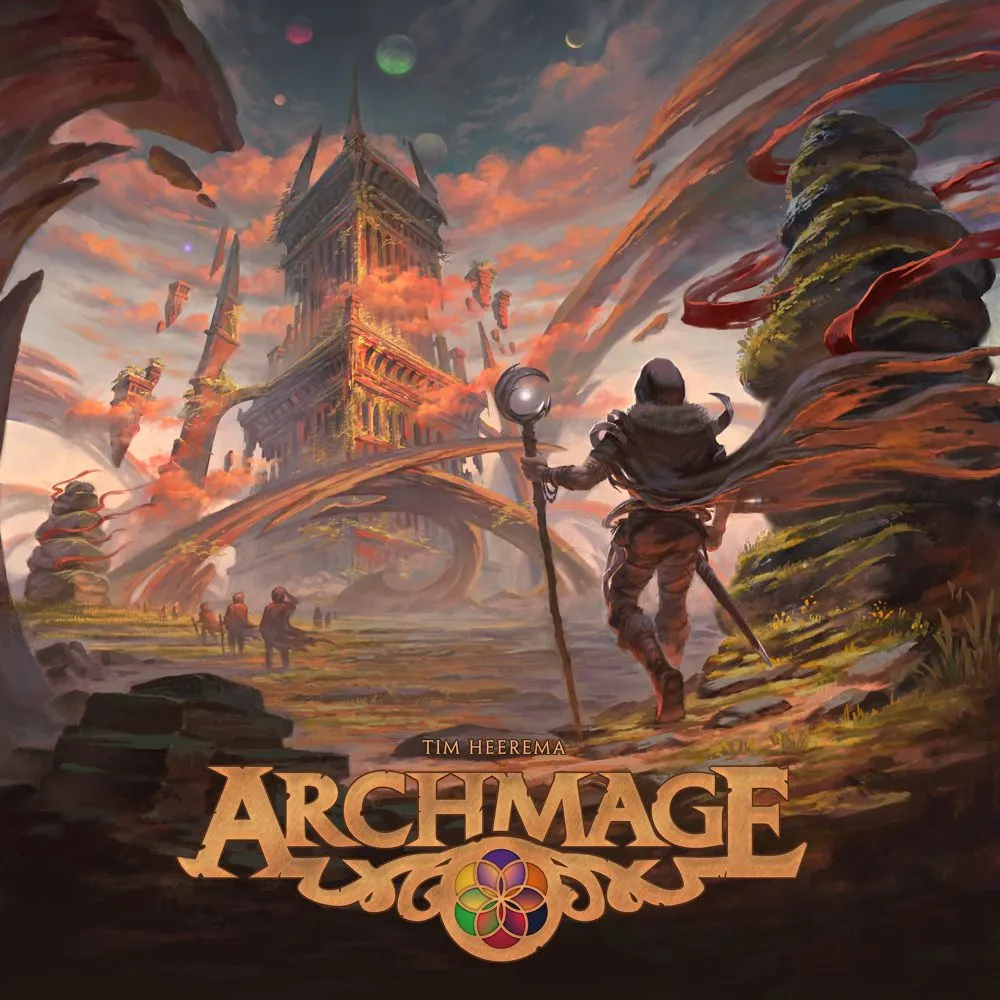
2018
Ayuda con las reglas de Archmage
Explicaciones claras de turnos, efectos de cartas y situaciones dudosas, con referencias a fuentes oficiales e historial de preguntas guardado.
¿Qué quieres saber?
Las respuestas salen del reglamento oficial, con la página para comprobarlo.
Archmage es un juego de mesa publicado en 2018 para 1–4 jugadores, con partidas de 60 a 120 minutos y a partir de 14 años. Fue diseñado por Tim Heerema y sus mecánicas principales son Variable Player Powers, Area Majority / Influence y Pattern Building.





En inglés
A few magically talented individuals, their devoted followers in tow, have been drawn from their villages across the twisted wilderness to the Ruined City. At the very heart of the city, the cursed Tower of Magic rises into the broiling clouds. From this vantage the Archmage and her Order of Mages ruled these lands for an Age, drawing together the warring magics of the mythic races into one all-powerful and cohesive force. That was, of course, before The Ending. The Ruined City is now home to but a fragment of the mythic races that once served the Archmage and her Order. And until now, no human has dared step foot in these forsaken streets. The newcomers, of human stock, are the descendants of the ancient Mages, now outcasts living in camps in the farthest reaches of the lands. Unusual shows of power in their home villages have already gathered them small but enthusiastic bands of followers. And now they have travelled to meet with representatives of the mythic races, to seek their wisdom and magical secrets. The mythic races are the keepers of six very different spheres of magic, with very different abilities. It was only the power of the Archmage that long ago found ways to combine the spheres and gain higher and higher levels of magic. Now, much of the magic of the mythic races is lost, and the newcomers, having come so far, are told they must now travel the lands to reclaim lost relics sacred to the races. It seems the journey to absolute magical power has only just begun... Archmage is a euro-thematic hybrid, where players take on the role of fledgling Mages, traveling the lands to recover ancient relics, gather followers, and train apprentices in six spheres of magic and beyond. As the power of their Order grows, they will pit apprentices against each other, and attain unheard of spells and magical powers, building their own Mage tower to watch over the lands and weave their magics. When the time of reckoning comes, a new Archmage will rule. Each turn is formed of two phases: The Journey: A Mage travels across the map (formed of hex tiles): discovering new locations; deploying followers to gather relics from Ruins, Libraries, Sacred Glades, and other locations sacred to each of the mythic races; and encountering and dealing with the followers of their opponents. Journey's End: A Mage will finish each Journey in a specific location where they can perform a specific action. Ending a Journey on a Town will let the Mage call on their Followers to deliver the relics and resources they have gathered. Ending in a Settlement (where the spurned descendants of the Mages fled after the Ending) will let a Mage recruit more Followers to their Order. Ending with a Mythic Race will let the Mage train Followers as Apprentices specialising in the magic of that Mythic Race (at a cost of the Relics with which the magic must be weaved). Ending in the Wilderness will let the Mage's followers take more physical control over the area. Ending in the Mage's Tower (once it has been built), will let the Mage train and test their Apprentices. On the floor of the tower (player board) is a mandala in which the Apprentices stand. Moving apprentices on the mandala will change the sorts of spells the Order has access to. Testing apprentices sees one apprentice advance to a higher level and allows an Order to discover new spells and magics beyond what any of the Mythic Races could individually know, and to add to those magics to their spell library. Spells provide Mages with a range of options for strategic and tactical play. Archmage has a modular spell system, with 18 spells included in the base game, and expansions planned to add more sets. Spells are used by expending a cost in Relics, the magical currency of the game that is unique to each mythic race. The game is played over a number of turns, depending on the player count. After the last turn, the Mage with the most powerful Order of Mages, is declared the new Archmage and power is restored to the lands... until the next time!
Según el catálogo, Archmage admite de 1 a 4 jugadores. Este intervalo corresponde al número de jugadores indicado por la editorial, así que el juego puede prepararse para cualquier grupo dentro de ese margen. La preparación, algunas reglas y la puntuación pueden variar según el número de jugadores; consulta la configuración exacta en el reglamento de tu edición.
La duración indicada para Archmage es de 60 a 120 minutos, la estimación de la editorial para una partida completa. El tiempo real depende del grupo, del número de jugadores y del conocimiento de las reglas: las primeras partidas suelen alargarse y los grupos con experiencia terminan antes. La preparación y la explicación de las reglas no están incluidas.
El catálogo indica Archmage a partir de 14 años. Es la recomendación de la editorial y refleja la lectura necesaria, la complejidad de las reglas y las piezas pequeñas, no solo el tema. Los más pequeños a menudo pueden jugar con ayuda de un adulto: comprueba la edad recomendada en tu edición y la experiencia de tu grupo.
Archmage tiene una puntuación de complejidad de 3,2 sobre 5 según los jugadores de BoardGameGeek, lo que lo convierte en un juego de complejidad media. La puntuación refleja cuánto conocimiento de reglas, planificación y toma de decisiones exige una partida típica. Los juegos exigentes requieren una explicación inicial más larga, así que conviene usar una guía de preparación.
Archmage pertenece a estas categorías: Fantasy, Territory Building y Exploration. Sus mecánicas principales son Variable Player Powers, Area Majority / Influence y Pattern Building. Las categorías describen el tema y la ambientación de un juego, mientras que las mecánicas describen lo que los jugadores hacen realmente en su turno. Cada mecánica lleva a una página del catálogo con juegos similares.
Los autores acreditados de Archmage son: Tim Heerema. Estos créditos proceden de los datos publicados del juego y nombran a las personas responsables de su diseño, no a ilustradores ni editoriales. Las páginas de autor de MeepleRules reúnen otros títulos de los mismos autores, algo útil cuando un juego te gusta y buscas otros parecidos.
El catálogo clasifica Archmage como juego base. Se juega por sí solo con los componentes de la caja y no requiere ningún otro título. Las expansiones, si existen, añaden contenido o reglas nuevas y aparecen por separado en el catálogo con un enlace a este juego base.