
- Puesto en BGG
- BGG #17.301
- Puntuación BGG
- 7,8
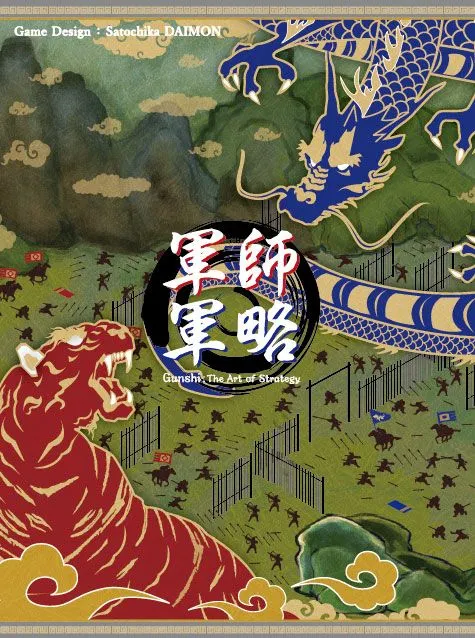
Gunshi: The Art of Strategy
- 2 jugadores
- 30–60 min
- Complejidad 2,0/5
- 2021
2016
Ayuda con las reglas de Captain Dice (キャプテンダイス)
Explicaciones claras de turnos, efectos de cartas y situaciones dudosas, con referencias a fuentes oficiales e historial de preguntas guardado.
¿Qué quieres saber?
Las respuestas salen del reglamento oficial, con la página para comprobarlo.
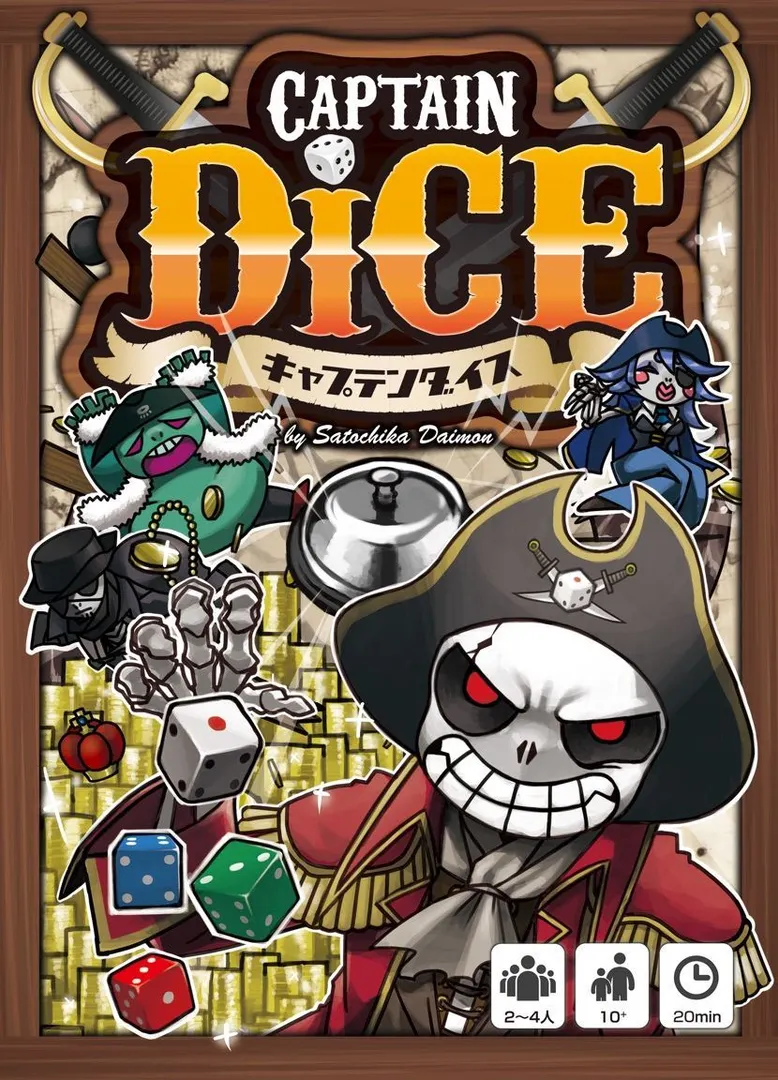
Captain Dice (キャプテンダイス) es un juego de mesa publicado en 2016 para 2–4 jugadores, con partidas de 20 a 30 minutos y a partir de 10 años. Fue diseñado por Satochika Daimon y sus mecánicas principales son Hand Management, Dice Rolling y Area Majority / Influence.







En inglés
User summary Captain Dice (キャプテンダイス) is a dice and action card game, combining speed and cunning. Swiftly place dice to secure treasure cards. Then replace your dice with action cards to attack the other players. Then collect treasure if your cards survive the attacks. The playing area is a grid of treasure cards and a bell in the centre. The bell is rung, and each player rolls and rerolls their own six dice entirely at will, trying to make combos to place on treasure cards. As soon as there are any three pairs in any line, any player may ring the bell to force a stop (and becomes the start player). It helps to secure treasure cards in sections; if you succeed, you collect all treasures you have linked up. Each player has nine cards, numbered 0 to 5 (four 5 cards each). Each card attacks neighbouring locations in different directions, except the 0 card which is a shield, and the 5 cards on which you are becalmed. Depending on which locations you grabbed, you take turns placing cards face down, taking back your dice. The actions are revealed and resolved, going from 0 to 5 (tied numbers are won closest to the start player). Here the tactical element appears. The cards 1 to 4 attack each other in set patterns, and in rank order from low to high. Since you cannot pick up cards spent in previous rounds until you clear your hand, you must choose carefully which cards you place where. If you think a spot is safe from any attack, you can safely spend a 5 card and help clear your hand. If you think a spot is certain to be attacked, place your 0 and it survives. If you have claimed places on straight lines, you'll collect all the empty treasure cards lying between them, so often you want to be secure. If you know what cards the others have spent, you might get your attack in first with a low numbered attack. After a couple of rounds, the tactical choices become very clear and frustrating. Using the wrong action cards is a costly waste. Failing to get dice down means you get fewer chances to collect treasure and it takes longer to clear your hand and pick up your discard. Once the action cards have been resolved, any left standing take the treasure cards below them or linked in straight lines, and the action cards go to a personal discard face-down. Empty treasure spots are refilled, and the bell is rung! The game ends when there is not enough treasure on the table. At the finish, most treasure cards wins. The game is fast and the theme fits the game play. The game is language free. The second edition simply revised the artwork on the box and cards to a more cartoon/manga style and added a strategic variant. Otherwise, components and gameplay are identical between the first and second editions. Publisher's summary Roll the dice to your heart’s content! Ring up a storm with the bells! Speed and strategies are both important for this analog game, which offers real-time domination + mind games, appealing to all 5 senses. Secure territories pre-emptively by placing a pair of dice on the treasure cards as fast as possible, then take time to think about how to protect the territories with attack cards, so that other players cannot foil your plans. If you are successful in holding your territory on the treasure cards, then SUCCESS! The treasure cards are rewarded to you and the process is repeated again. In the end, the player with the most treasure cards wins. サイコロ振りまくり!ベル鳴らしまくり! スピードも心理戦も両方大事な、リアルタイム陣取り×心理戦を五感で楽しめるアナログゲームです。 ひとことで言うとどんなゲーム? 場にある財宝カードをダイスの早置き勝負で自分の陣地として仮確保し、その後はじっくり考えながら攻撃カードを使って他プレイヤーに邪魔されないように陣地を守ります。 守りきった陣地の財宝カードをGET!という流れを繰り返します。 最終的に、財宝カードを一番多く獲得したプレイヤーの勝利というゲームです。
Según el catálogo, Captain Dice (キャプテンダイス) admite de 2 a 4 jugadores. Este intervalo corresponde al número de jugadores indicado por la editorial, así que el juego puede prepararse para cualquier grupo dentro de ese margen. La preparación, algunas reglas y la puntuación pueden variar según el número de jugadores; consulta la configuración exacta en el reglamento de tu edición.
La duración indicada para Captain Dice (キャプテンダイス) es de 20 a 30 minutos, la estimación de la editorial para una partida completa. El tiempo real depende del grupo, del número de jugadores y del conocimiento de las reglas: las primeras partidas suelen alargarse y los grupos con experiencia terminan antes. La preparación y la explicación de las reglas no están incluidas.
El catálogo indica Captain Dice (キャプテンダイス) a partir de 10 años. Es la recomendación de la editorial y refleja la lectura necesaria, la complejidad de las reglas y las piezas pequeñas, no solo el tema. Los más pequeños a menudo pueden jugar con ayuda de un adulto: comprueba la edad recomendada en tu edición y la experiencia de tu grupo.
Captain Dice (キャプテンダイス) tiene una puntuación de complejidad de 1,3 sobre 5 según los jugadores de BoardGameGeek, lo que lo convierte en un juego ligero. La puntuación refleja cuánto conocimiento de reglas, planificación y toma de decisiones exige una partida típica. Los juegos exigentes requieren una explicación inicial más larga, así que conviene usar una guía de preparación.
Captain Dice (キャプテンダイス) pertenece a estas categorías: Dice, Action / Dexterity y Real-time. Sus mecánicas principales son Hand Management, Dice Rolling y Area Majority / Influence. Las categorías describen el tema y la ambientación de un juego, mientras que las mecánicas describen lo que los jugadores hacen realmente en su turno. Cada mecánica lleva a una página del catálogo con juegos similares.
Los autores acreditados de Captain Dice (キャプテンダイス) son: Satochika Daimon. Estos créditos proceden de los datos publicados del juego y nombran a las personas responsables de su diseño, no a ilustradores ni editoriales. Las páginas de autor de MeepleRules reúnen otros títulos de los mismos autores, algo útil cuando un juego te gusta y buscas otros parecidos.
El catálogo clasifica Captain Dice (キャプテンダイス) como juego base. Se juega por sí solo con los componentes de la caja y no requiere ningún otro título. Las expansiones, si existen, añaden contenido o reglas nuevas y aparecen por separado en el catálogo con un enlace a este juego base.