
- Puesto en BGG
- BGG #4845
- Puntuación BGG
- 6,1
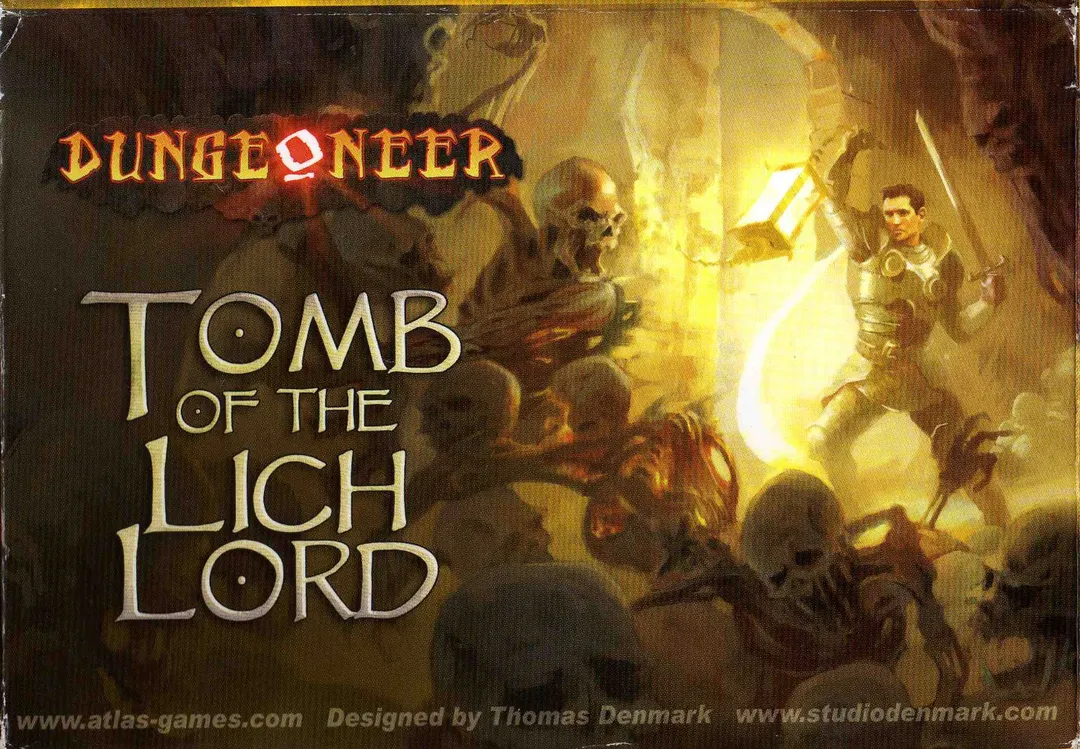
Dungeoneer: Tomb of the Lich Lord
- 2–4 jugadores
- 60 min
- Complejidad 2,2/5
- 2003
2003
Ayuda con las reglas de Dungeoneer: Vault of the Fiends
Explicaciones claras de turnos, efectos de cartas y situaciones dudosas, con referencias a fuentes oficiales e historial de preguntas guardado.
Para 2 jugadores
¿Qué quieres saber?
Las respuestas salen del reglamento oficial, con la página para comprobarlo.
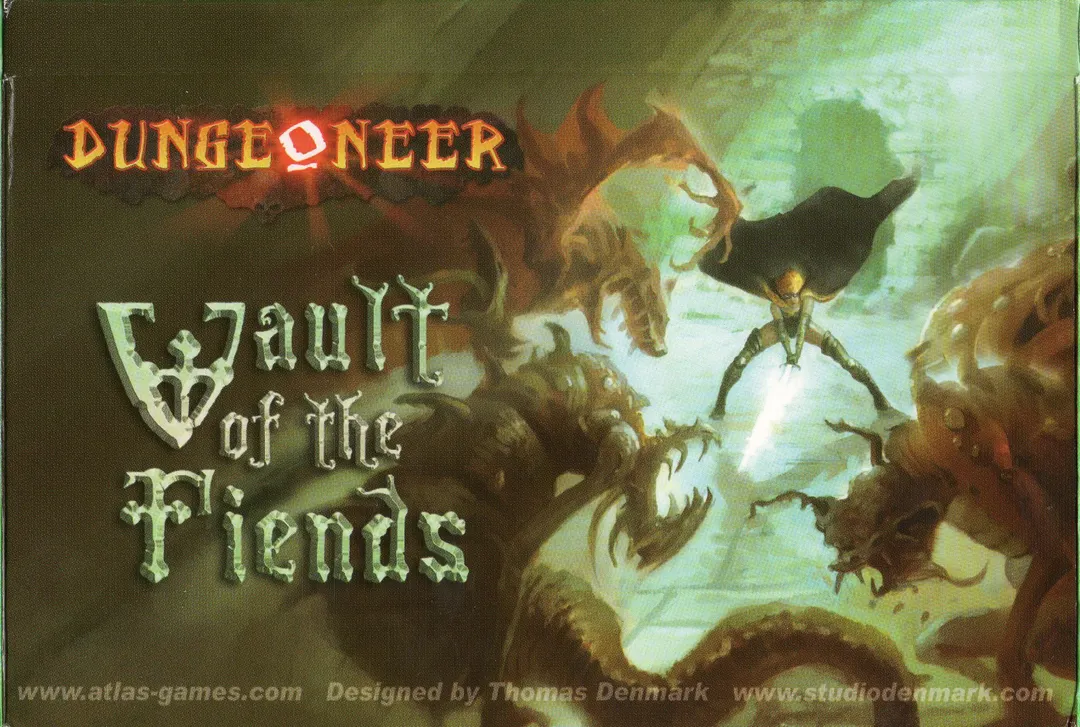
Dungeoneer: Vault of the Fiends es un juego de mesa publicado en 2003 para 2–4 jugadores, con partidas de 30 minutos y a partir de 12 años. Fue diseñado por Thomas Denmark y sus mecánicas principales son Variable Player Powers, Hand Management y Dice Rolling.



En inglés
Dungeoneer: Vault of the Fiends is a non-collectable dungeon-crawl card game for 2-4 players. It is meant as an expansion to the Dungeoneer: Tomb of the Lich Lord also published by Atlas Games, but Tomb of the Lich Lord is not necessary to play this set, as Vault of the Fiends is also a stand-alone set. Players play the part of one of six heroes. Each hero has variable melee, magic and speed scores, as well as a unique ability. Your second role in the game is as the malevolent “Dungeonlord”, trying to exterminate the other heroes. You win the game when as a hero you complete 3 Quests such as destroying an evil laboratory or rescuing a princess. An alternate win goal is as the Dungeonlord if all the other heroes are defeated except yours. Vault of the Fiends features a variety of new heroes. Elf Assassin, Human Beastmaster, Drakan Sentinal, Ork Shaman, Dwarf Runecaster, and Gnome Illusionist. Each turn you may: Play monsters, traps and other bad events on opponents Build a dungeon Move around the dungeon with your hero (collect Glory and Peril resources) Play abilities and treasures for yourself Complete a Quest Discard an unwanted card Fill your hand to 5 cards This game is similar to Wiz-War where you race in a dungeon to complete your objectives. This dungeon is created by the laying down of Map cards. You collect Glory and Peril as you move through the dungeon. Glory buys cards that help your hero such as abilities and treasures, but your opponent spends your Peril against you to play monsters, traps and other unpleasant stuff. Combat is similar to Talisman. Roll a six-sided die and add the score you are combating with, either Melee or Magic, to beat your opponent’s roll. The way the cards interact will be familiar to CCG players, in that you have “Permanents” and “Instants” that you can use strategically, or in combinations, but this game is not really a strategy game. Most of the fun comes from the theme, and surprising combination of events that occur. Dungeoneer is likely to appeal to those who enjoy a classic dungeon crawl and RPG like action. Vault of the Fiends features a few new mechanics that should serve to enhance the game play which players of Tomb of the Lich Lord will be familiar with. Some monsters, and attack cards are “pumpable” that means you may spend extra Glory or Peril to boost the effectiveness of the card. Also conditions on the map change such as effects being deactivated when a certain Quest is completed or throwing a switch in a room to extend a bridge across the Fiery Chasm. One of the more unexpected new mechanics are “artifact” Quests, such as the Armor Golem’s Glove which makes your hero more powerful or the Sunken Treasure which makes your hero faster. These do not confer a level, but are rotated 180 degrees so you can read the bonus they provide. Part of the Dungeoneer Series.
Según el catálogo, Dungeoneer: Vault of the Fiends admite de 2 a 4 jugadores. Este intervalo corresponde al número de jugadores indicado por la editorial, así que el juego puede prepararse para cualquier grupo dentro de ese margen. La preparación, algunas reglas y la puntuación pueden variar según el número de jugadores; consulta la configuración exacta en el reglamento de tu edición.
La duración indicada para Dungeoneer: Vault of the Fiends es de 30 minutos, la estimación de la editorial para una partida completa. El tiempo real depende del grupo, del número de jugadores y del conocimiento de las reglas: las primeras partidas suelen alargarse y los grupos con experiencia terminan antes. La preparación y la explicación de las reglas no están incluidas.
El catálogo indica Dungeoneer: Vault of the Fiends a partir de 12 años. Es la recomendación de la editorial y refleja la lectura necesaria, la complejidad de las reglas y las piezas pequeñas, no solo el tema. Los más pequeños a menudo pueden jugar con ayuda de un adulto: comprueba la edad recomendada en tu edición y la experiencia de tu grupo.
Dungeoneer: Vault of the Fiends tiene una puntuación de complejidad de 2,2 sobre 5 según los jugadores de BoardGameGeek, lo que lo convierte en un juego algo ligero. La puntuación refleja cuánto conocimiento de reglas, planificación y toma de decisiones exige una partida típica. Los juegos exigentes requieren una explicación inicial más larga, así que conviene usar una guía de preparación.
Dungeoneer: Vault of the Fiends pertenece a estas categorías: Card Game, Fantasy y Dice. Sus mecánicas principales son Variable Player Powers, Hand Management y Dice Rolling. Las categorías describen el tema y la ambientación de un juego, mientras que las mecánicas describen lo que los jugadores hacen realmente en su turno. Cada mecánica lleva a una página del catálogo con juegos similares.
Los autores acreditados de Dungeoneer: Vault of the Fiends son: Thomas Denmark. Estos créditos proceden de los datos publicados del juego y nombran a las personas responsables de su diseño, no a ilustradores ni editoriales. Las páginas de autor de MeepleRules reúnen otros títulos de los mismos autores, algo útil cuando un juego te gusta y buscas otros parecidos.
El catálogo clasifica Dungeoneer: Vault of the Fiends como juego base. Se juega por sí solo con los componentes de la caja y no requiere ningún otro título. Las expansiones, si existen, añaden contenido o reglas nuevas y aparecen por separado en el catálogo con un enlace a este juego base.