
- Puntuación BGG
- 8,0
Scorched Earth
- 2 jugadores
- 2400–6000 min
- Complejidad 4,4/5
- 1987
1984
Ayuda con las reglas de Fire in the East
Explicaciones claras de turnos, efectos de cartas y situaciones dudosas, con referencias a fuentes oficiales e historial de preguntas guardado.
Para 2 jugadores
¿Qué quieres saber?
Las respuestas salen del reglamento oficial, con la página para comprobarlo.
Fire in the East es un juego de mesa publicado en 1984 para 2–4 jugadores, con partidas de 3000 minutos y a partir de 12 años. Fue diseñado por Frank Chadwick, John Astell y Paul Richard "Rich" Banner y sus mecánicas principales son Dice Rolling, Hexagon Grid y Simulation.


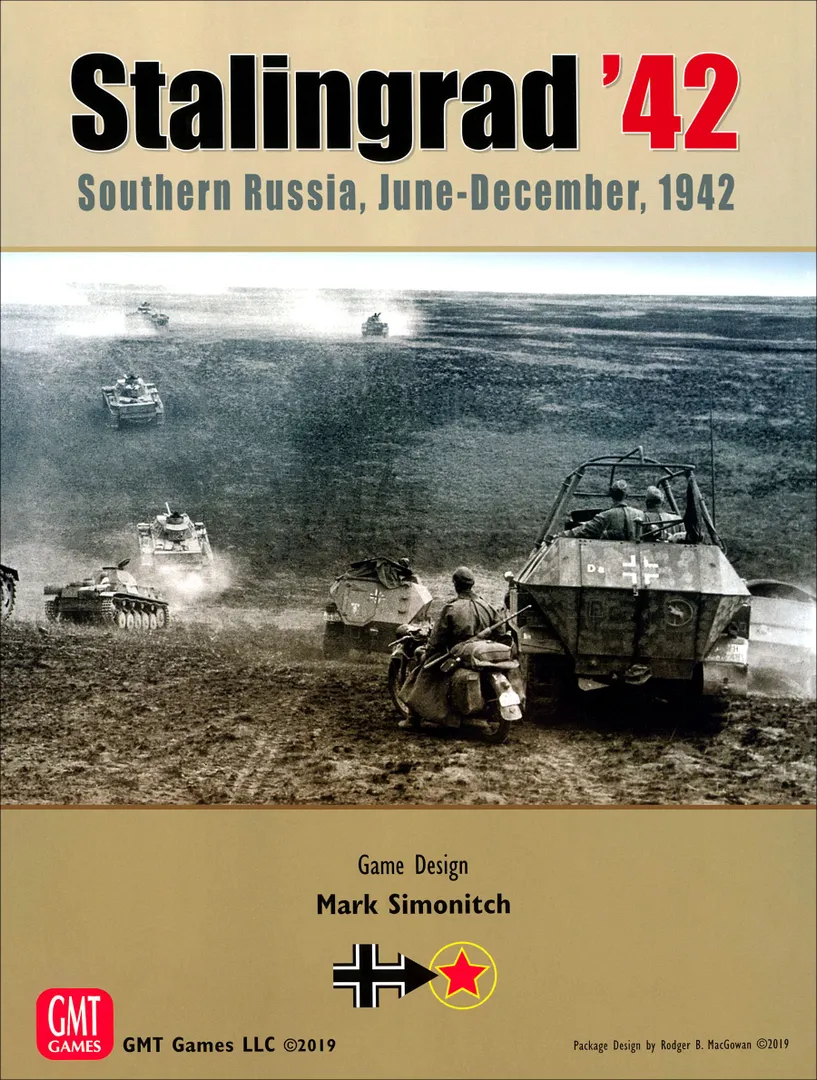
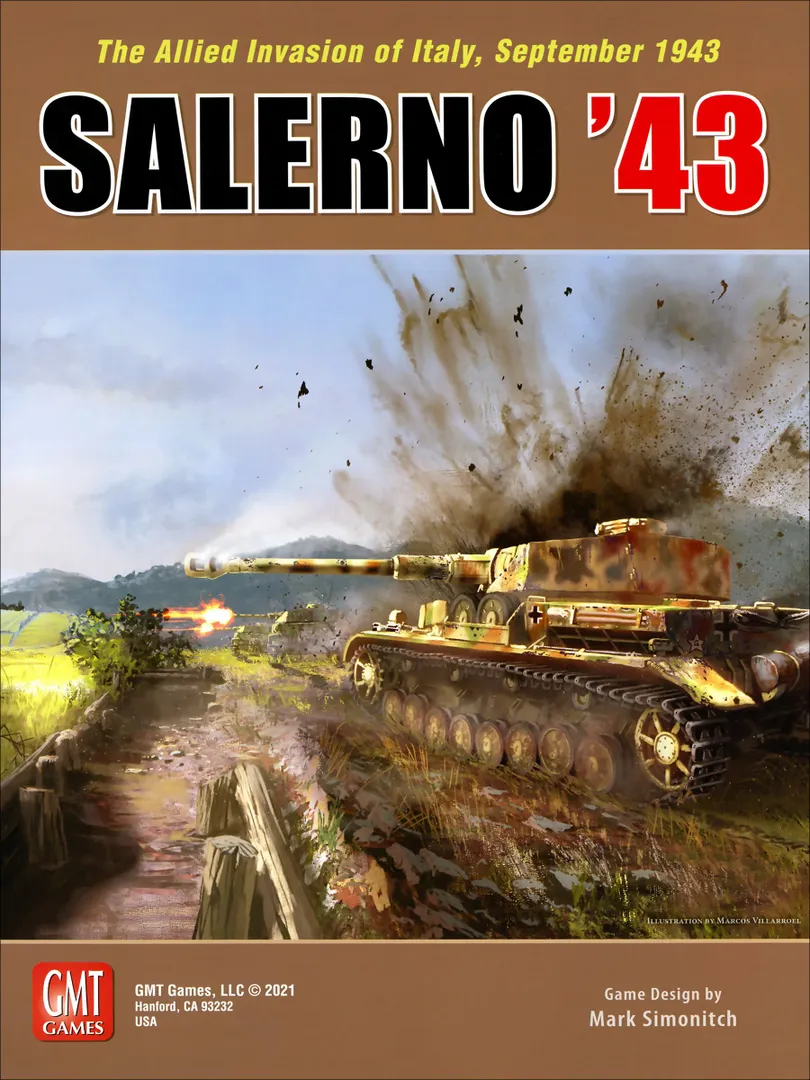

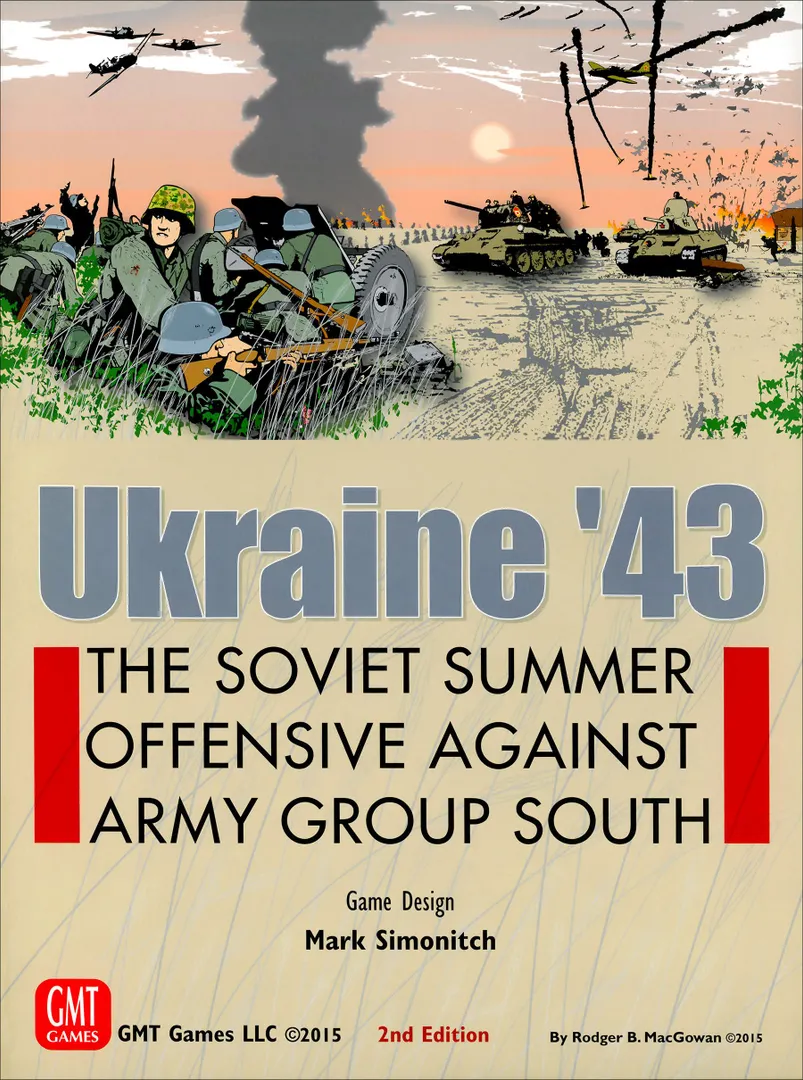

En inglés
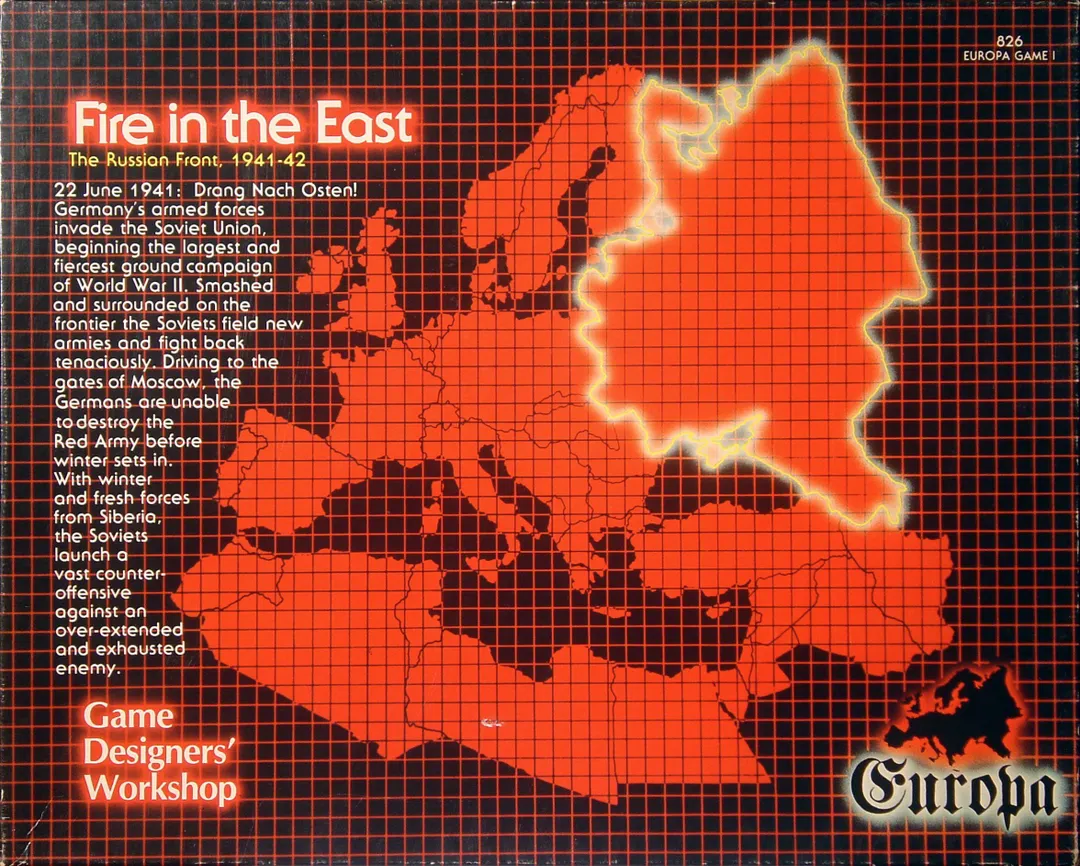
Fire in the East covers the war in the Soviet Union from the start of the Barbarossa invasion in June 1941 through the end of the Soviet winter counteroffensive in March 1942. It requires two players, with one player controlling the German and German-allied (Rumanian, Finnish, etc.) forces and the other controlling the various Soviet forces: regular troops, militia divisions,and Guards formations. The size of the game makes it well suited to team play: each side can easily be played by a team of two or three players. Fire in the East's 6 multi-color maps stretch from Warsaw to Stalingrad, from Murmansk to Sevastopol. Terrain is analyzed in detail, with over 20 different types, including two types of rivers, forests, and mountains and four types of cities. There are over 2500 counters each marked with its historical designation - the most accurate and detailed order of battle ever published for the Eastern Front. The counters represent divisions, and independent brigades, regiments, and battalions. Units are highly differentiated by type, from armor, infantry, and artillery to Soviet Guards, NKVD, and katyushas, German flammpanzers and railroad artillery, and Finnish ski troops. Air units vary from outmoded I-15 biplane fighters to the Me-109F, from Ju 87 Stukas and Il-2 Sturmoviks to Pe-8 long-range bombers. The capital ships of the Soviet Baltic and Black Sea fleets are also represented. The rules include extensive armor and antitank effects, plus special capabilities for many other unit types, from assault engineers to paratroopers. Every combat arm has its own abilities and limitations, and the players must use them all to achieve victory. The air system is very detailed - almost a game in itself. Logistics rules cover the different gauges of German and Soviet rails and allow supply lines to be extended temporarily by trucks. Isolated units gradually lose their combat abiliites and then collapse, but those besieged in cities and fortresses survive longer. Other important rules cover weather effects, the unique nature of the Arctic front, the need for artillery support, the German surprise attack, doctrinal limits of Soviet mechanized units, and more. Fire in the East is extremely challenging to both sides. German panzer spearheads can break through the front almost at will, but soon will find themselves outrunning their supply lines, infantry, and air support. Careful play and the optimum use of all arms are needed to travel the long road to Moscow. The Soviets are faced with the need to preserve their army for the final defense of major cities while delaying the German advance to make that defense possible by determined resistance and carefully chosen local counterattacks. Game Components: six 21" x 27" maps (1B, 2A, 3B, 4A, 5B, 6A) over 2880 die-cut counters (Europa 1A, 2A, 3A, 4A, 5A, 36, 37, 38, 39, 40, 41, 42) a complete set of rules a complete set of charts two dice (source: back of the box and user's description)
Según el catálogo, Fire in the East admite de 2 a 4 jugadores. Este intervalo corresponde al número de jugadores indicado por la editorial, así que el juego puede prepararse para cualquier grupo dentro de ese margen. La preparación, algunas reglas y la puntuación pueden variar según el número de jugadores; consulta la configuración exacta en el reglamento de tu edición.
La duración indicada para Fire in the East es de 3000 minutos, la estimación de la editorial para una partida completa. El tiempo real depende del grupo, del número de jugadores y del conocimiento de las reglas: las primeras partidas suelen alargarse y los grupos con experiencia terminan antes. La preparación y la explicación de las reglas no están incluidas.
El catálogo indica Fire in the East a partir de 12 años. Es la recomendación de la editorial y refleja la lectura necesaria, la complejidad de las reglas y las piezas pequeñas, no solo el tema. Los más pequeños a menudo pueden jugar con ayuda de un adulto: comprueba la edad recomendada en tu edición y la experiencia de tu grupo.
Fire in the East tiene una puntuación de complejidad de 4,3 sobre 5 según los jugadores de BoardGameGeek, lo que lo convierte en un juego exigente. La puntuación refleja cuánto conocimiento de reglas, planificación y toma de decisiones exige una partida típica. Los juegos exigentes requieren una explicación inicial más larga, así que conviene usar una guía de preparación.
Fire in the East pertenece a estas categorías: Wargame y World War II. Sus mecánicas principales son Dice Rolling, Hexagon Grid y Simulation. Las categorías describen el tema y la ambientación de un juego, mientras que las mecánicas describen lo que los jugadores hacen realmente en su turno. Cada mecánica lleva a una página del catálogo con juegos similares.
Los autores acreditados de Fire in the East son: Frank Chadwick, John Astell y Paul Richard "Rich" Banner. Estos créditos proceden de los datos publicados del juego y nombran a las personas responsables de su diseño, no a ilustradores ni editoriales. Las páginas de autor de MeepleRules reúnen otros títulos de los mismos autores, algo útil cuando un juego te gusta y buscas otros parecidos.
El catálogo clasifica Fire in the East como juego base. Se juega por sí solo con los componentes de la caja y no requiere ningún otro título. Las expansiones, si existen, añaden contenido o reglas nuevas y aparecen por separado en el catálogo con un enlace a este juego base.